

THE MAKING OF THE PERSONAL BRAND. By Steve Harrison.
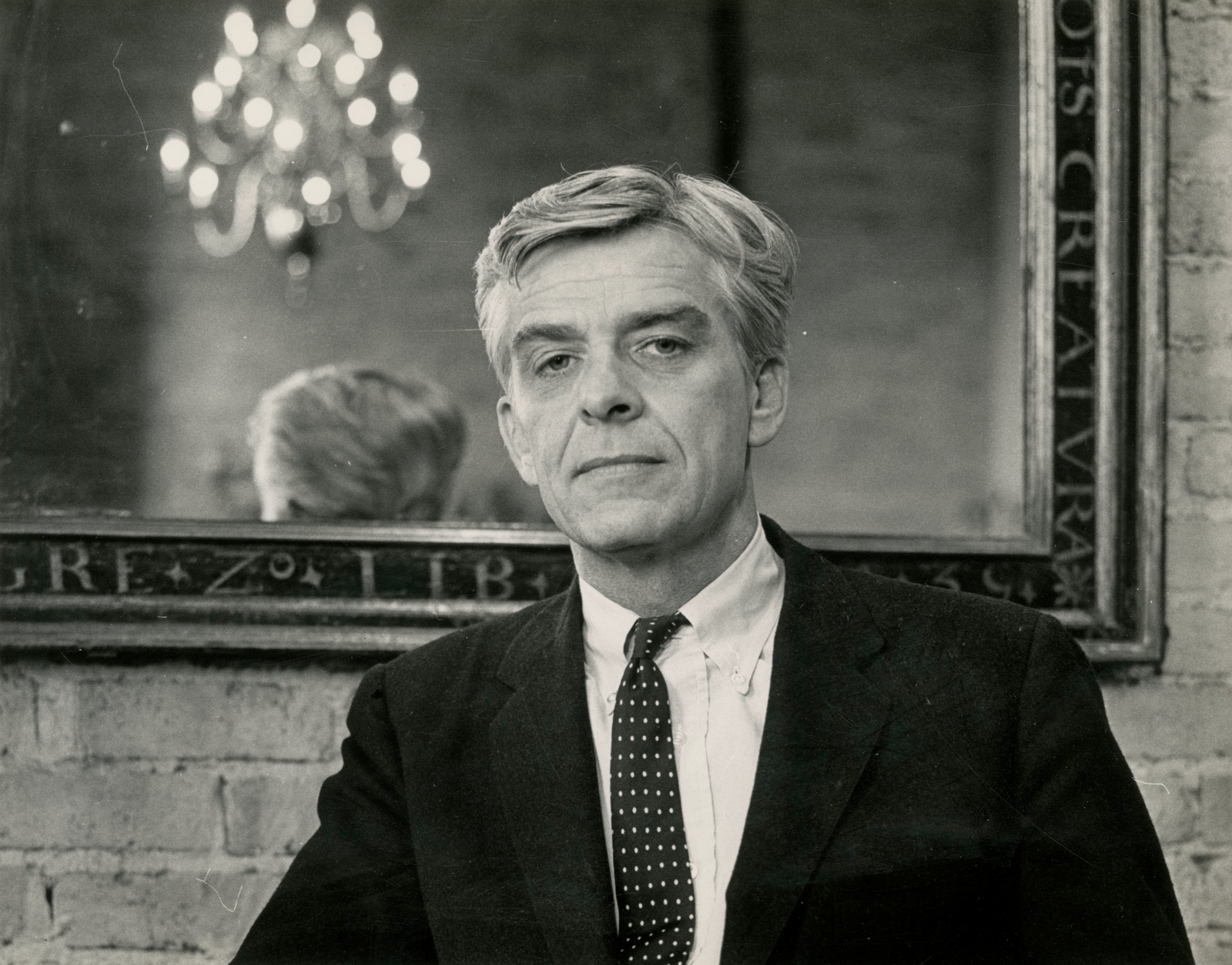
Have a look at this photograph. On the mirror’s frame you’ll see an inscription. Translated from the Spanish, it reads: "Do not look into this mirror to see yourself as you are, but as you would like to be, and you will become that desired image.And what an image Howard Gossage projected.According to his colleague, art director Dugald Stermer, “His complexion was corpse-like, porcelain. He looked older than his age.... His hair was absolutely white and I don’t know how he did it but it always looked flowing but was always in one place. He was a great-looking guy. He was very dramatic-looking. Looked more like an actor than an advertising man.”Alice Lowe agreed: “There is no question that Howard was every bit as much an actor as [his wife] Sally.”Jerry Mander, also saw the actor in the adman. To Mander, Gossage was “a ham. He occupied the room. If he was to walk into a room, all eyes would turn to him.”Make no mistake, that’s what he wanted. To be the centre of attention. To be, yes, famous.And he set about it using the techniques we’ve seen him employ when accomplishing the same task for, first, his clients and then Marshall McLuhan.“I’ve always been a ham. A publicity hound”Howard Gossage was part Jay Gatsby, and part Dan Draper. Like both, he was that quintessence of the 20th century American dream: the self-made man.And, in this case, Self-made.As with the other two, Gossage's Mid-Western origins were inauspicious.He was born in Chicago on 30 August, 1917 and grew up in New York, Denver, New Orleans and primarily Kansas City.Howard's mother, who hailed from a family of vaudevillians, was away touring for months on end. His maternal grandmother was a poisonous woman. She split the family and turned the boy against his father - a trauma that took him years of psychoanalysis in the 1950s to deal with.The craving for attention that characterised his behaviour in later life could well be explained by the neglect he felt back then.Shy, embarrassed by a heavy stammer and raised as a strict believer in the Church of Scientology, he wasn't the most outgoing of kids. And certainly not the happiest.In one of a series of revelatory letters he wrote to his sister Jane in 1959, he spoke of the “guilt (possibly we felt, as little kids, that we were responsible for breaking up the family – that sacrifices were made by Mama and Papa in separating for our sake): a sense of shame. I seem to have spent most of my teens, at least, being ashamed of one thing or another; the smell of poverty, inadequacy, social unacceptability.”Laterly, when asked about his early years, there was just one highlight. And it tells us much about the man the boy would become.One Sunday morning in July 1936, he was reading Huck Finn in bed and got to the bit where the hero fakes his own death and heads down the Mississippi. Gossage and a friend immediately took off on a 45 day canoe trip down to New Orleans. As he explained, “there are lots of clippings about it. I was even on the radio in St Louis. In case you were wondering how anybody knew about it, I’ve always been a ham. A publicity hound. As soon as we’d stop in a town, I’d go see the newspaper editor.”Think back to the Rainier Ale "Walk to Seattle" on pages xx-xxx, and here you have the prototype for that media event.Even at age 17, Gossage sensed that editors were hungry for stories - and he knew how to feed them to his own advantage. It was a realisation reinforced when, as an undergraduate, he himself became an editor - of the Kansas City University newspaper - the portentously titled Kangaroo.From “Hard Luck Gossage” to war heroUpon graduation he worked in his father’s record shop, the Groove, in Houston. Then, one imagines to relieve the boredom, he enlisted as a US Navy Aviator in 1940.
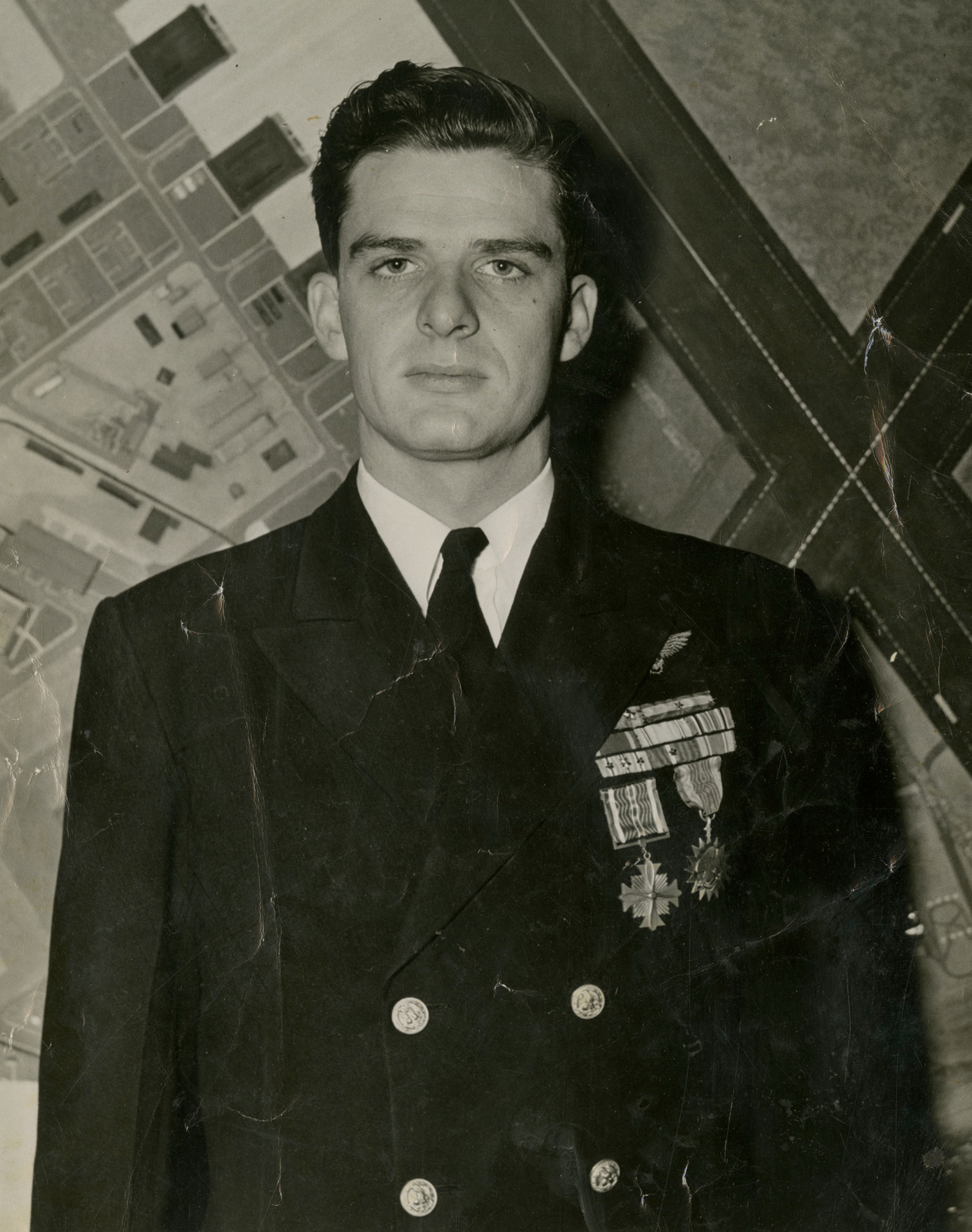
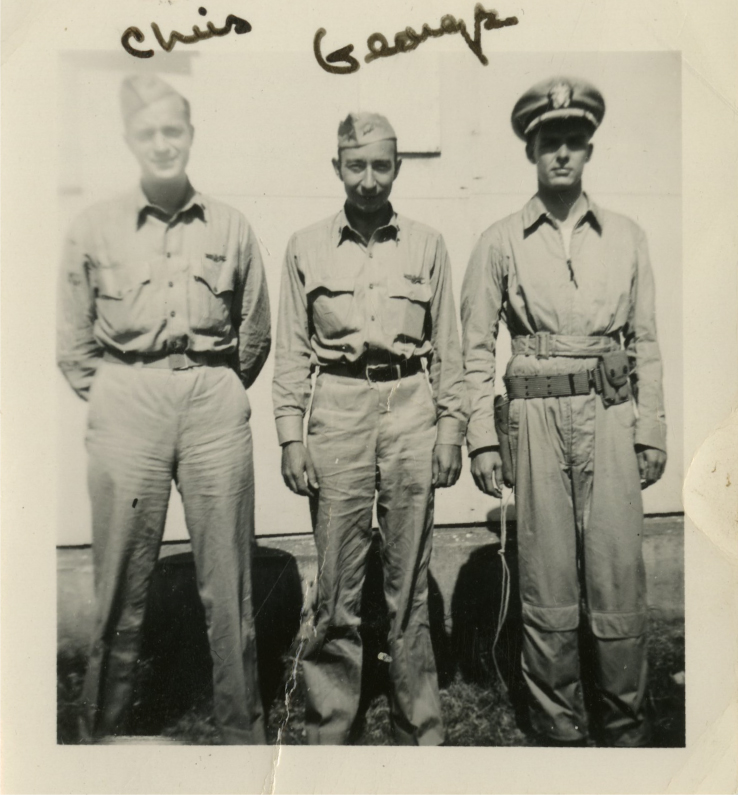
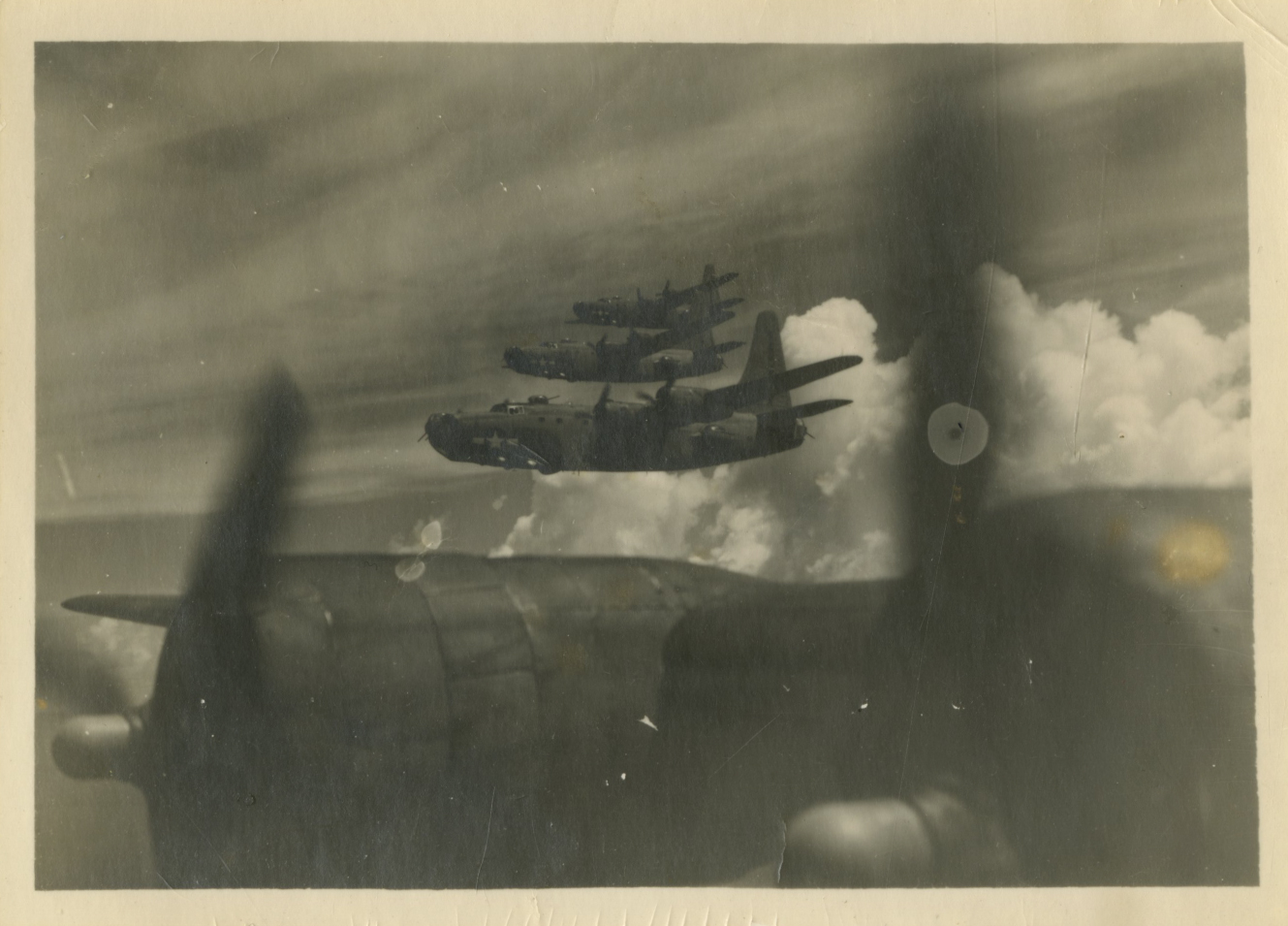
Photo’s show a gauche young man - barely recognisable as the debonair flaneur of later life. His personality also seems to have been quite different. Of their first date, his future first wife, Francis Page Fox wrote “Howard was quiet, reflective, apologetically clumsy and almost depressing. He told me people called him “Hard Luck Gossage. He had little else to say.”He must have been a bit more talkative the following evening because he proposed. She accepted, and he went back overseas.They were, as Francis acknowledged “naive” when they married. And, after the stability of life in the Navy, they were also quite rootless once Howard was demobbed. When they met in the 1960s Gossage looked back on those days and said “There is one thing I can’t forgive you for. You let me get out of the Navy. I like to drink. In fact, I’m a lush, and I like to think of a Navy career as the best way for me.”You can understand his reasoning. He had, after all, come through the war with two Purple Hearts to his name, the rank of Lieutenant, a flight of bombers in his command, and all the kudos that went with war hero status.


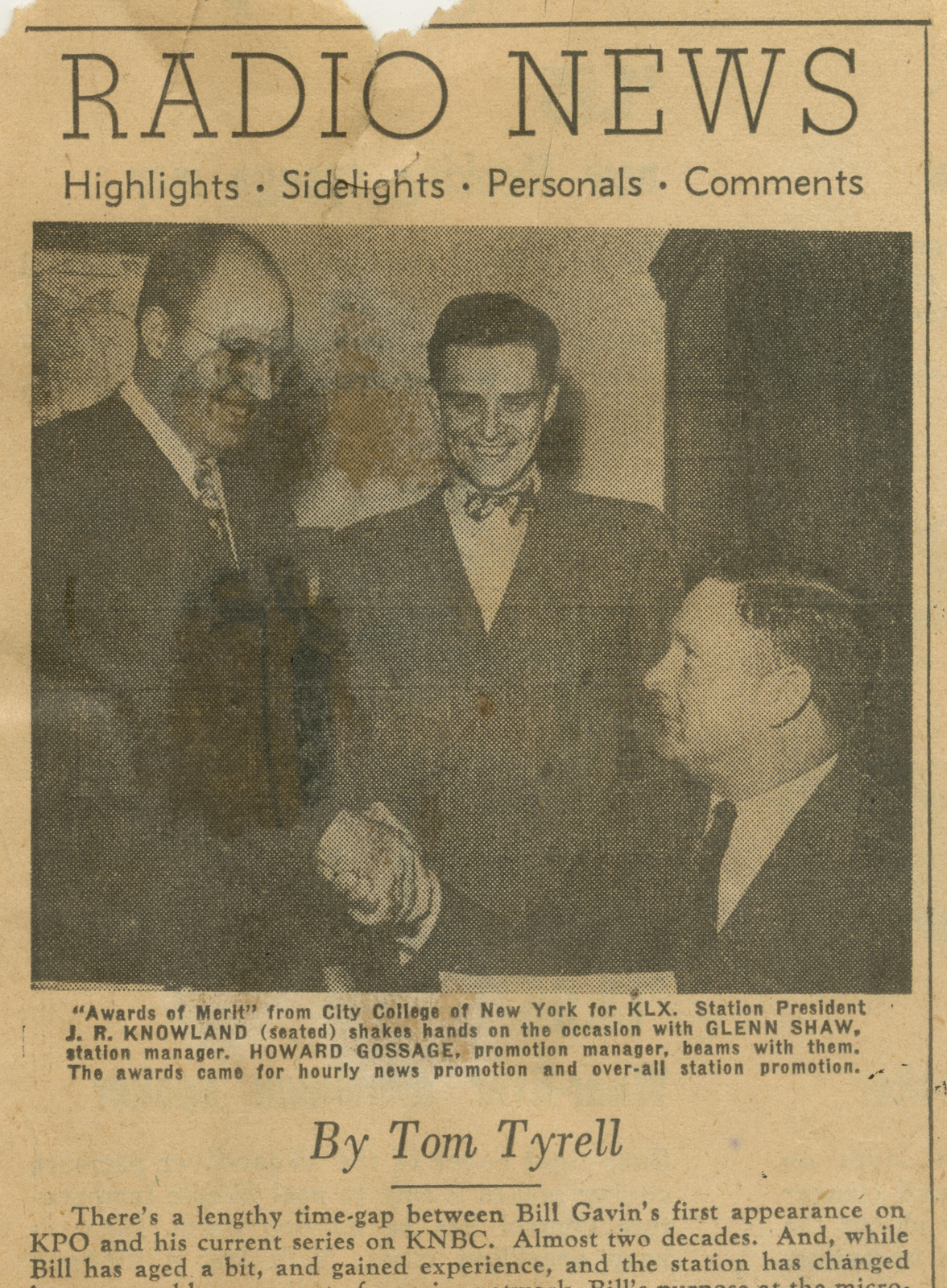
“To hell with it, I’ve never been famous before”Back on civvy street, he was a nonentity.But it wasn’t long before he was in the local papers. His first job was as promotions manager at KLX radio station in Oakland where he came up with gimmicks and stunts aimed at getting local companies to advertise with the station. As this cutting suggests he was obviously good at it.
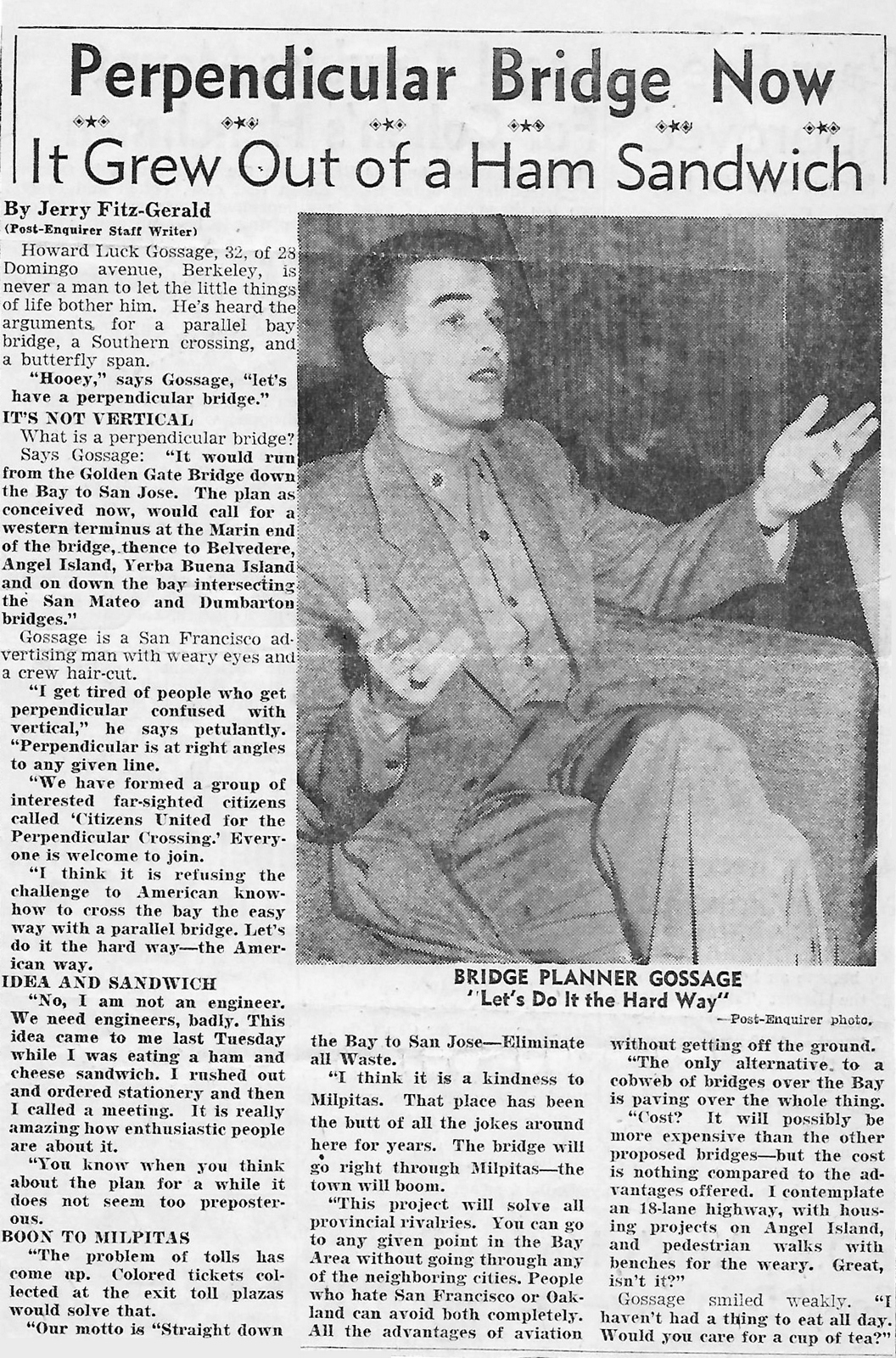
Then there was the bizarre episode when, in 1949, he contacted the San Francisco Post Enquirer with a crazy idea about a “Perpendicular Bridge running from Golden Gate Bridge down the Bay to San Jose”. Part of another stunt, perhaps?
He got in the papers again organising street parties at which attendees donated cans of food for the hungry kids in a still war-ravaged France. The first event was a flop - rescued by Gossage’s already well developed ability to manipulate the media.As he told his boss, “Reality has nothing to do with it, we will make this one of the most successful propaganda events ever. Reality is not what happens but is controlled by what is written and said about it. We control the print and the air. Remember all those starving French kids…."He was right, and a suggestible public duly turned out for the second event.Enjoying the limelight, Gossage accepted an invitation to accompany the mercy mission to Paris -- even though he knew the station would fire him for taking unauthorised leave.After that came his first stint as a writer (see his Bank of America ads on page X), a couple of years doing his PhD in Europe, his return to San Francisco, the job as junior writer at Brisacher, Wheeler and Staff, the ads for Qantas and finally, fame.As Roger Jellineck wrote in a 1969 profile of Gossage for Esquire magazine, the Kangaroo campaign made the front pages of the daily tabloids in what was “a personal coup for Gossage … ‘You’re famous, but don’t let it go to your head’, warned his elders and betters. ‘To hell with it – I’ve never been famous before!’”The Gossage show had started in earnest.Putting the writer firstThereafter, he seemed incapable of doing a conventional ad. He explained why in a talk he gave while at Brisacher: "I think you have to really throw the bull over the fence every now and then or it's not much fun being a copywriter."As we saw in Chapter 1, he had fun doing the the bizarre Qantasylvannia competition … the quirky Arlberg ads .... the groundbreaking radio spots with Freeberg.Not only did this work grab the audience's attention, it also attracted John Cunningham whose agency Cunningham & Walsh duly bought Brisacher. Gossage maintained that his ads were reason for the acquisition. And it is true that John Cunningham was himself both an exponent and fan of the soft sell approach that characterised Gossage work. Cunningham was, as Gossage would become, also an outspoken critic of the bombastic hard sell. But as a Time magazine profile explained "this debonaire Don Quixote of advertising .... gets away with such blunt talk because admen admire him as one of the great copywriters of all time.""Debonaire Don Quixote ... blunt talk ... one of the great copywriters of all time" Could it be that Gossage found a role model in his new boss? If so, he wasn't about to play understudy for long. And by 1957 had founded Weiner & Gossage, where the spotlight was well and truly in him.The aim was to do ads that made both his clients and himself famous. He never tried to deny the latter part of that deal. In 1963, during KCBS radio's Spectrum phone-in show, one caller asked "if Mr Gossage would agree that his most successful promotion is himself?"His reply?"From a personal point of view, I'd like to think so, yes, since I'm a person. But I take responsibility for any advertisement that I put out, much the same way as an actor would for any role that he plays."In the manuscript of his, regrettably, unpublished book on advertising, Gossage elaborated on this:“I have been criticized, as you might gather, for trying to build up myself in my ads, I have never denied it, though I put it a different way that is possibly stronger than they would dare.“The first thing a creator of an ad should do is make himself look good. Because if he does, then he is sticking his neck out; he is responsible and identifiable. If it lays an egg he is the culprit, no one else. And the chances are that if it makes him look good it will make the client look good, too”.We’ve seen the toll that “sticking his neck out” took on Gossage. The pressure to maintain his high standards and the risk of personal failure eventually made him avoid writing.But from 1957- 65 Gossage’s audacious ideas made his tiny San Francisco agency the talk of the industry. And it wasn’t just the brilliant work that focused attention on the Firehouse.Repurposing the self Back then, no one was renovating old industrial/institutional buildings. They were tearing them down. Weiner and Gossage bought the San Francisco Firehouse #1 in 1959 and tasked Marget Larsen with restructuring, designing and decorating what became the most flamboyant agency offices in the business.
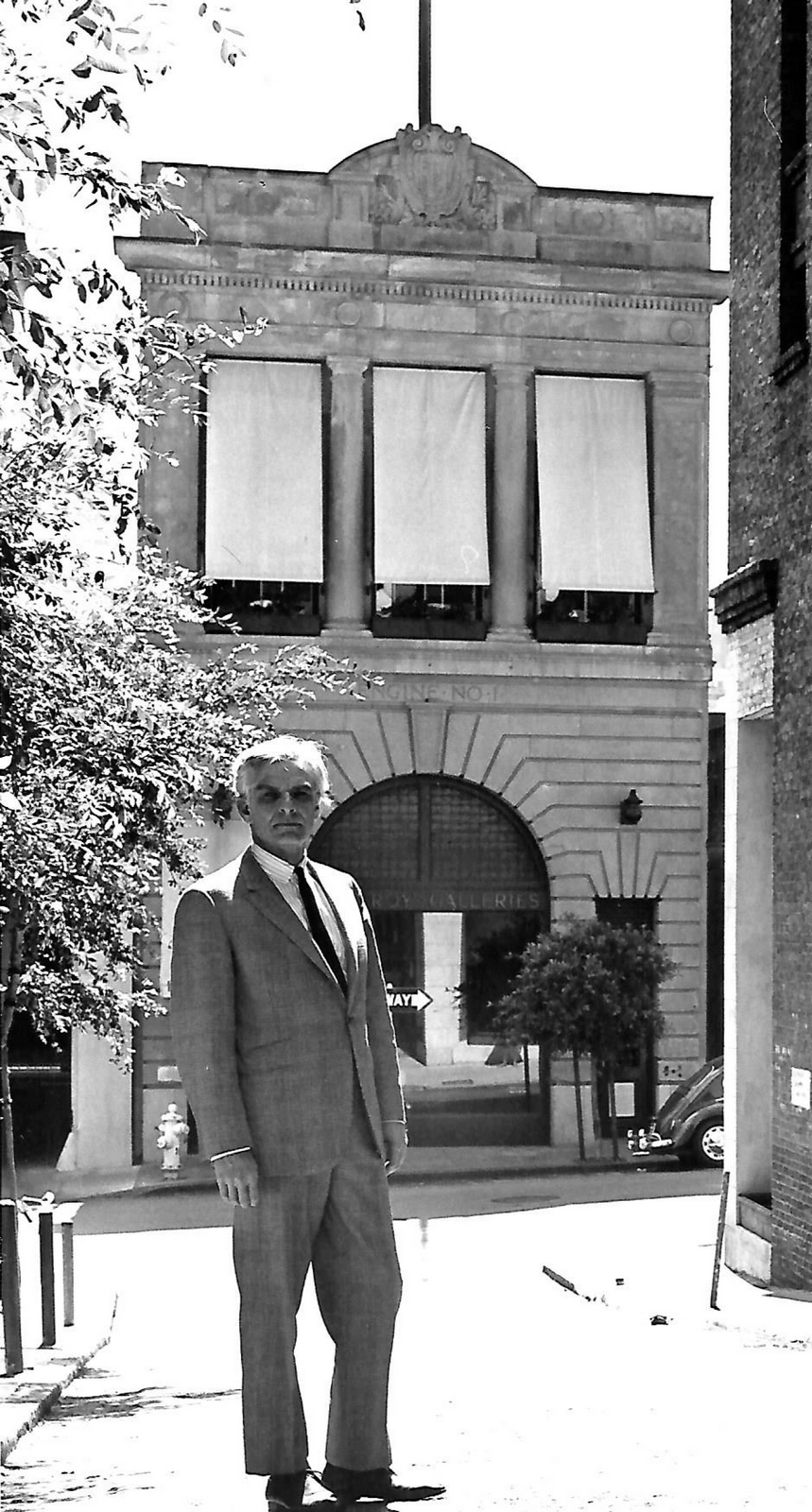
Thereafter, as Alan W Cundall wrote in Western AdvertIsing, “I am convinced that Howard Gossage’s firehouse has been publicised more than any other building in the world, with the possible exception of the Sistine Chapel.”That was certainly Gossage’s intention, as Roger Jellinek explained in Esquire magazine: “The firehouse is more than an exotic place of business for Gossage. It is a statement of his style, a stage for his soliloquies, and the nexus of his constellation of cronies.”The “style” that Jellinek referred to was as carefully cultivated as Marget Larsen’s interior designs. Indeed, you could say that Gossage had himself been repurposed.The hick from the midwestern sticks had become the cultured, urbane, intellectual. And all his accessories and accoutrements spoke to that persona.He smoked only Gauloise Bleu. His signature brand of Champagne was Veuve Clicquot. As for whiskey, it had to be Irish, and then only Paddy.When travelling, it was always First Class, preferring the best smaller hotels: The Lombardy or Carlisle in New York, The Connaught in London and The Lancaster in Paris. For trips to Europe, it had to be the SS FranceSartorially, he was conservative. Well, his elegantly tailored suits were. But, for an idiosyncratic flourish, he’d wear a floppy bow tie and, on occasion, yes, a monocle!Even the hair was a statement. At a time when buzz cuts and short back and sides were the norm, Gossage wore his long, drawing the comparison from journalist James Lincoln Collier as “a cross between Leonard Bernstein and The Joker.”In short, a masterclass in the fastidiousness required for impeccable personal branding- and yet another example of just how far ahead of his time he was.Personal Branding today…Because, oh dear, if you type “Personal Branding” into your search engine today you’ll get 4,920,000,000 results.There seem to be that many self-help gurus making their hyperbolic claims about the success you’ll enjoy by creating a persona, raising your profile and presenting the very best version of yourself to the world.Follow their advice and, in pursuit of likes, shares and clicks, attention becomes a currency of its own, and having an audience, the primary measure of self-worth.Which is why, from the perfomative outrage of X's keyboard warriors to Tik Tok's perfoming influencers, much of social media has become show business for the untalented.In corporate life, the development of a core competence based on training and tutelage has been undermined by a reliance on manouevring and manipulation. As a consequence in many fields, the workplace has become an arena in which optics often trump aptitude and success is de-coupled from skill. The reductio ad absurdum of this self-promotional charade being the delusional blowhards you see competing in TV’s The Apprentice.Of course, Gossage first and greatest guru, Marshal McLuhan saw all this coming. In the late '60s he'd told a group of bemused advertising men that they no longer needed products, images were enough. Indeed in the electronically mediated world, the image would be everything; a point of view wholly endorsed by not only Daniel J Boorstin but also that other great seer of the 'sixties, Andy Warhol.The production and projection of that image on a industrial scale would have to wait 30 years for the coming of the the digital revolution - and the solipsistic hall of mirrors that is Social Media.…and done expertly sixty years agoThe man who popularised the personal brand was himself a celebrity. Tom Peters was the king of the conference circuit on the strength of his massive best sellers In Search of Excellence and Thriving on Chaos. His 1999 article for Fast Company magazine began: “We are CEOs of our own companies: Me Inc. To be in business today, our most important job is to be head marketer for the brand called You.”He went on to give this guidance on how to build that brand. Have a look and compare it to what Gossage was doing in the 1950s and ‘60s.
- “Sign up for an extra project inside your organization, just to introduce yourself to new colleagues and showcase your skills — or work on new ones.”
Remember how, as a junior writer, Gossage went to his Creative Director at Brisacher, Wheeler and Staff and volunteered to work on “some account that’s a real dog … that no one wants and that doesn’t amount to a damn?” That account was Qantas.
- “Try teaching a class at a community college, in an adult education program.”
In 1963 Gossage signed up as Distinguished Visiting Professor at Penn State University teaching a course in “The Nature of Paid Propaganda.”
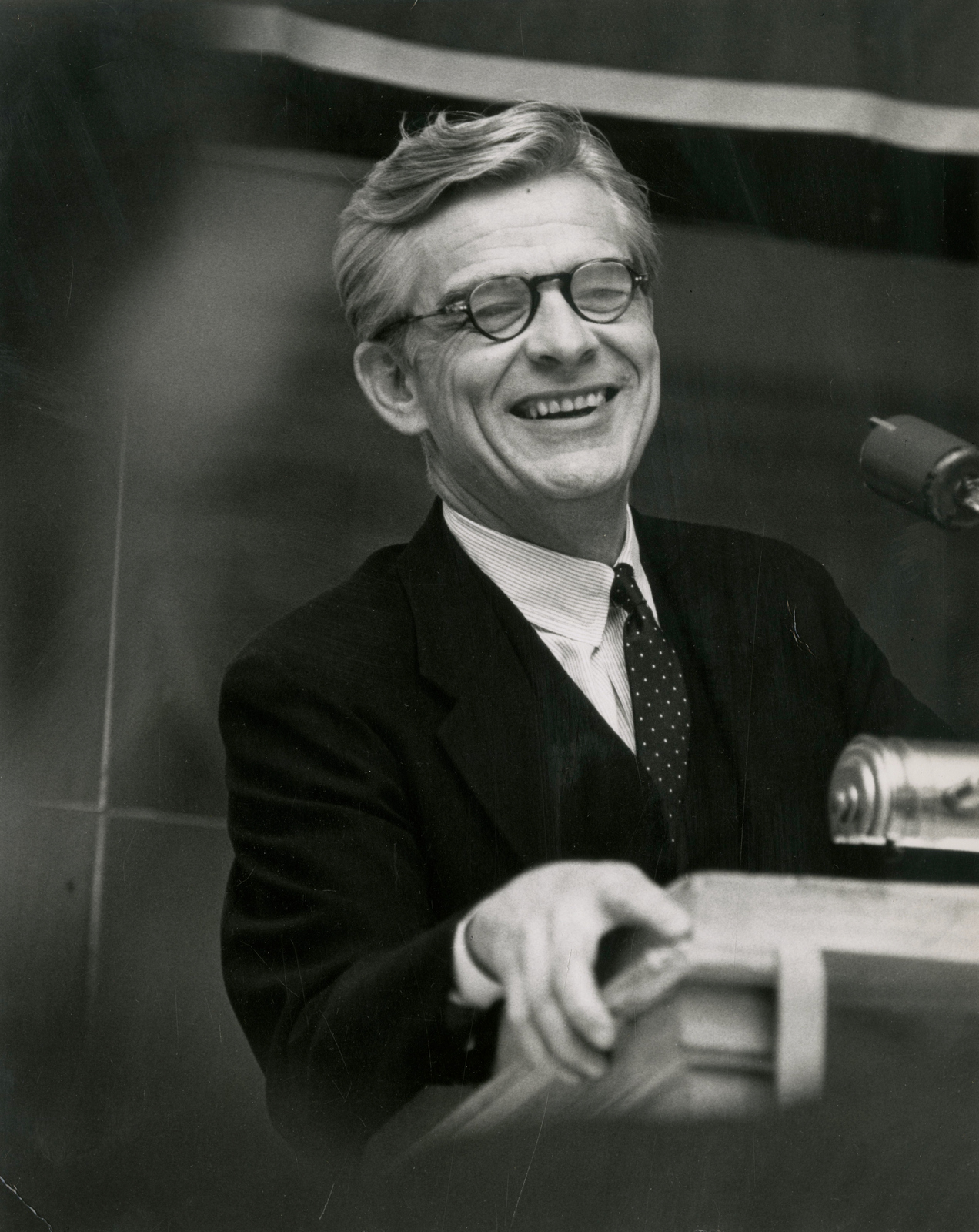
- “If you’re a better writer than you are a teacher, try contributing a column or an opinion piece to your local newspaper.”
Gossage had not one but two such writing gigs : “The Easy Chair” in Harpers and a weekly column in the San Francisco Examiner. He was also a prolific contributor to the trade and business press. He even sat on the board at Ramparts magazine which gave him an outlet for his own articles - most notably promoting Marshall McLuhan.. And finally, he collaborated with Barrows Mussey to produce a compilation of his writings and speeches "Can Advertsing be Saved". There was no US publisher until 1986 but a German edition came out in Spring 1967 as Ist die Werbung noch zu retten?
- “And if you’re a better talker than you are teacher or writer, try to get yourself on a panel discussion at a conference or sign up to make a presentation at a workshop.”
Gossage was so busy on the speaker circuit, you wonder how he found time to do any work. In the first three months of 1969 when incapacitated by leukaemia, he managed to speak at such diverse gatherings as the National Council for Fine Arts Deans, The California Association of School Psychologists and the Sociology Department of the University of Houston.
- "A project-based world is ideal for growing your brand: projects exist around deliverables, they create measurables, and they leave you with braggables".
From day 1, that was W&G's business plan. Getting bogged down in conventional, open ended campaigns was to be avoided. As Gossage told Newsweek in January 1962, "A client must be able to pose a problem. We continue with them until we solve the problem and renew if they come up with another problem. If not we help them get another agency to do the treadmill type of thing." Hence, for example, the Turning Times Square Green ...Shirtkerchief ... Pink Air ... Repealing the 18th Amendment ... The Paper Airplane Competition .... There was no fun or glory in doing the grunt work on trade, dealer and product ads. Gossage went for big ideas that delivered quick results, lots of publicity and, of course, his "braggables".And finally, here's another of Peters's suggestion: networking.That concept was, of course, unknown in the 1960s. But it already had a brilliant practitioner.NetworkingRoger Jellineck observed: “Herb Caen, the man who coined the word beatnik, is an important friend. His daily three dot gossip column in the San Francisco Chronicle fans the Gossage legend with frequent stories and bon mots of ‘adman Howard Gossage’”Apparently he would call Caen every morning at 11.10 to suggest ideas for the column - and not surprisingly quite a few featured you know who.Often the stories would revolve around the parties held at the Firehouse. These get togethers did much to cultivate the Gossage legend and extend his network.Amongst the attendees might be Oscar winning film director John Huston or Nobel Prize winning novelist (and Rover car driver), John Steinbeck. There were also the likes of Jessica Mitford, Dr Benjamin Spock, Buckminster Fuller, and young gunslinger journalists Warren Hinckle and Tom Wolfe.
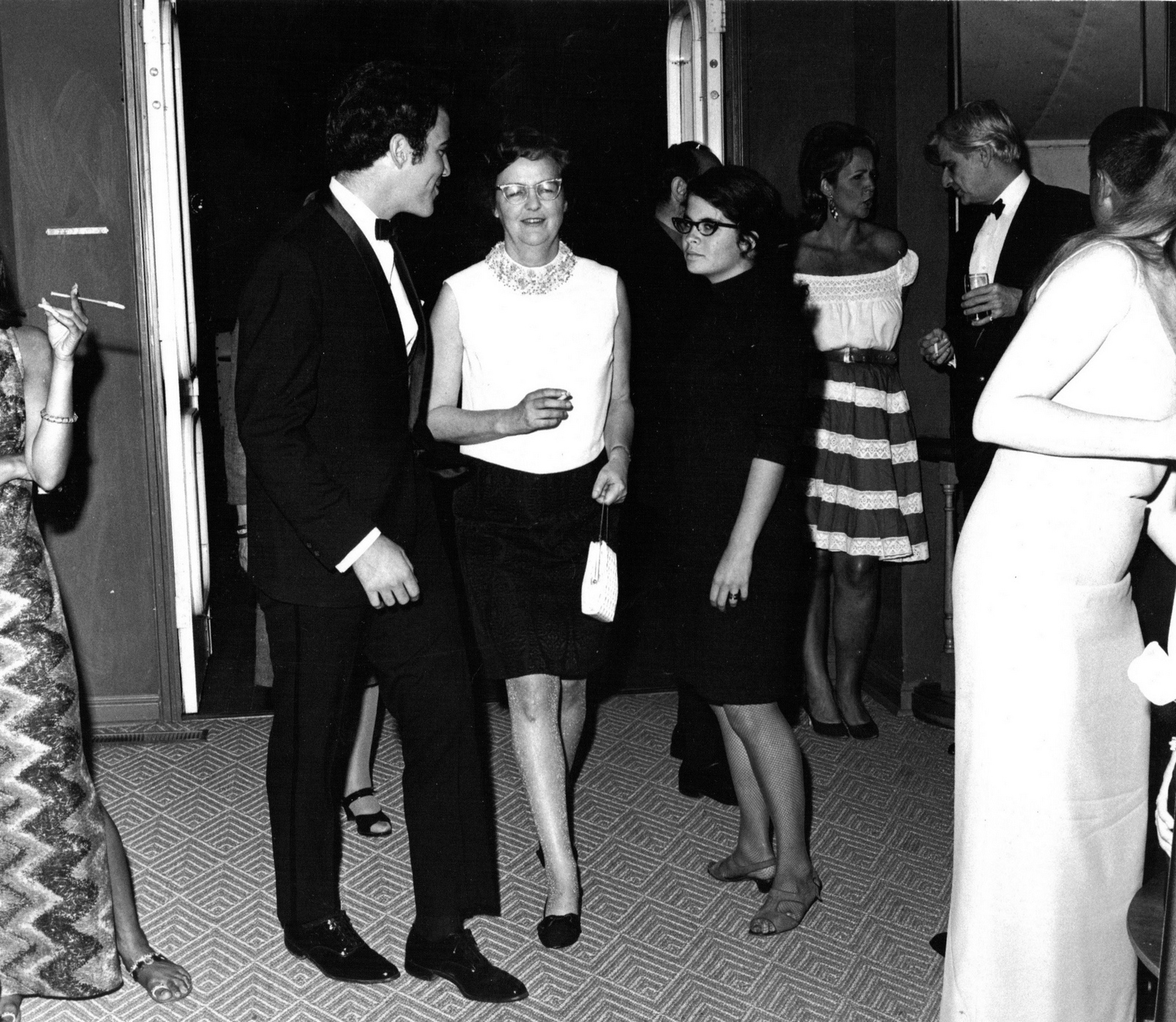
Show business was well represented by English character actor, Terry Thomas, and Hollywood stars Sterling Hayden and Candice Bergen. Gossage also was a great friend of Enrico and Suzy Banducci who owned the Hungry I cabaret club and they’d bring along such up and coming stars as Jonathan Winters and Joan Rivers.
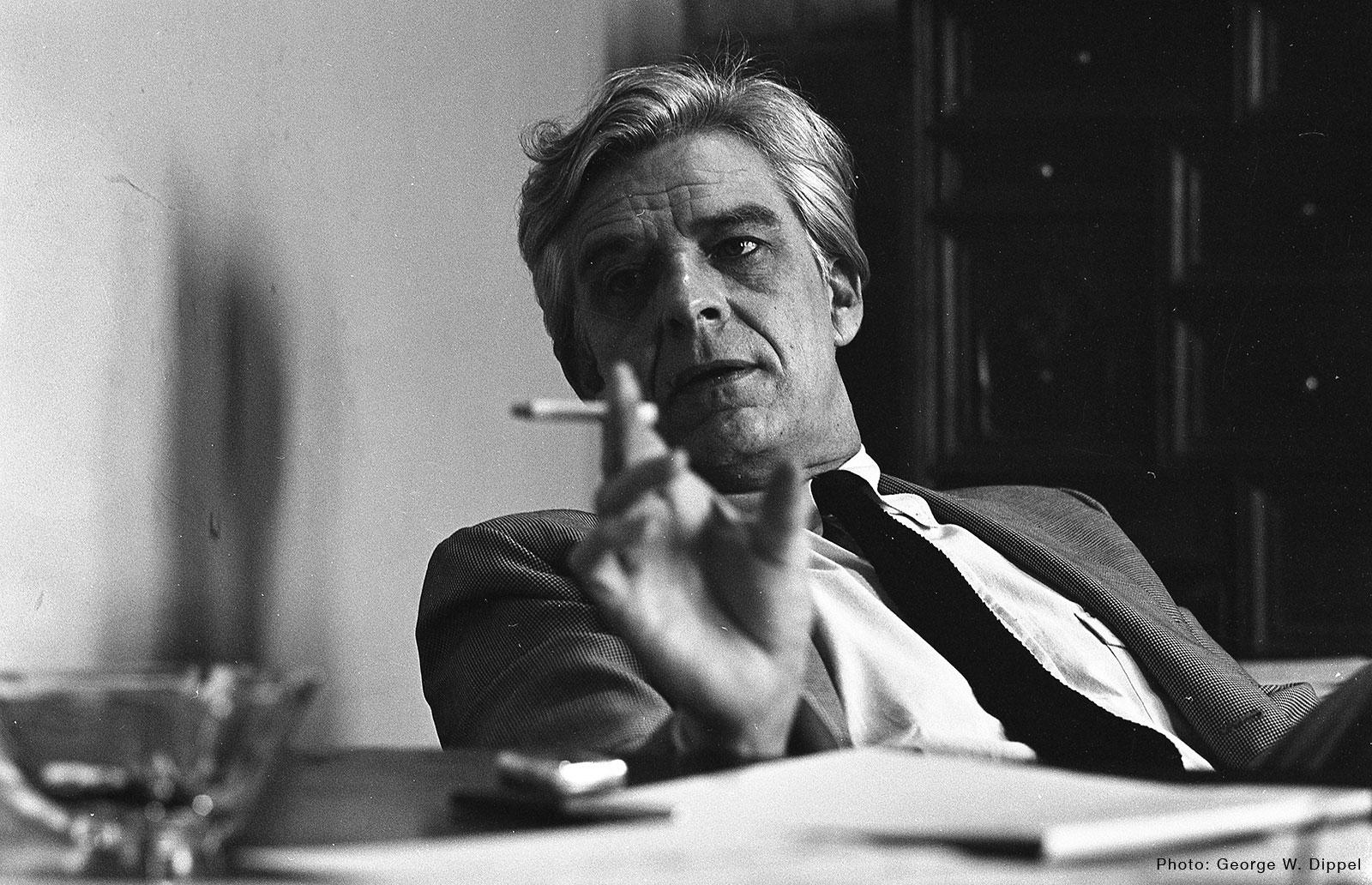
Of course, show business was best represented by Gossage’s third wife, Sally Kemp. As glamorous as she was gregarious, the Broadway star was the perfect foil for the cerebral and sybaritic adman.
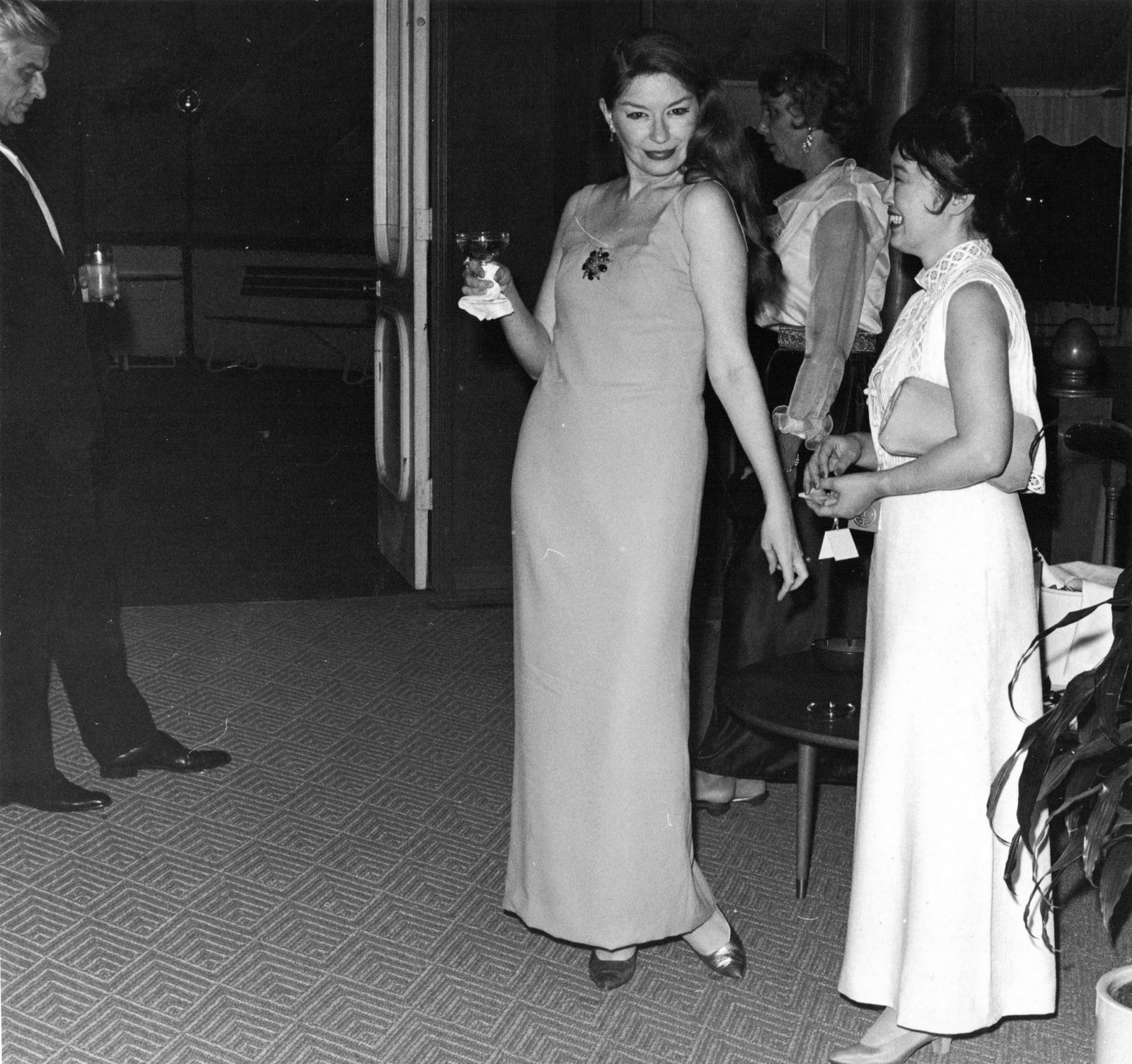
After all, did anyone have any idea what Mrs Bill Bernbach looked like? Or Mrs Leo Burnett? How about Mrs Rosser Reeves?Speaking of whom, while there were theologians and philosophers, architects and activists at Gossage’s famous gatherings there’s no record of anyone from advertising being invited (Those other self-publicists, David Ogilvy and Carl Ally were the only two Gossage liked).True to the dictum that to be famous you must be known by those outside your natural constituency, he aimed for a different kind of renown to that enjoyed by the kings of Madison Avenue.In fact, as part of that positioning, he went out of his way to not only distance himself from but also antagonise them.Zigging while others zaggedIn his articles and speeches, he railed against advertising’s flaws and failings.“Is advertising worth saving? From an economic point of view I don’t think that most of it is. From an aesthetic point of view I’m damn sure it’s not.”“It is a multibillion dollar sledgehammer driving an economy-size thumb tack”.“I don’t know a first class brain in the business who has any respect for it”.“I cannot recall the time when our industry has taken a public stand on anything that anybody gave two whoops about.”“I long for the day when it will become a business for a grown man.”“the bulk of intelligence-insulting, banal, tasteless advertising is done by the biggest agencies for the biggest clients.”The people in this “Gutless, formless industry” were understandably none too happy to be publicly derided - and by one of their own. Business Week reported that “he is looked upon a as an iconoclast by some peers and as a scoundrel by others”.But in violently zigging while everyone else zagged, he was doing for himself exactly what he’d been doing for his clients: Saying something interesting that sparked a response. Getting noticed. Being newsworthy. In short, becoming famous.The fall of the curtainDan Wieden has spoken of Gossage’s “searing honesty” And it seems that nothing was off- limits. Even if that meant writing about the leukaemia that was killing him.Nowadays, in the age of the curated self where every experience can be merchandised, it is commonplace for stars and online celebrities to reveal that they have potentially fatal illnesses - and some are happy to share their last days with their audience or followers. But in 1969 death was taboo.Ever the contrarian, Gossage took to Advertising Age to discuss his condition and how it was “fatal but not serious”. He followed this with “Tell Me, Doctor, Will I be Active to the Last”, which actually appeared in The Atlantic magazine after he died in July 1969. In that article, the actor Gossage freely admits that his response to the news of his illness was lifted directly from the daytime soaps. "It was uncanny, I knew exactly the words they were going to say, and I made the responses automatically. Then it dawned on me why. They had picked it up the same place I had."He went on to give what, by all accounts, was an heroic last hurrah. His friend, Warren Hinckle - the editor of Ramparts magazine said it was "beyond bravery, a final act played with great style but without bravado."He certainly seemed to enjoy the new role he was playing. Hinckle went on to say "Howard made great sport of telling his friends, a performance which was part Shinto ceremony, part Miracle Play, part barrom hijinks. 'Hey, not shit, I'm really going to die', he would insist, somewaht impatiently to those who failed or refused to accept his technicolor announcement of his own doom. He told his thirty or so best friends in San Francisco - usually in a Last Supper setting or a private lunch or dinner, sometimes at a commamd performance high tea with Irish whiskey in his Firehouse office - and then he went to New York to tell some more."Looking back, Alice Lowe who was with him "to the last", marvelled at how a man could contemplate his own death in such objectivity. Perhaps he was able to detach himself from the Howard Luck Gossage show and observe and comment on his own exit from the stage. In the past he’d been quite capable of putting on a performance just to keep himself alert and amused.William Walsh, who hired Gossage to write the Irish Whiskey Distillers campaign, told Alice of a lunch meeting they’d had: “I was preoccupied and inattentive and conversation lagged. Then for no apparent reason Gossage brightened and resumed whatever he had been saying with all his usual sparkle. He has caught sight of his own reflection in a wall mirror and was being his own audience. … that day it occurred to me what Gossage really was; a great actor, an actor of genius, who because of some curious quirk was using print instead of a stage. Perhaps it’s because in print he could reach the whole world instead of just a theatre full of people.”And that point about using print as his theatre brings us back to what made Gossage so remarkable.Being a "great actor" made him an ad man of genius. It lent him an acute awareness of the audience’s presence. And the need to engage and involve that audience in the show.He said of other advertising that “it wants to speak to me but is apparently talking to someone over my shoulder. Its gaze is slightly disconcerting, like that of a man with a badly fitting glass eye. Or a politician using a teleprompter.”The latter day equivalent of Paul Feldwick's singing peddlar, Gossage used every trick at his disposal to catch the audience's eye: the challenging headlines ... the weird layouts... the whacky promotions ... the eccentric prizes. Having gained their attention he broke down the fourth wall which exists even more in advertIsing than it does the theatre. And then spoke directly with the people out there. Thereafter, their response was his applause.And, make no mistake, despite his apparent disdain for advertising, the coupons they sent back in were very important to him. He was proud of the fact that he held the record for the best responses to ads that ever ran in The New Yorker. And he delighted in reading them. Alice Lowe recalled: "Eagerly riffling through hundreds, sometime thousands of readers responses, the campaign creator could not resist snatching one out occasionally to read out loud. 'Listen to this', he would cry happily... His normally pale face flushed with unaccustomed pink, he interrupted himself from time to time with a great burst of uproarious laughter."Alice could have been describing an actor reading their glowing first night reviews.His last adJust a few weeks before he died, he came out of semi-retirement for one last bow.The client was publishing house Harpers & Row, which was promoting: ABM: An Evaluation of the Decision to Deploy an Anti-Ballistic Missile System.It was a deadly serious book, with a serious budget. The client was spending $40,000 on space in the New York Times, Boston Globe, Chicago Tribune,Washington Post, Minneapolis Tribune, and Los Angeles Times, and they’d also shifted the brief to Gossage from their agency of record, Denhard and Stewart.Once again, Gossage was under pressure.But particularly so, now. His leukaemia was now fatal, and very serious. However, although he was exhausted by cancer, and crippled by the cortisone he was taking to alleviate his pain, he created another masterpiece - with probably the longest - and most challenging - headline ever written.
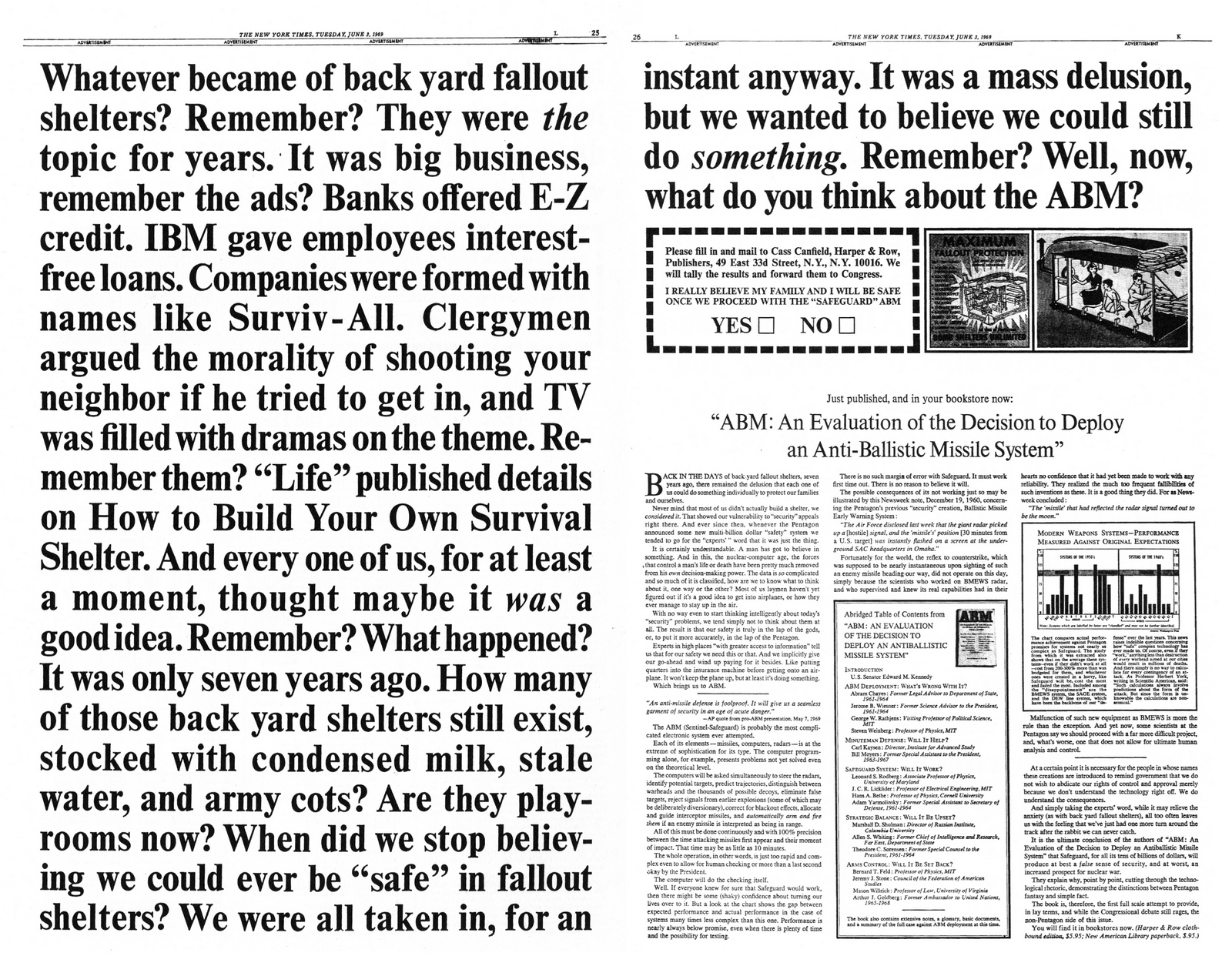
Four weeks after this ad appeared, Alice Lowe got a call from her boss. “I remember distinctly what he said: ‘For the first time in my life Alice, I feel completely free. I’ve gotten completely out of the advertising business -- Jerry Mander’s going to be taking care of that -- I’ll be able to do anything I want from now on.’ He was so weak, he could barely whisper.”He died two days later.
The memorial service at the Firehouse was, as you'd imagine, a theatrical affair.
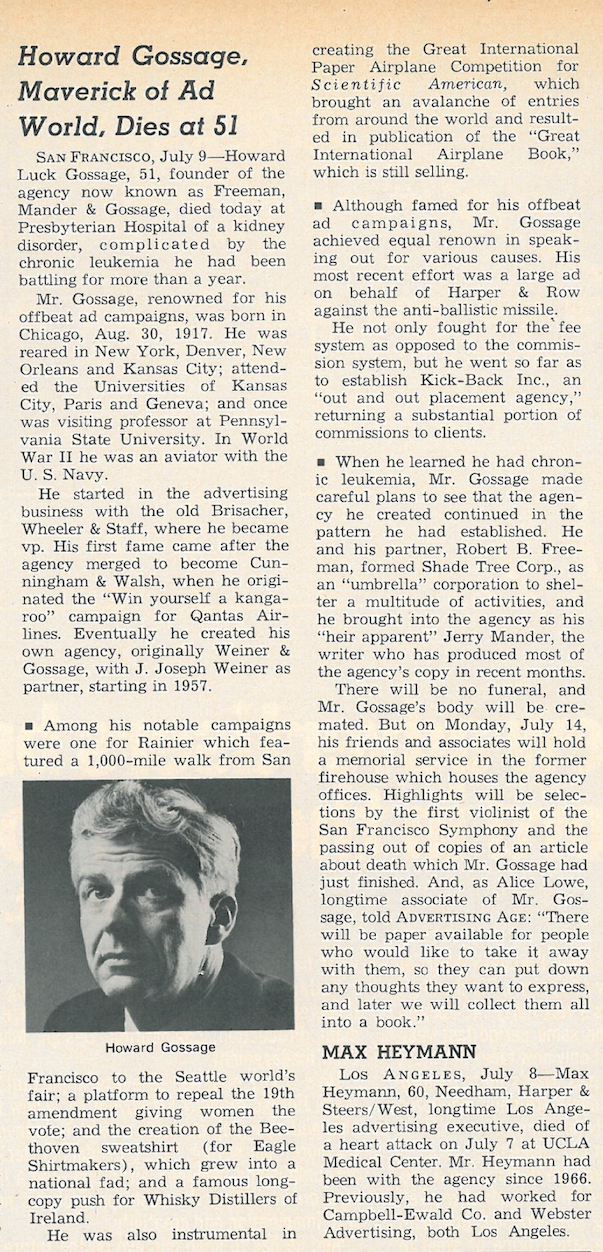
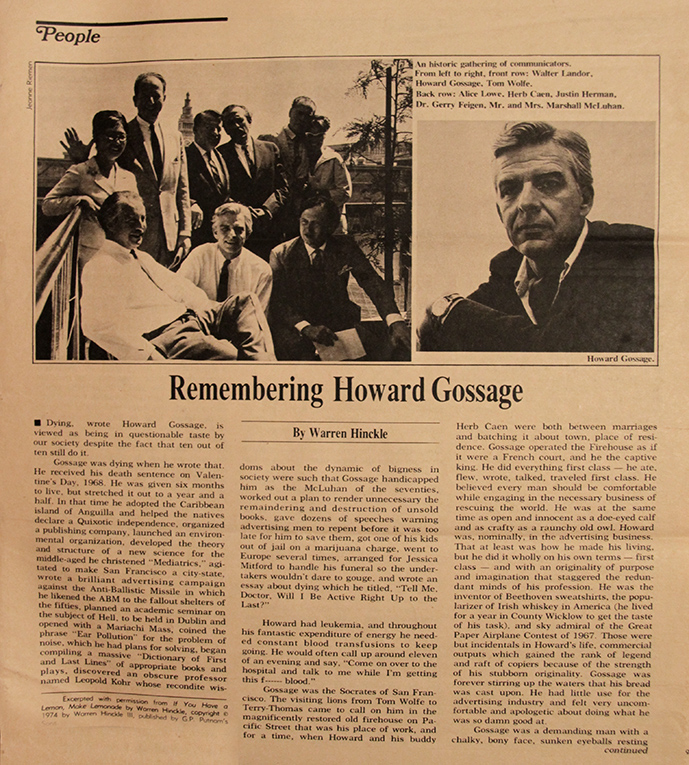
There were prayers from Rabbi Joseph Karasick and Father John Culkin and music by a string quartet from the San Francisco Symphony Orchestra and Salvador Padilla's Mariachi Band. In between were reminicensces from Howard's cosest friends: Tom Wolfe, Warren Hinckle, Herb Caen, Gerry Feigen, Father Culkin and Stan Freberg. It was the latter who observed that Howard's passing should have been marked by Daily Variety, the entertainmant industry paper because, "Inside that pundit suit, Howard was a minimum of 75% showbusiness ham.".
The ham would've loved the final flourish.
In the far distance could be heard the approaching strains of a band of Scots pipers. They processed down Osgood Alley, crossed Pacific Avenue and entered the Firehouse, circling slowly and ponderously as they played their lament. And then, as Alice Lowe remembered, they left as they'd entered, "the sound of their mournful music fading gradually to a whimper. It was a fittingly dramatic close to the afternoon."
And to the life of the great showman, Howard Luck Gossage.


Lorem ipsum dolor sit amet, consectetur adipiscing elit. Suspendisse varius enim in eros elementum tristique. Duis cursus, mi quis viverra ornare, eros dolor interdum nulla, ut commodo diam libero vitae erat. Aenean faucibus nibh et justo cursus id rutrum lorem imperdiet. Nunc ut sem vitae risus tristique posuere. uis cursus, mi quis viverra ornare, eros dolor interdum nulla, ut commodo diam libero vitae erat. Aenean faucibus nibh et justo cursus id rutrum lorem imperdiet. Nunc ut sem vitae risus tristique posuere.
Delete