
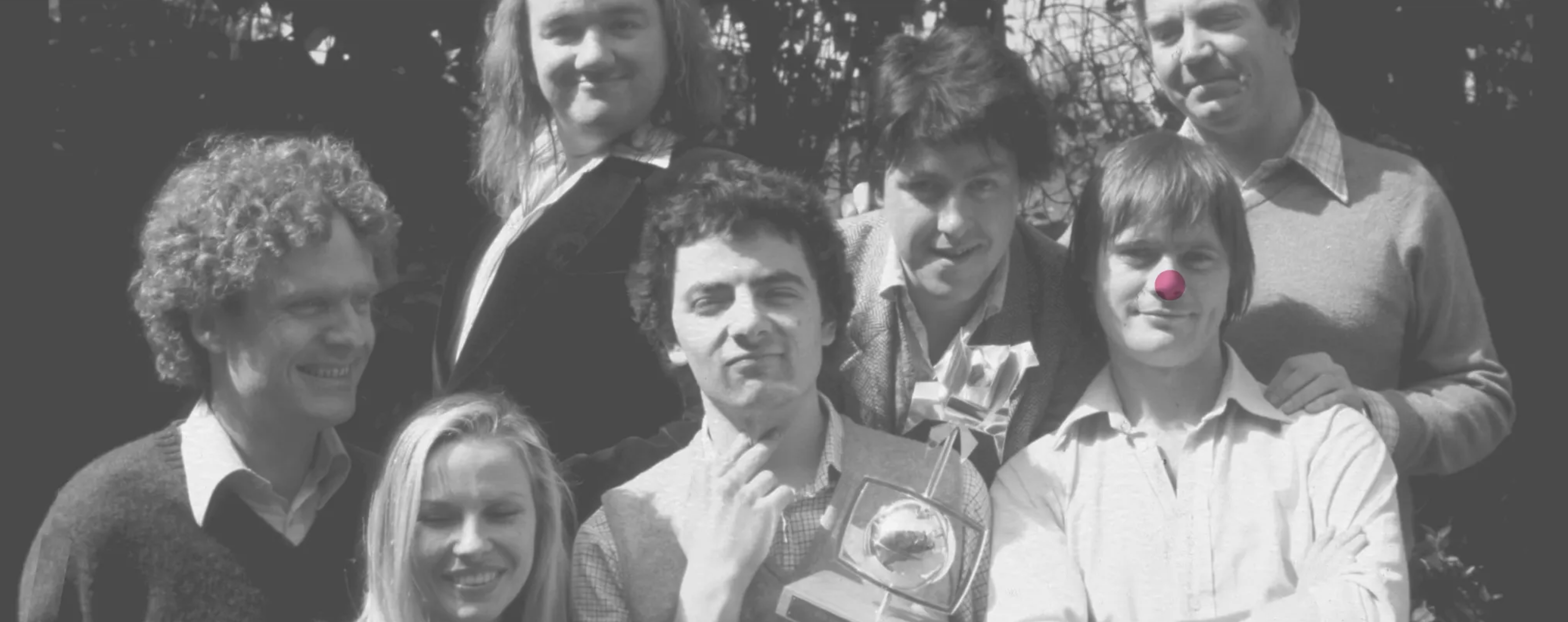
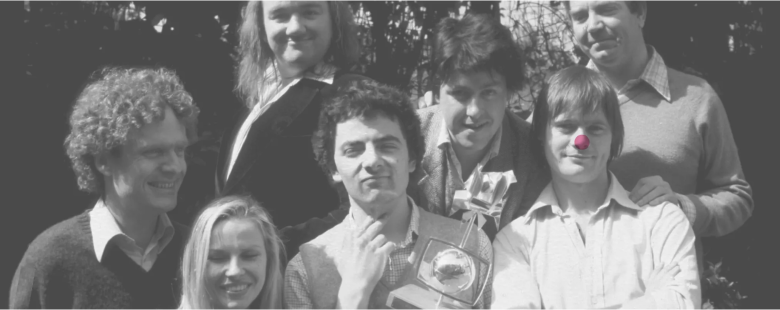

In 1961, notoriously hot-headed photographer Bob Brooks arrived in London.The advertising scene he stepped into was a very poor relation to the one he’d left in New York.His biggest grievance was it’s annual advertising awards “it was put on by a printer, whose clients were the major agencies, so the ads were often credited as being ‘designed on a group basis”.
No names were mentioned, and nobody knew who designed anything.”Rather than except the situation, he got in touch with London’s top Creative Director, Colin Millward, to pitch him an idea; ”Let’s set up an awards show where creatives are named’.
The whole business of naming names is that, if you do something successful, and it gets into the show, and everyone sees that you are the art director, designer, writer, photographer or whatever, the chances are that you will make a bit more money the following year.
And that is what the business is about.”
By 1963, they’d got a posse together, it now included the country’s top designers.One of those, Bob Gill, knocked up this logo for the new enterprise.

It looked cool, but had no particular meaning, Gill explained “We just tried to get the letterforms as close together as possible”.
Over the years this jumble of letters was imbued with meaning, it represented excellence.
If you were a creative, you were in one of two groups – those who’d ‘been in the book’ and those who hadn’t.
(It’s an awards show, it’s supposed to be elitist.)
Being asked to be a judge was like an award in itself.
Winning a pencil would be followed by a pay rise and a few job offers.
Creative Directors looking to hire would go straight to the index of the last annual.
I’ve read at least four on Facebook recently saying ‘Decided to chuck all my awards (except my D&AD pencils)’.
When I decided to bin all my certificates, writer Nigel Roberts came by and said ‘You do realise that some of those are D&AD?’
The point is, that little logo was precious.
Coveted, not just in the U.K. either.
One year, 2005 I think? Whilst judging The One Show in New York, I couldn’t help but notice that all the American jurors kept referencing D&AD, so I asked the group which pencil they’d rather win, the one we were judging or D&AD?
They looked at me like they didn’t understand the question – D&AD!
Why? They’re so rare.
While we handed out 102 One Show advertising pencils, D&AD handed out just 15. (And eight of those were for craft, The One Show didn’t even have craft sections.)
This year D&AD handed out 371 Pencils.
I find it hard not to care about this stuff, D&AD has been really helpful to me over the years and it’s an organisation I feel I’ve invested in.
How?
I’ve handed over hundreds of thousands of pounds in entry fees.
I’ve given 20 or 30 days to judge over the years.
I’ve done my time on the Committee, sneaking out of my day job once a month to argue about jurors, goals, positioning, etc.
I’ve donated hundreds of hours designing two Annuals (’04 and ’12), four ads (two of them are below, ’98), one book launch invite and one poster.
I don’t say this to suggest that I’m owed anything or that my opinion is important, just to explain why I have one.
Besides, there are literally hundreds of people out there who could write much longer lists than me.
But having just read that the Type Directors Club of New York has shut up shop, it got me thinking about whether D&AD would one day go the same way?
It made me wonder whether now might be a good time to have a kind of brand audit.
The two toughest questions a brand can face is: What are you for and who are you for?
They sound innocent enough, but they aren’t.
What is D&AD for?
To inspire people to produce better work?
To promote the communications industry to the business world?
To be an alternative to Cannes?
To be a public record of the industry’s finest work?
To entice people into our industry?
To, as Bob Brooks said, help the good people get paid a bit better?
To teach people how to communicate?
To be a meeting place for global communication companies?
To reward those who make our industry look better?
Who is D&AD for?
The staff?
The membership?
Creative people?
The winners?
The communications industry?
The business community?
Future generations?
People with eyes?
Humans?
The temptation is to tick all of them. (Don’t do that in a brand workshop, they’ll make you sit in the corner facing the wall.)
You need to reject some and give the rest in a hierarchy.
Try to be everything for everyone and you’ll end up being for no-one.
Maybe the best place to discover what they stand now is to look at what they’ve stood for previously.
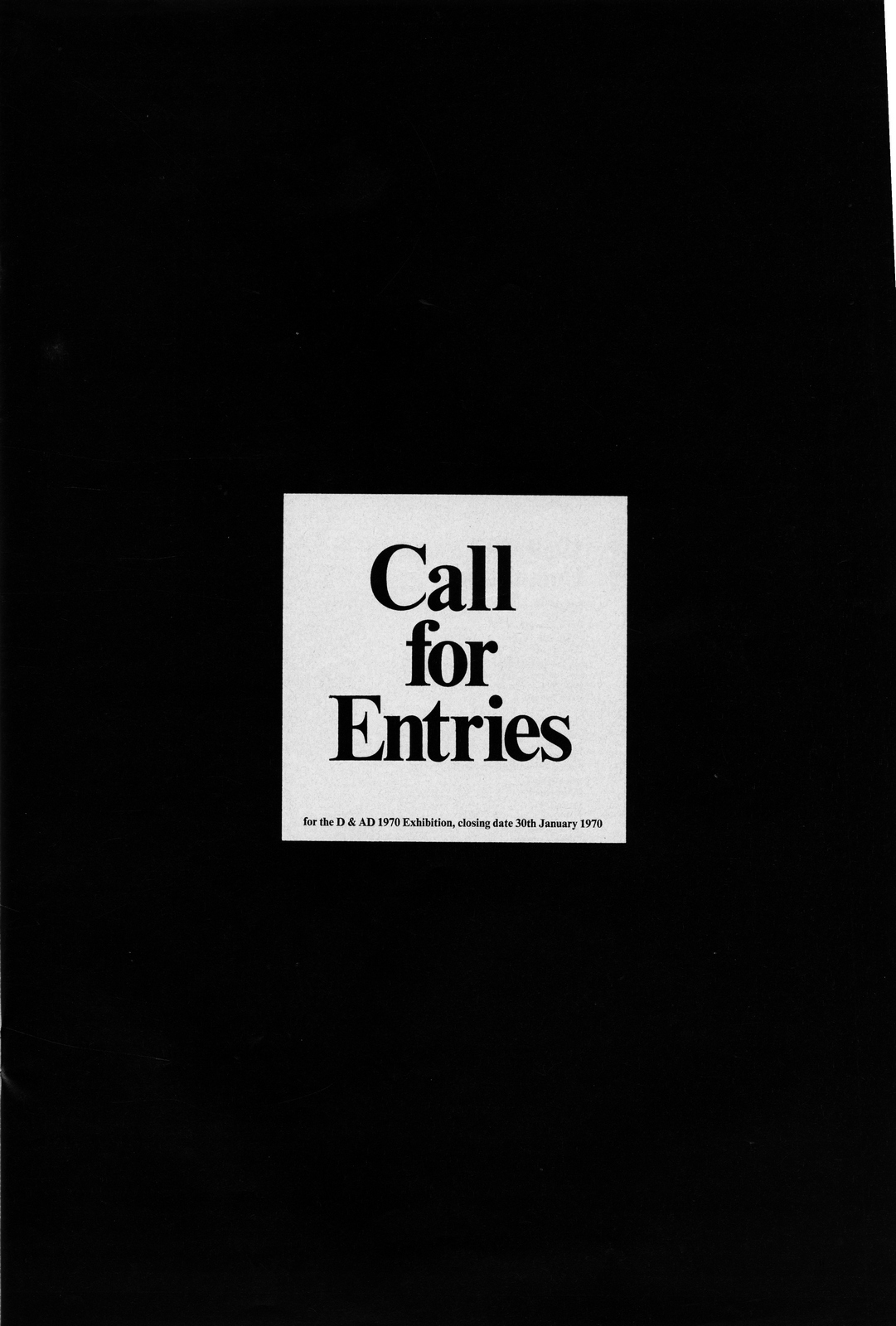
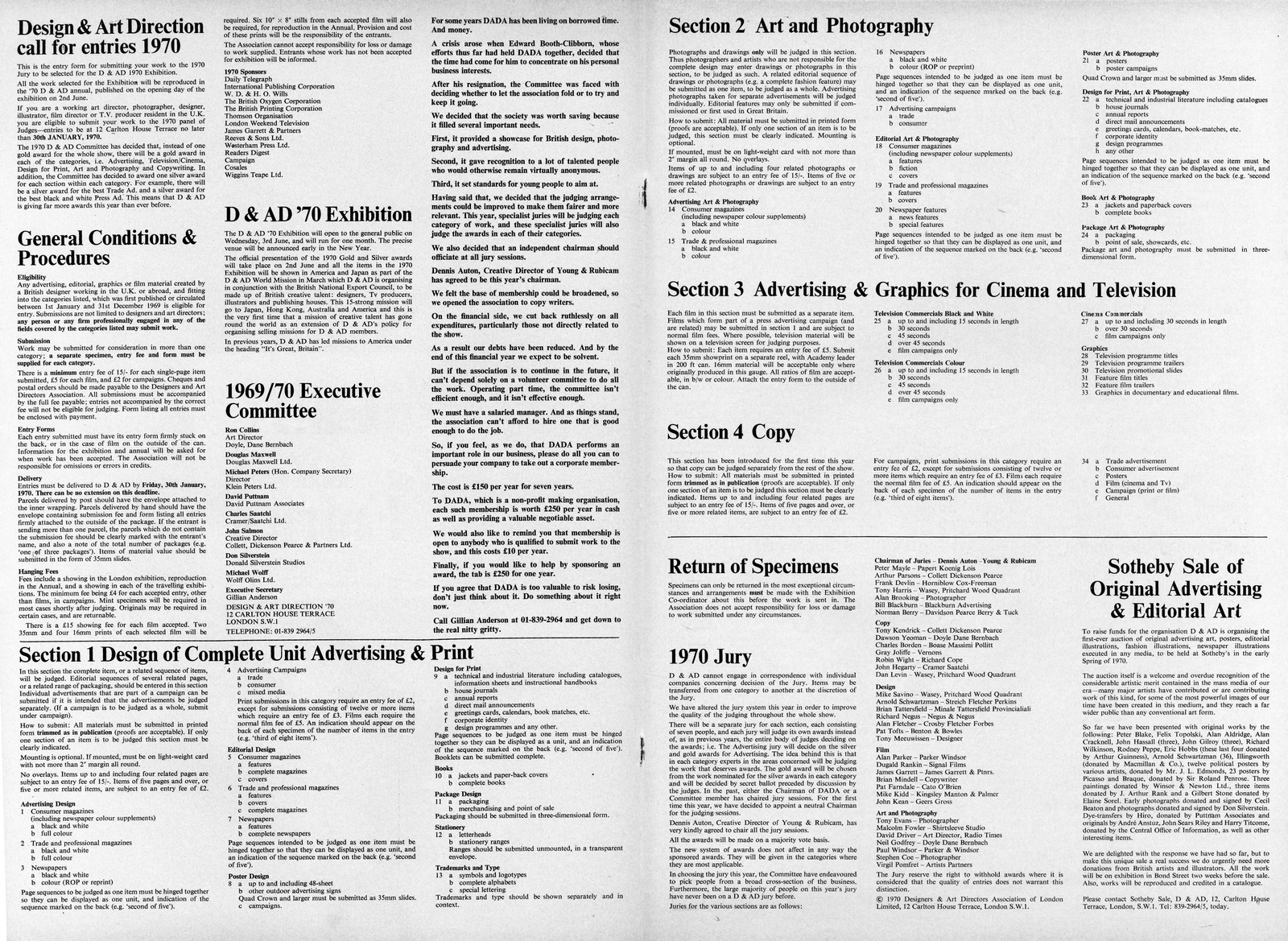
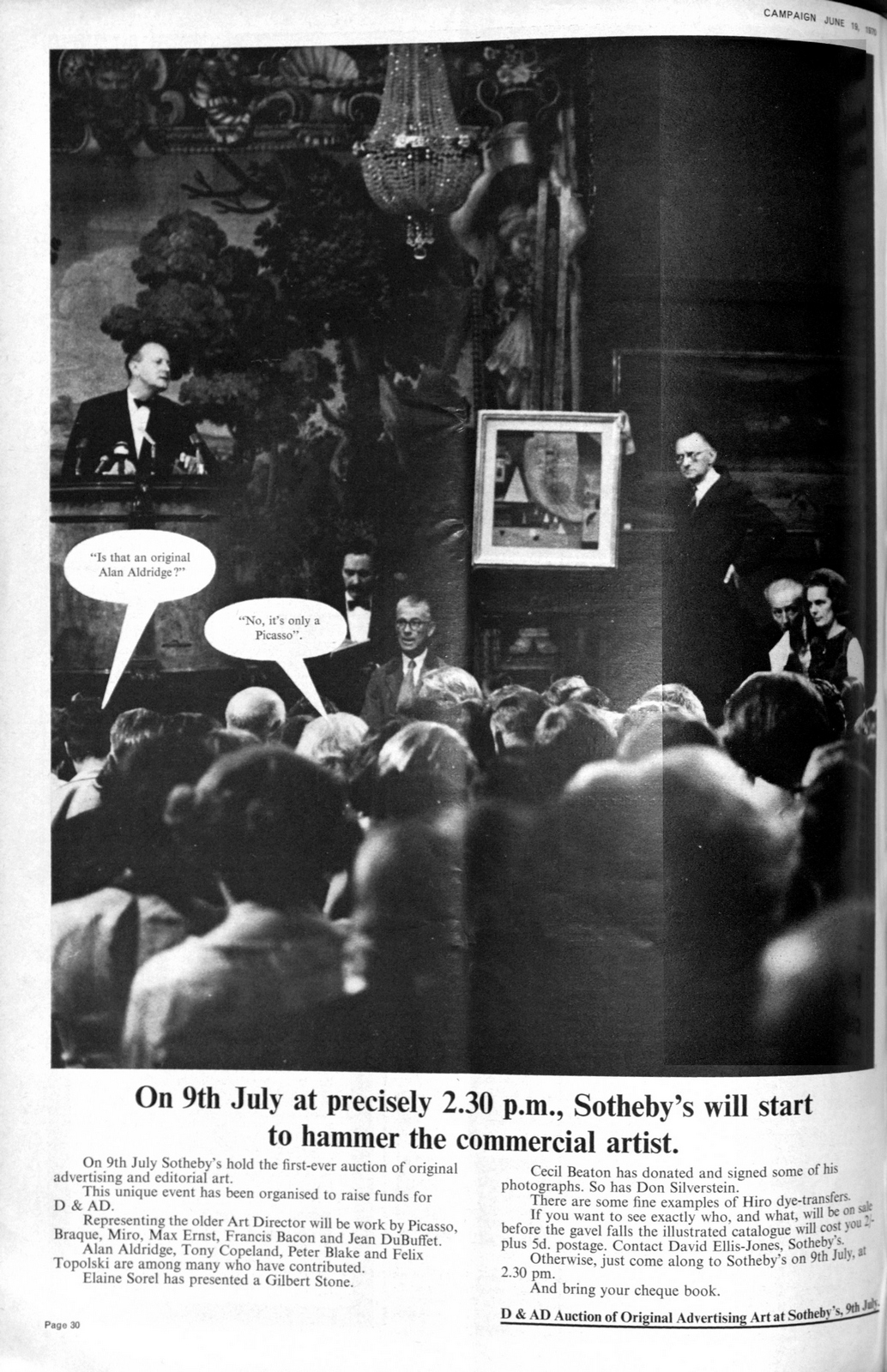
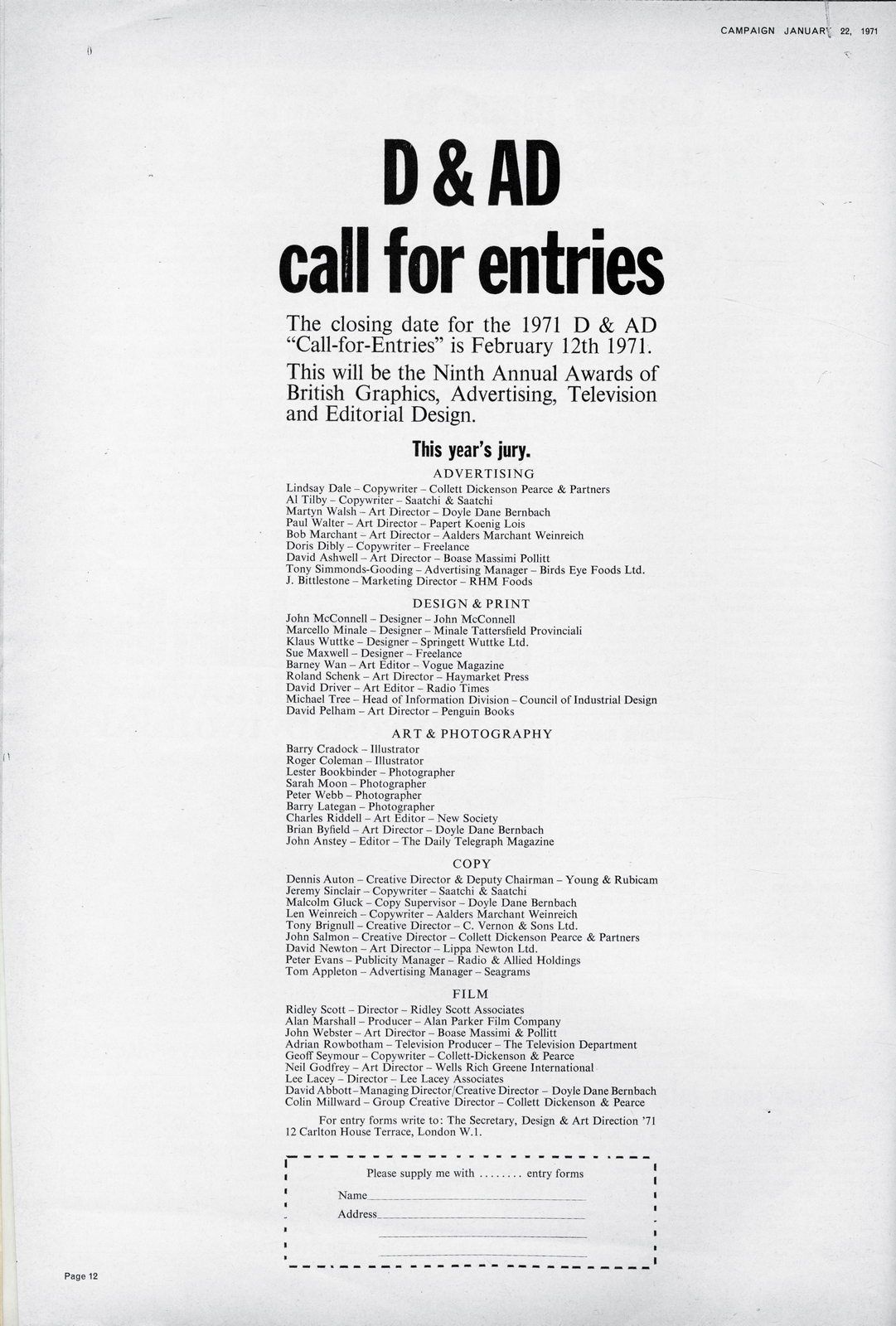
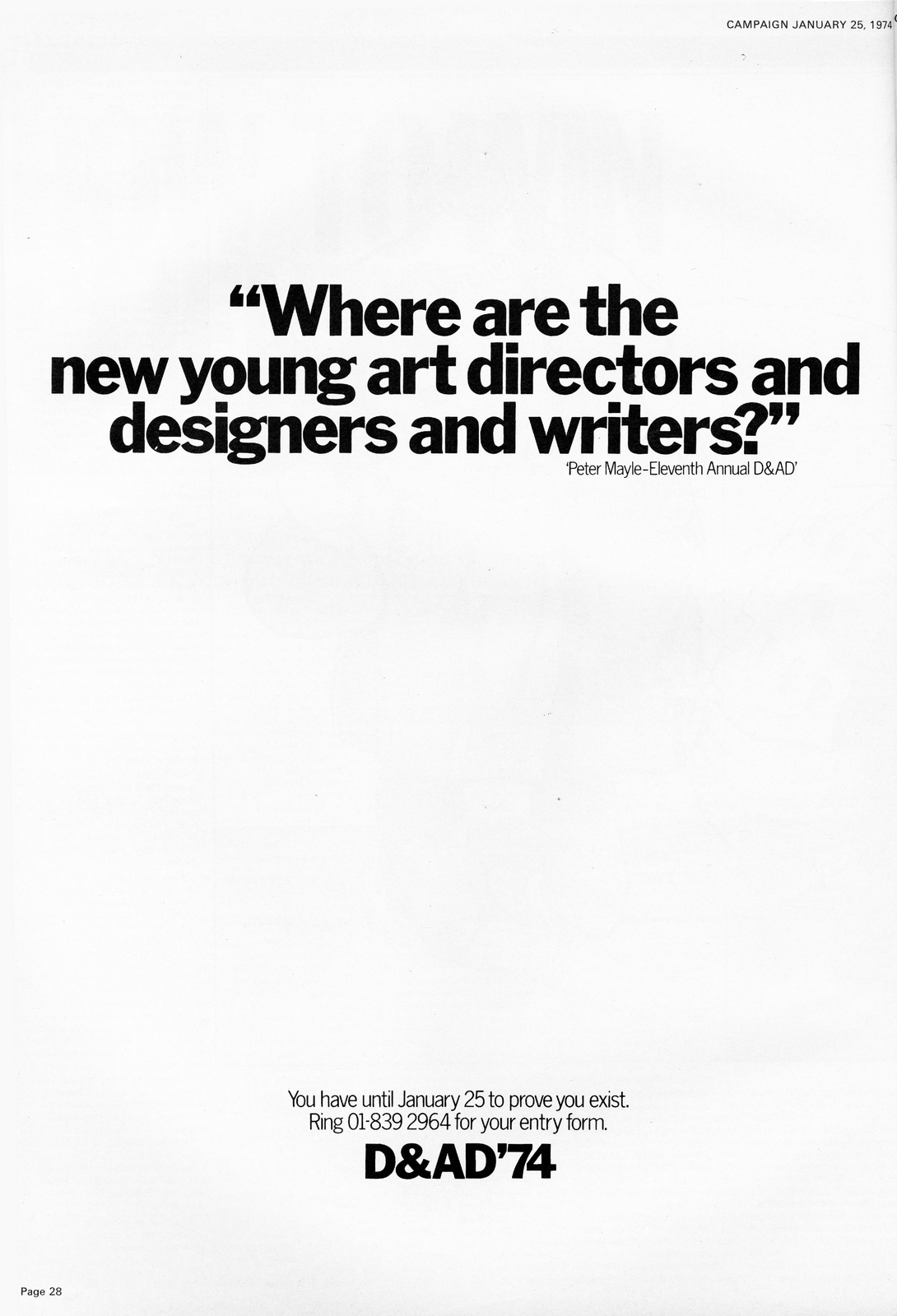
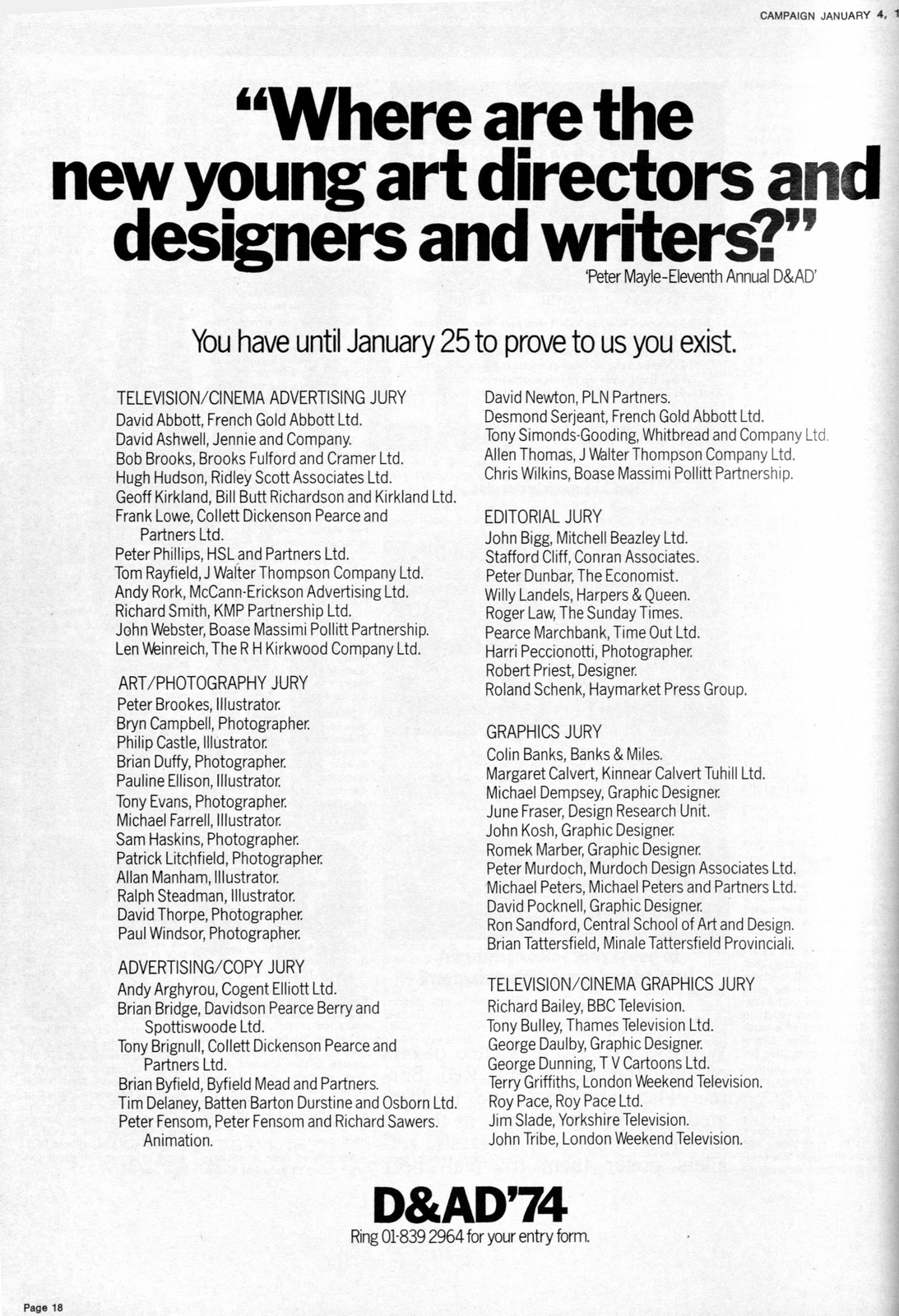
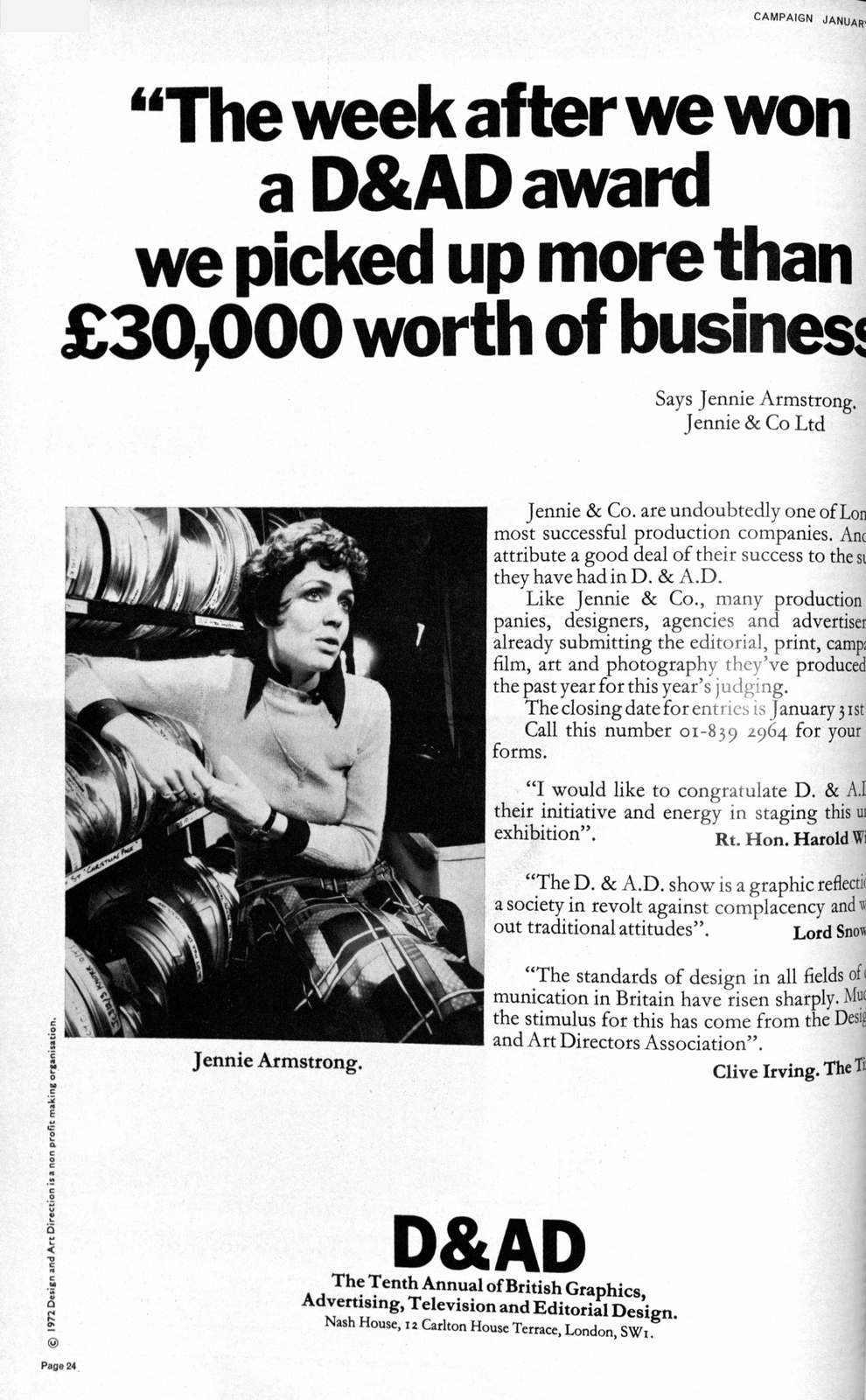
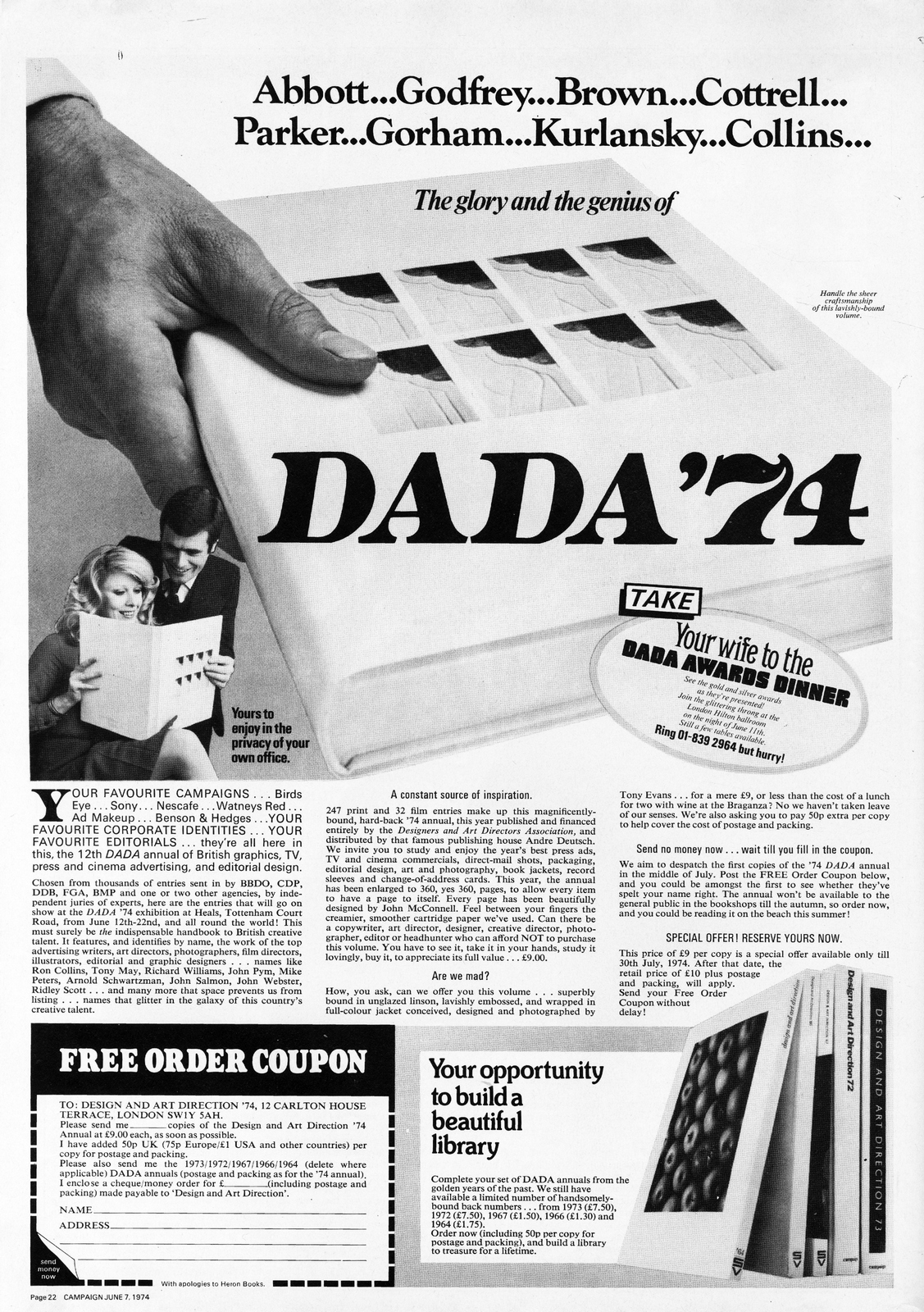
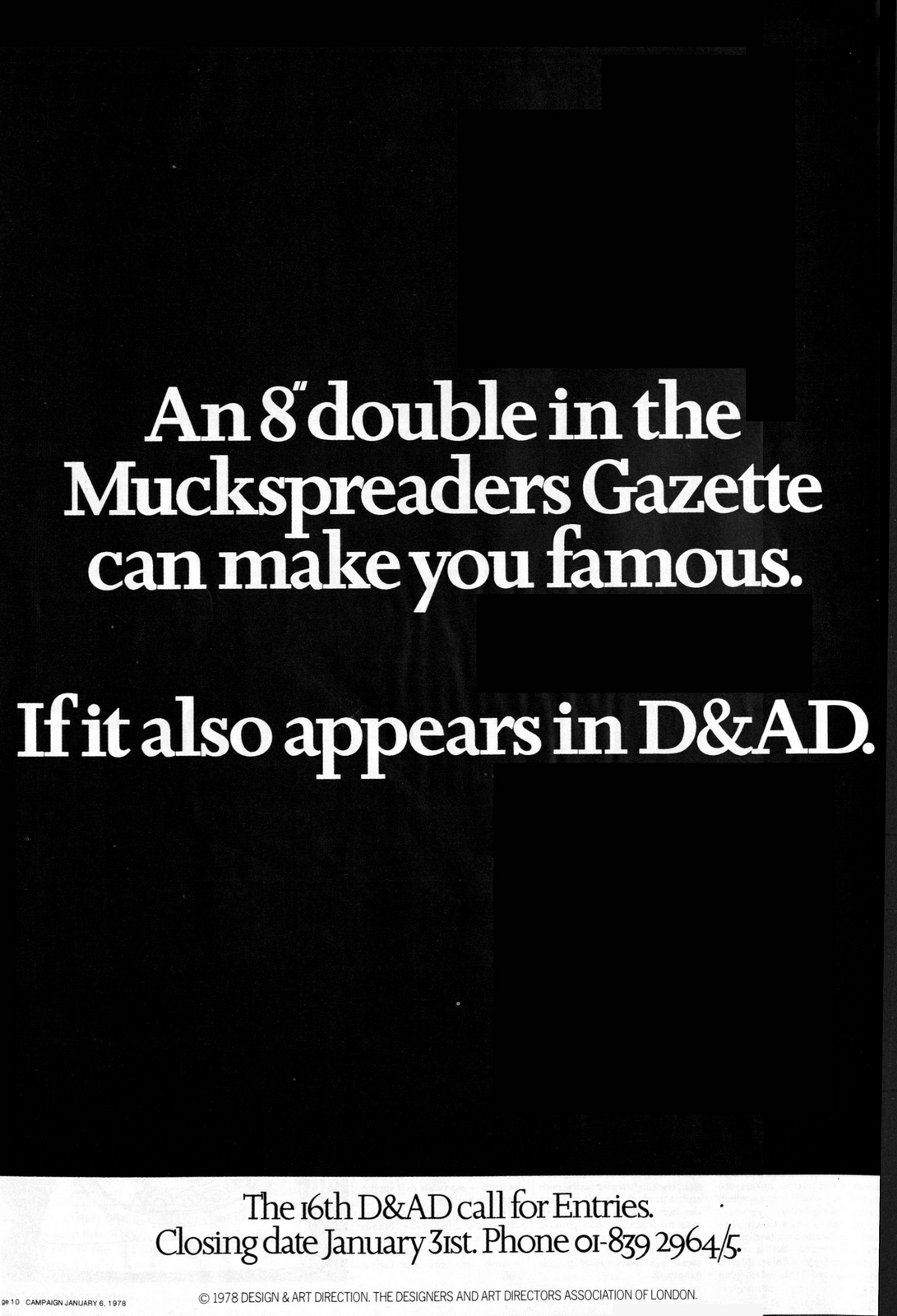
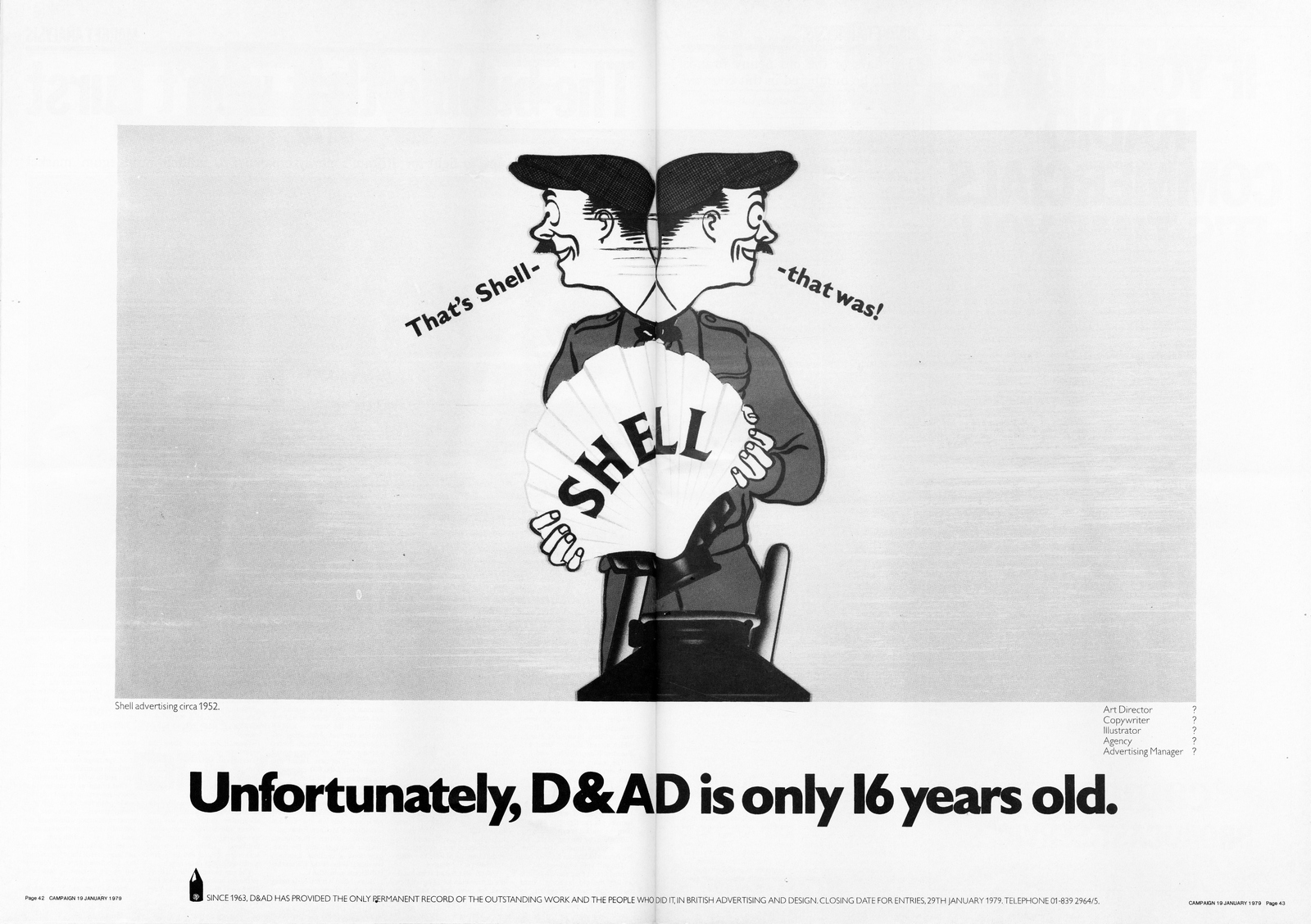
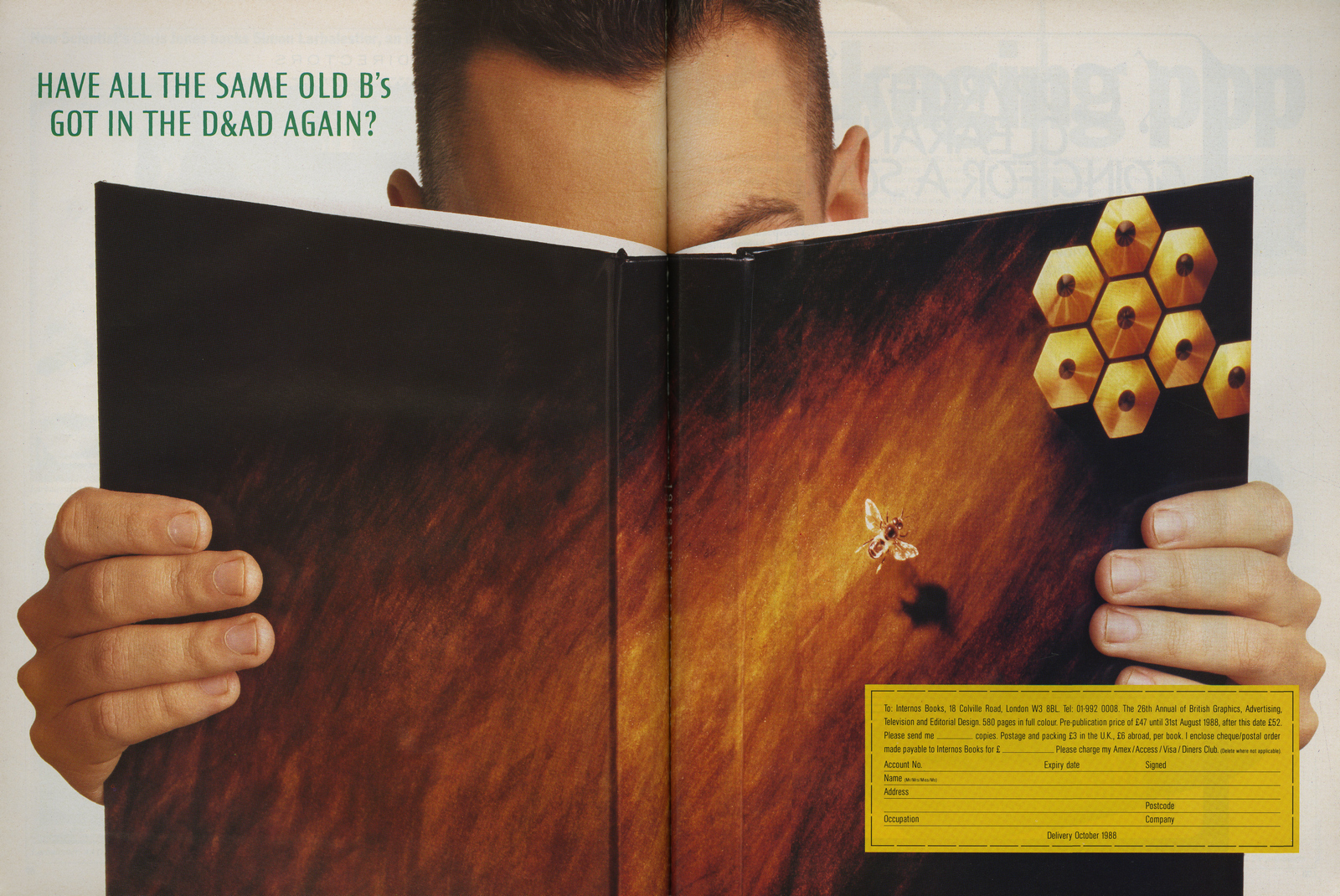
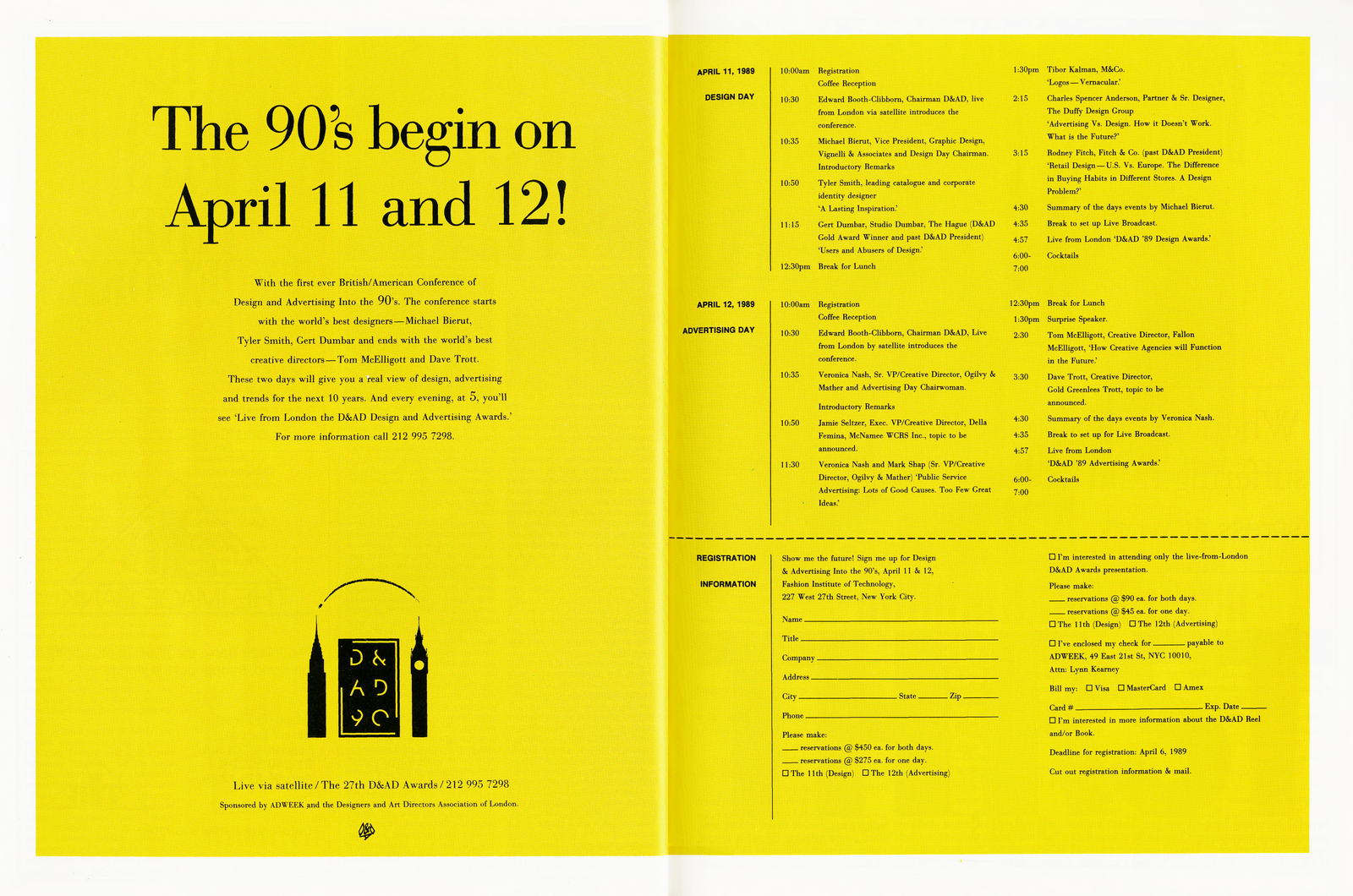
Their Call For Entries campaigns are the ideal place to start, when you’re trying to part people from their cash you’re forced to consider what you’re offering them in exchange.
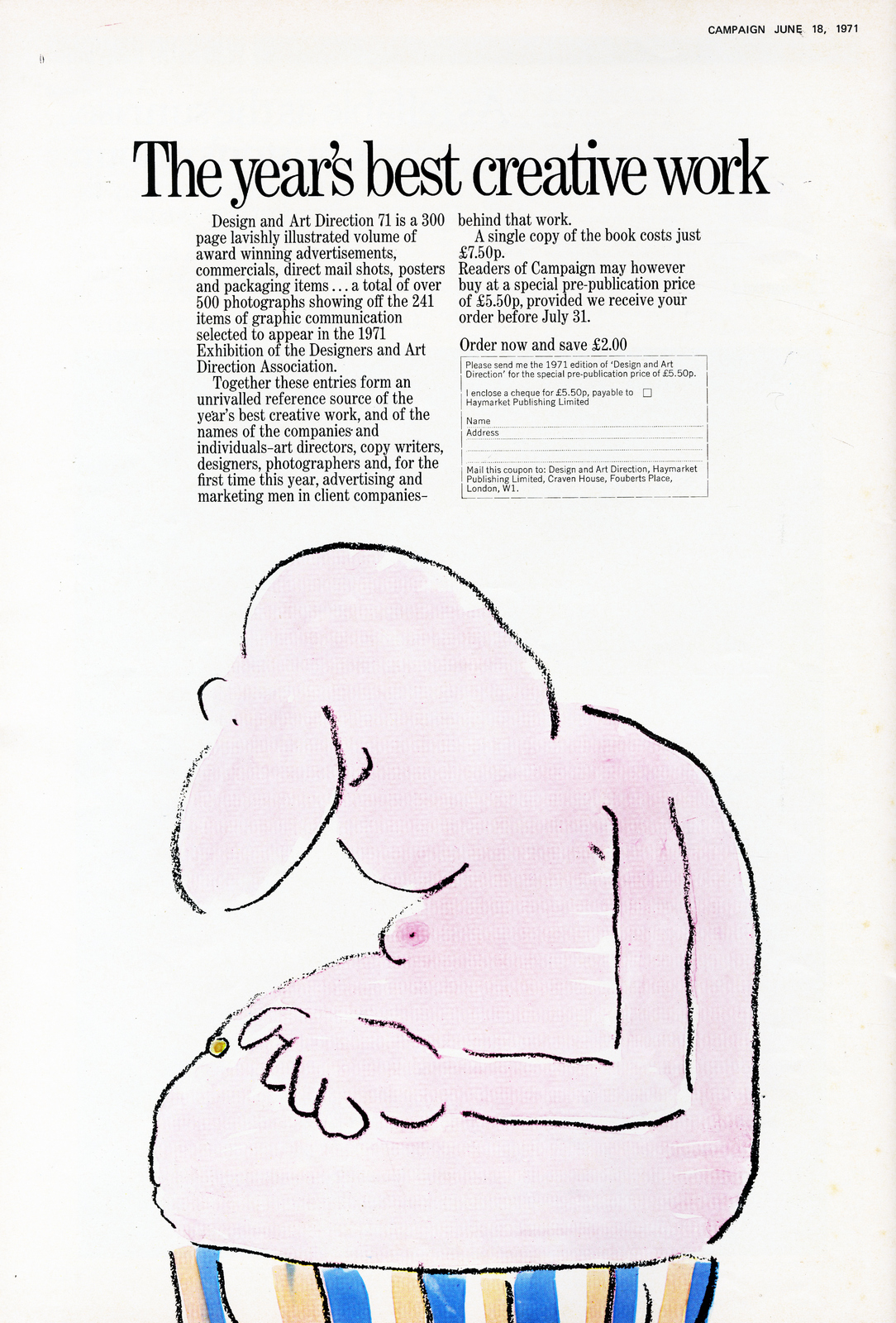
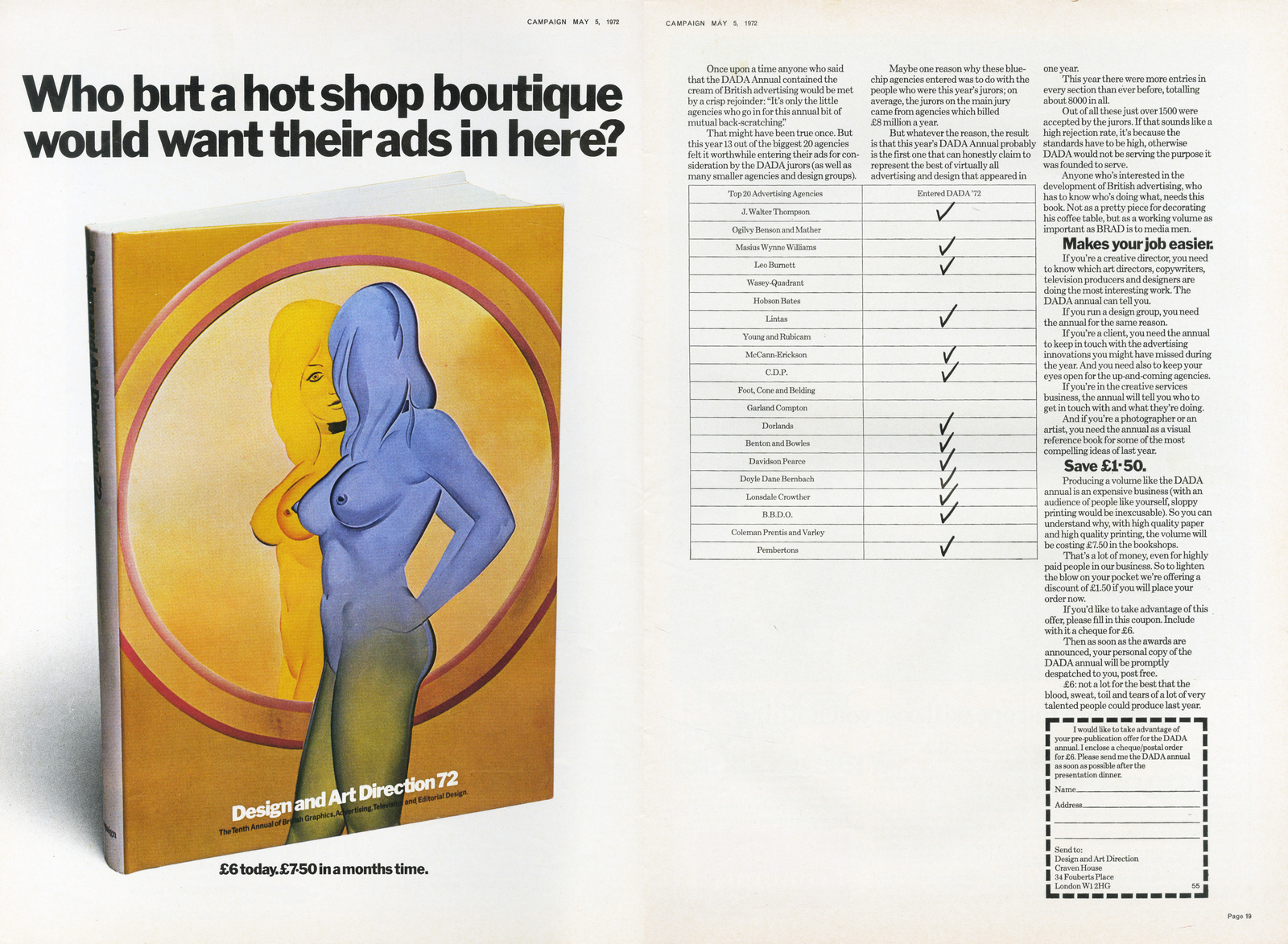
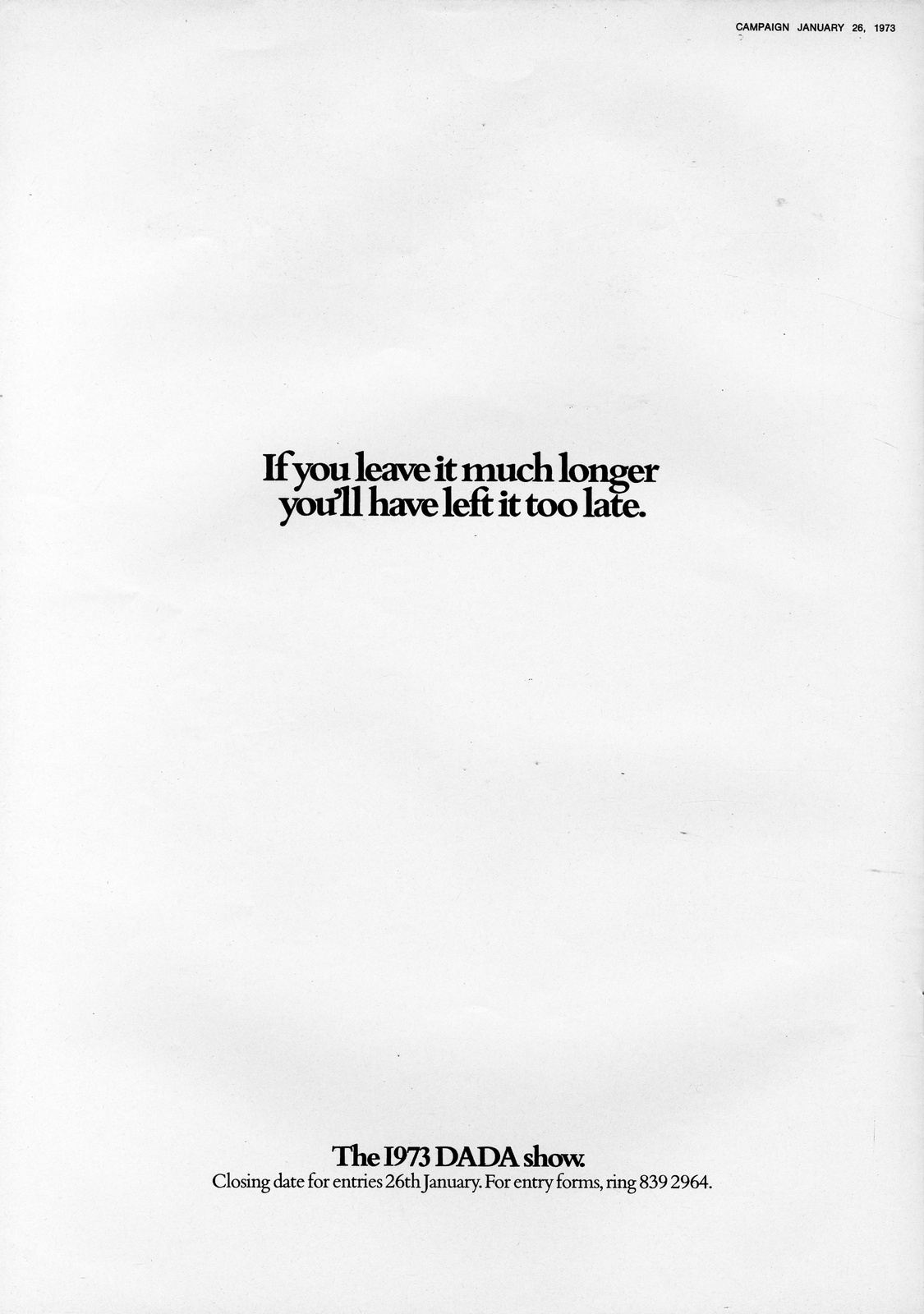
Some of the following ads are great, some are awful.
But lining them up, in chronological order, you can’t help but notice one thing.
They used to be created by the the best minds in the business; Bob Gill, Charles Saatchi, Tim Delaney, etc, now they seem to be done in-house.
So they don’t have ideas, insights or reasons why they deserve a bigger slice of an agencies awards budget than Cannes.
That may seem harsh, but if there’s one organisation out there you’d hope would choose excellence over the convenience of bringing things in-house, you’d hope it would be D&AD.
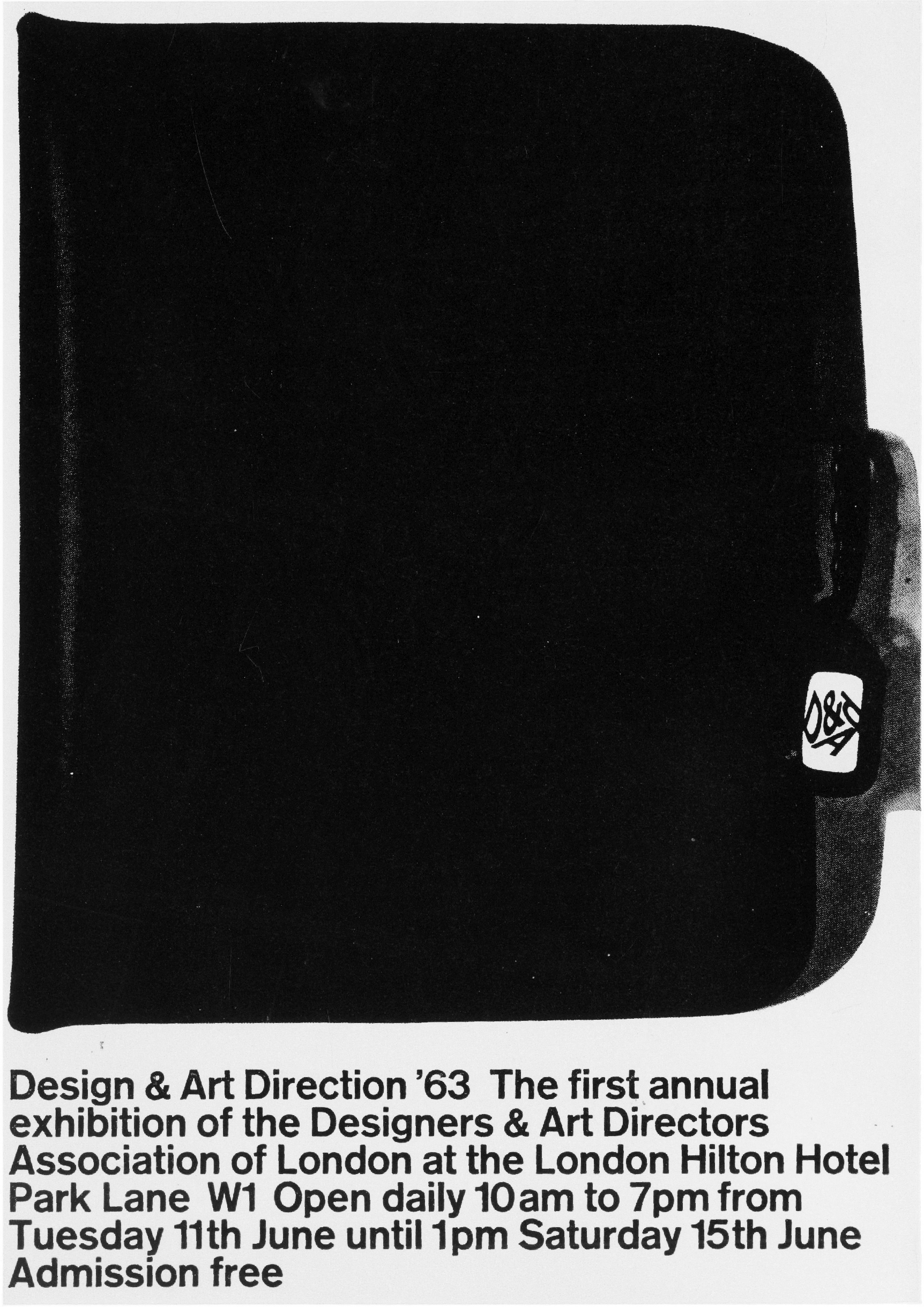
1963.
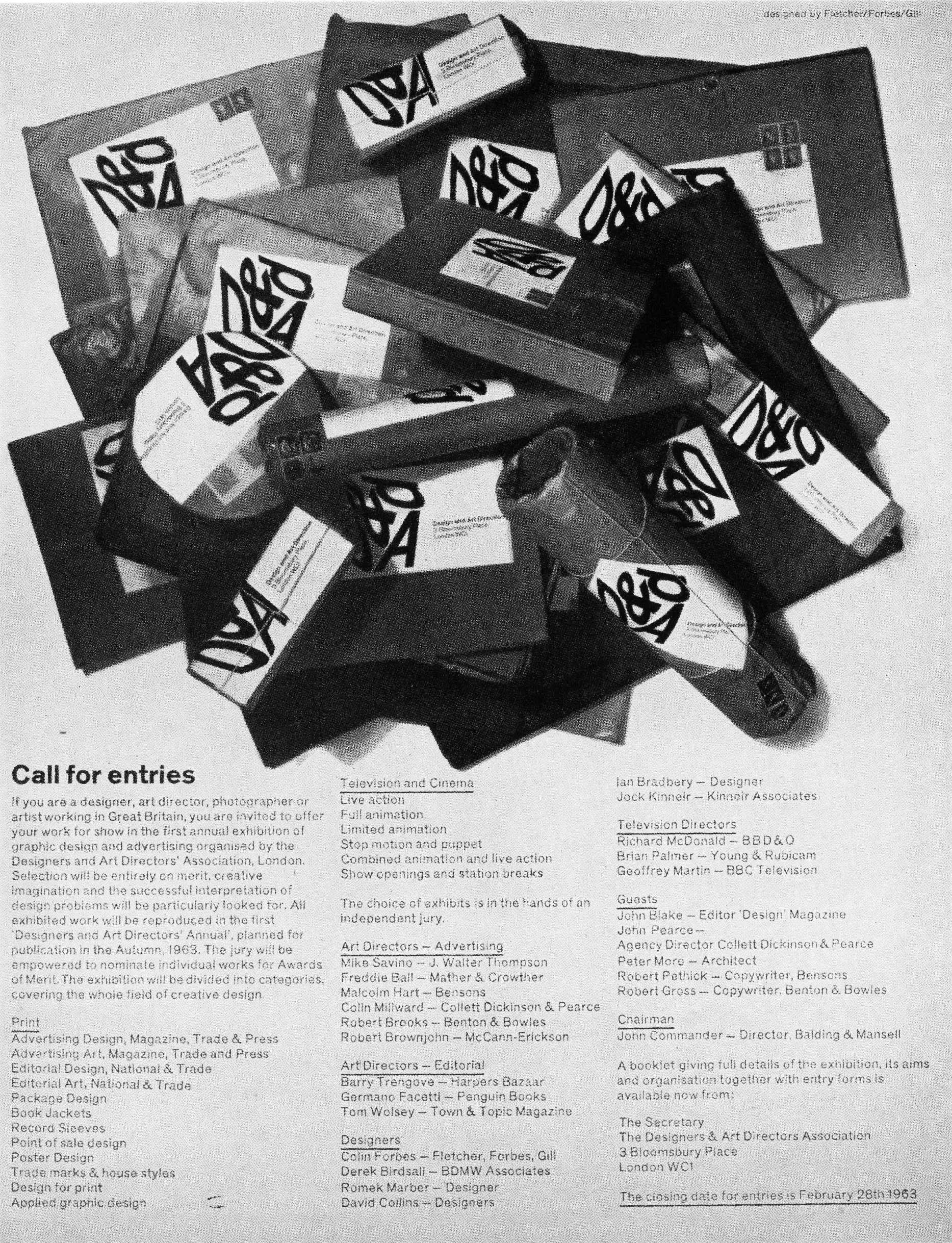
1965.

1966.

1967.


1969.






1972.

1973.
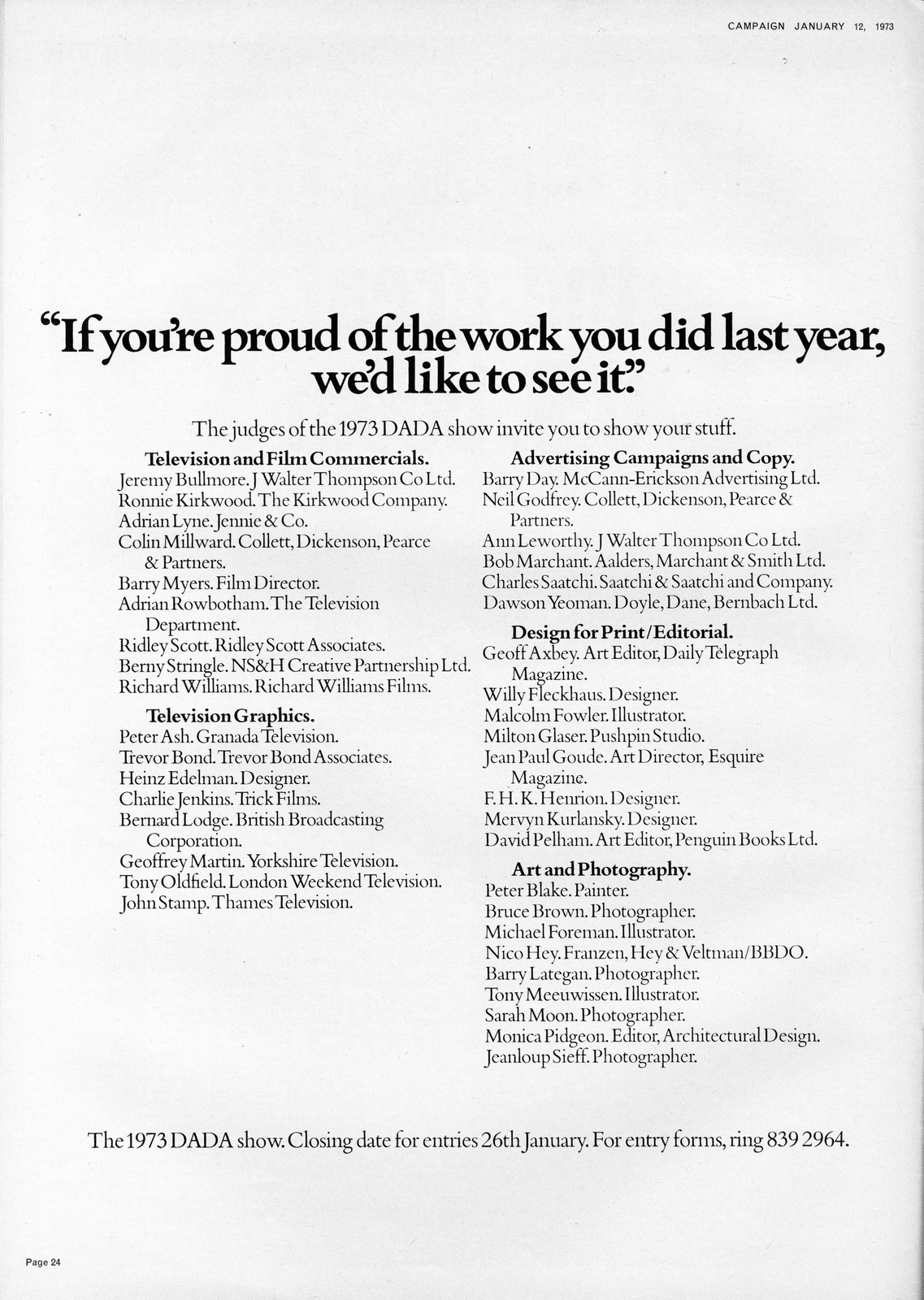

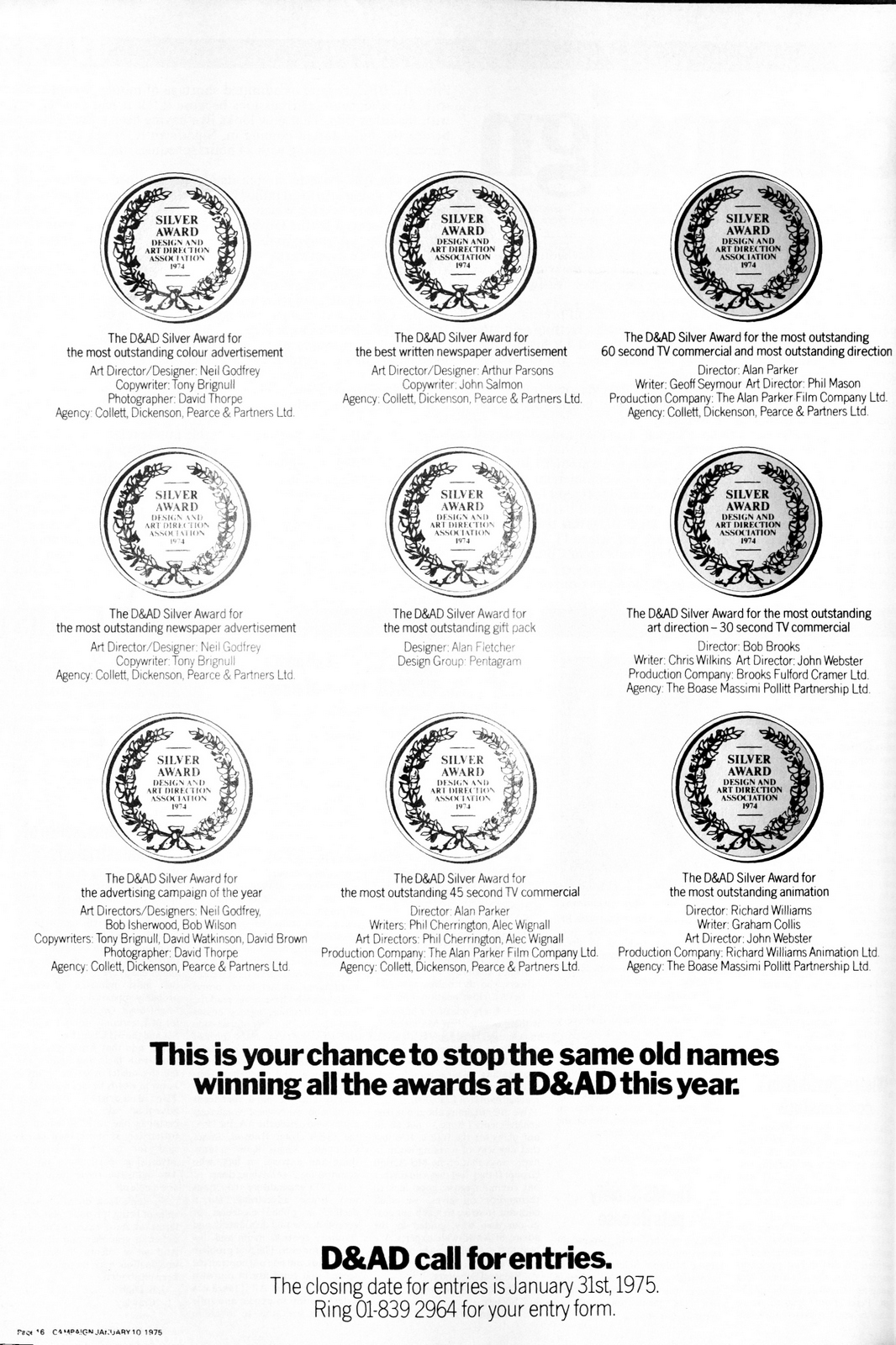
1974.

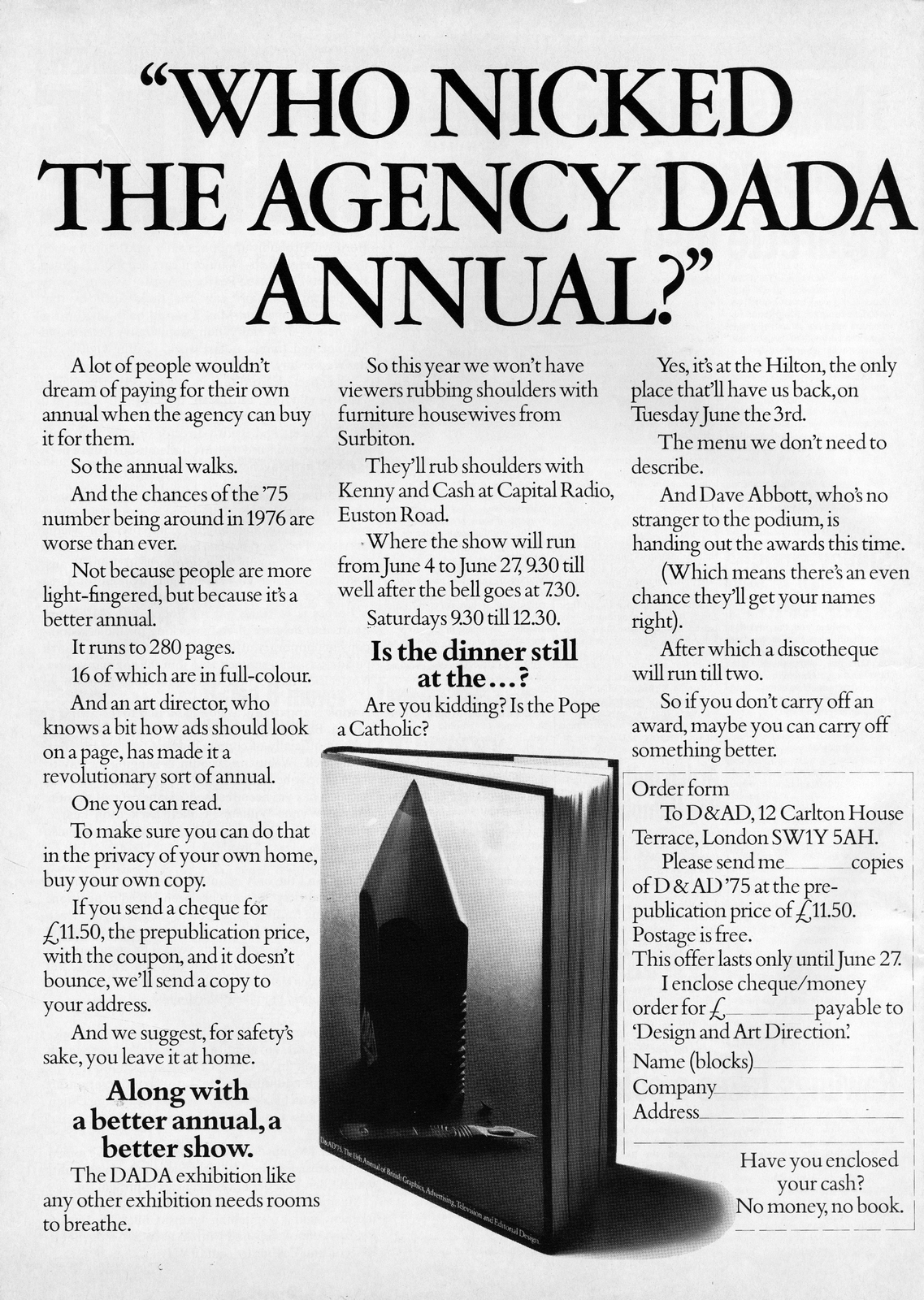
1975.

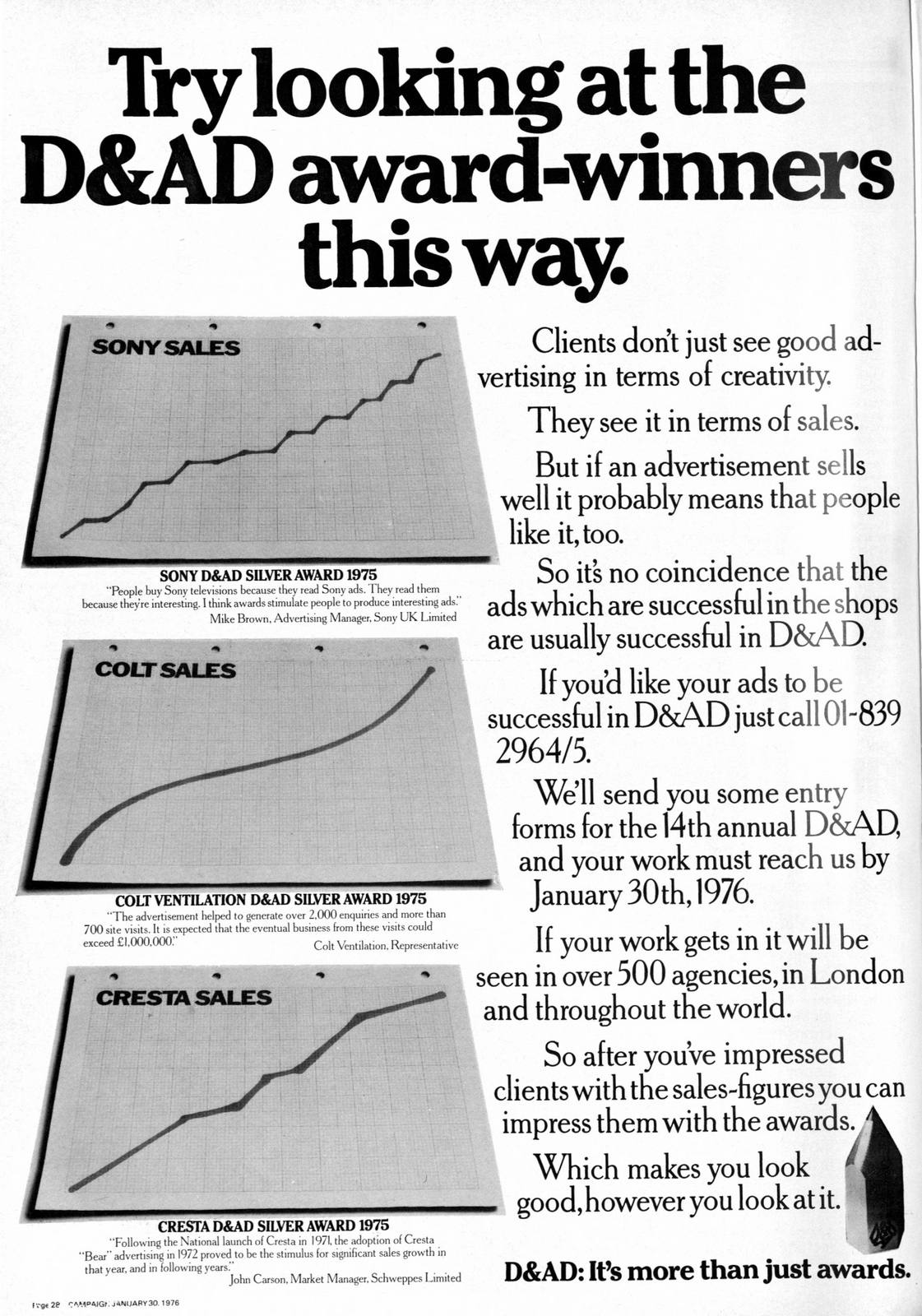
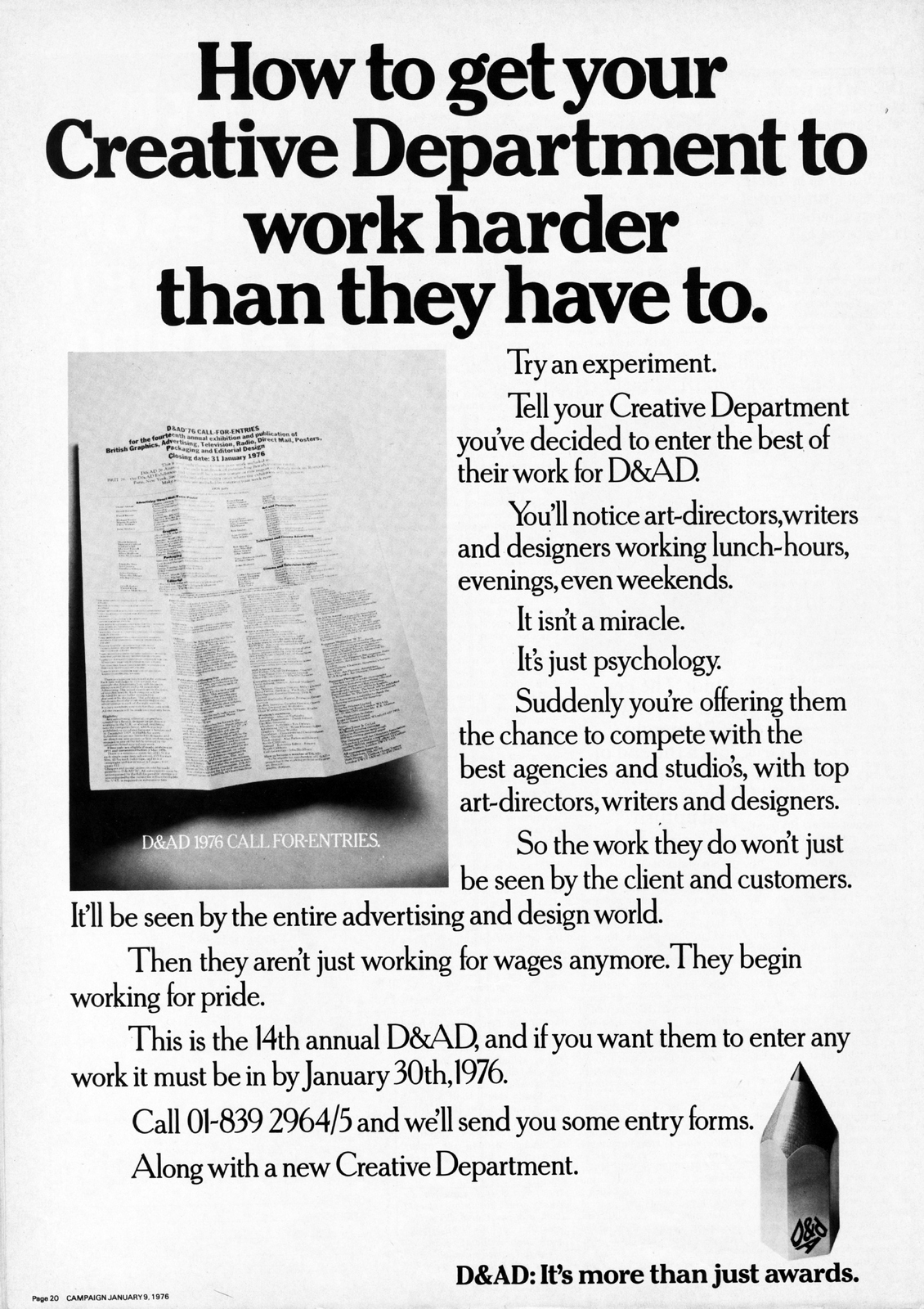
1976.


1977.
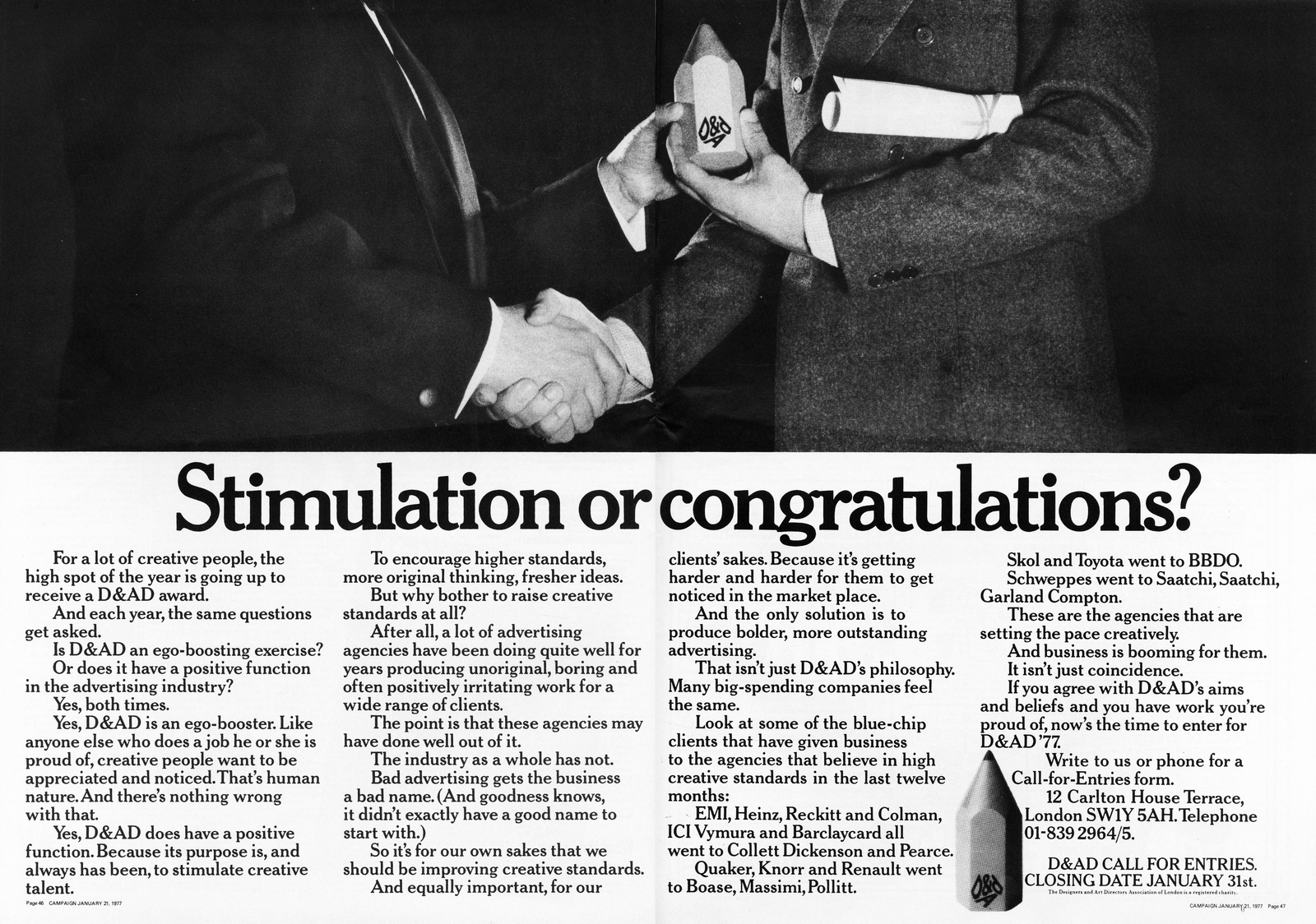

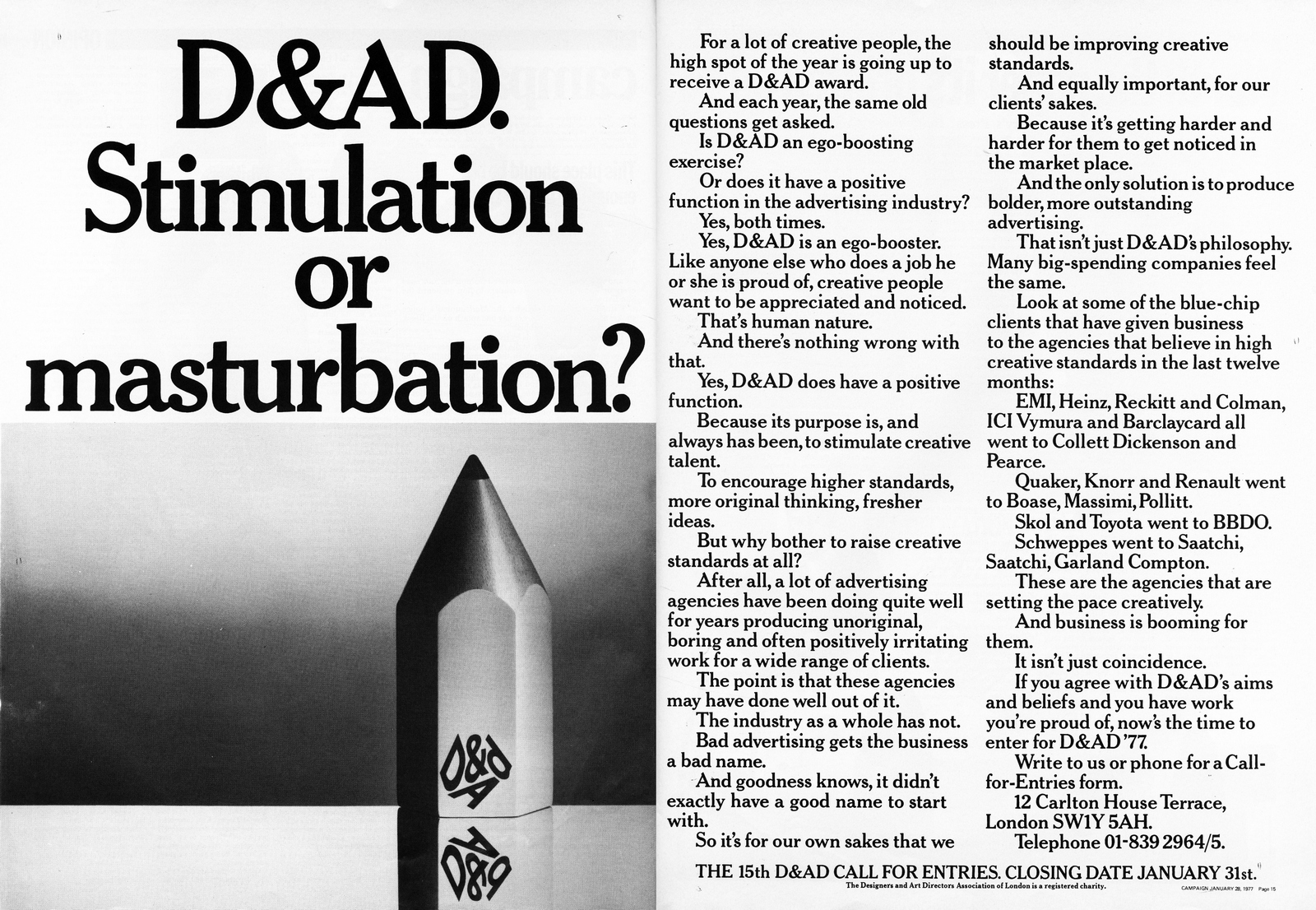
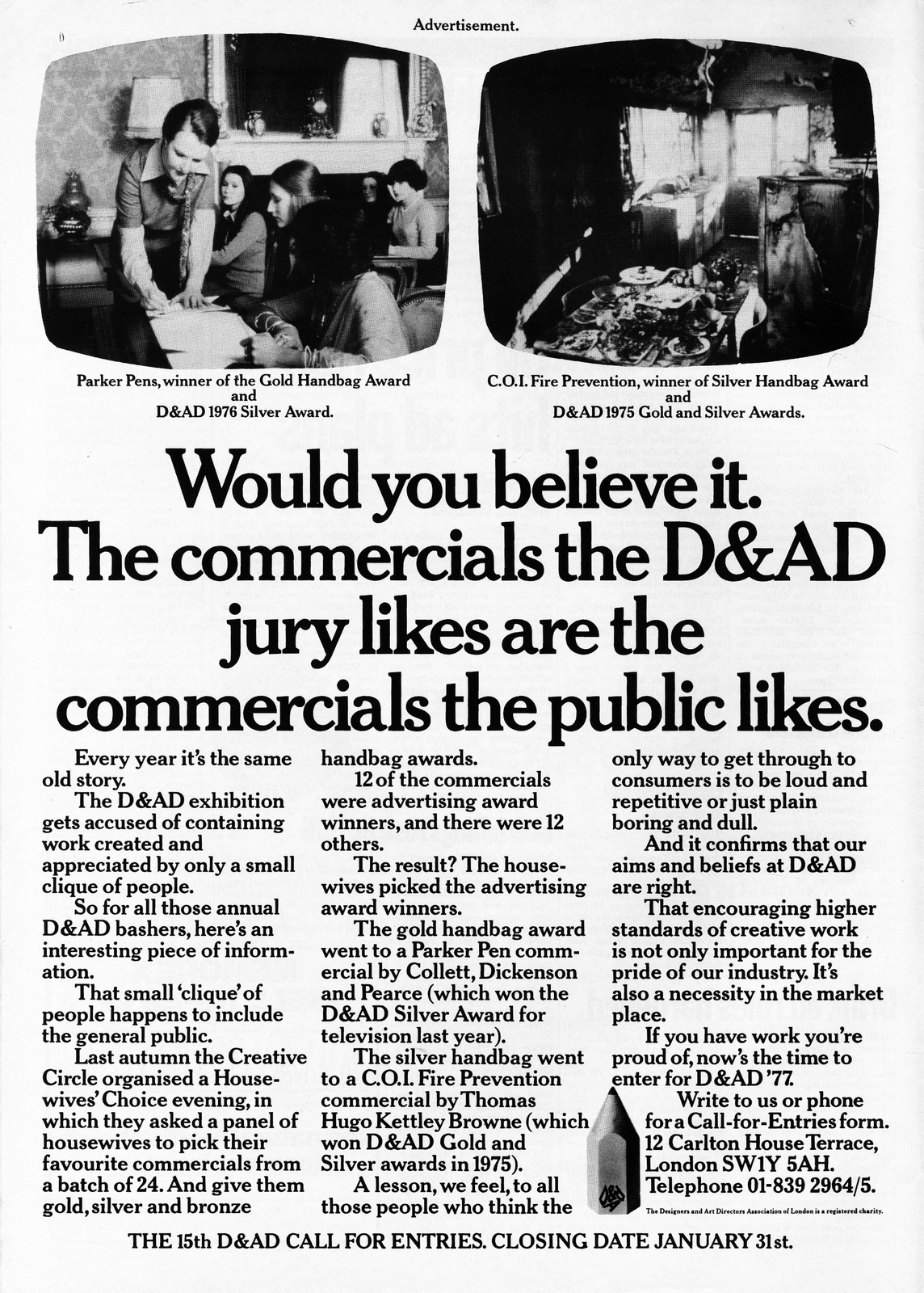
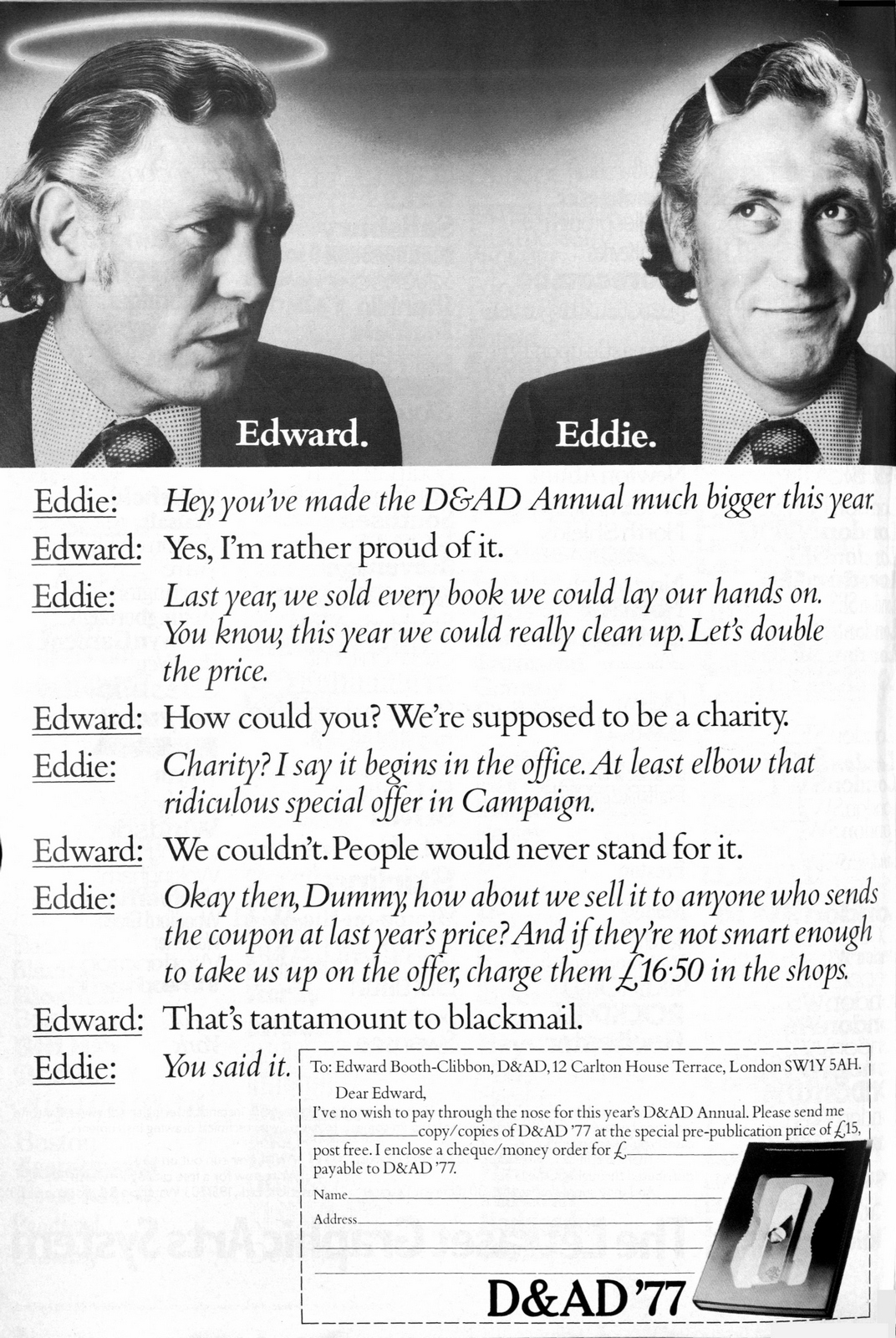
1978.


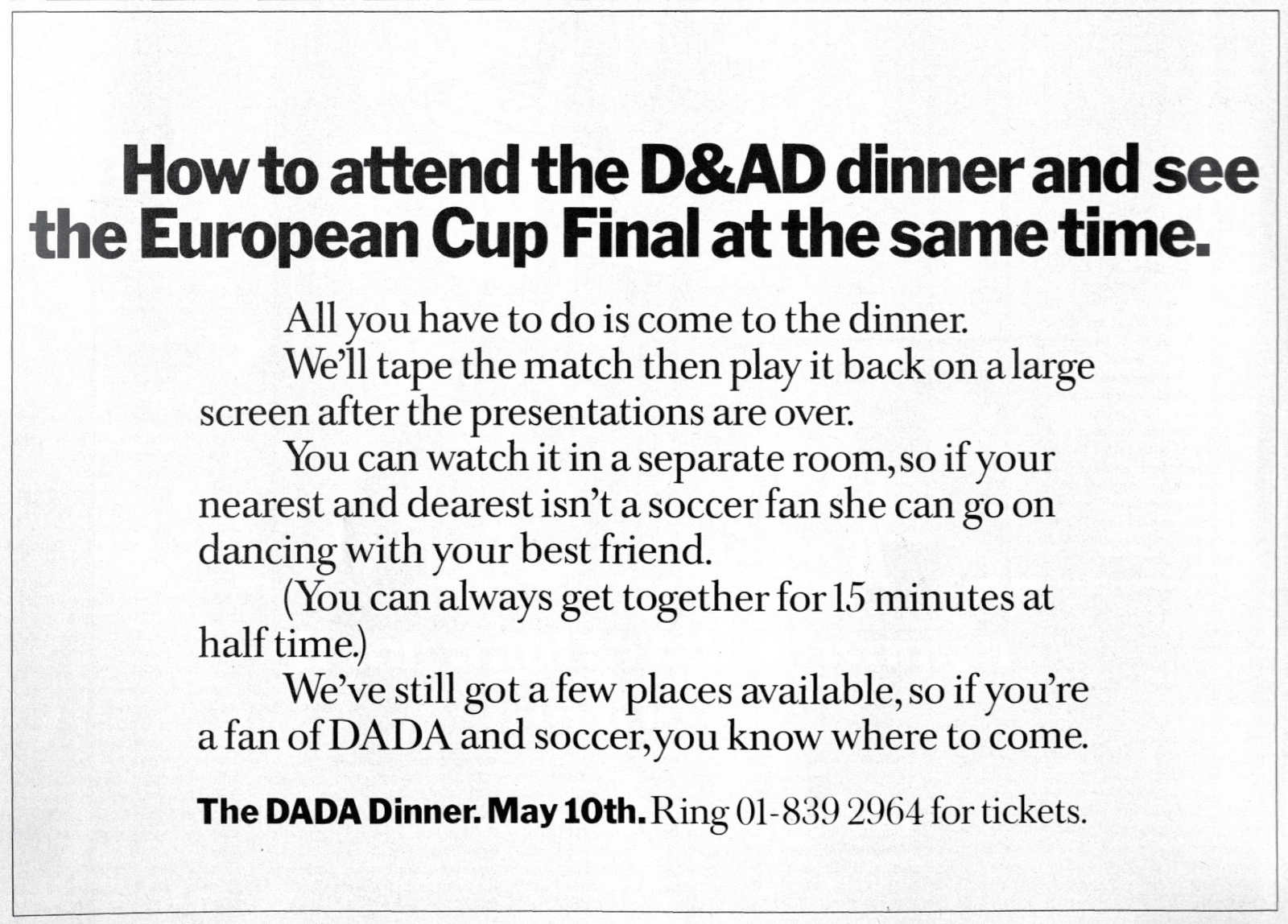

1979.


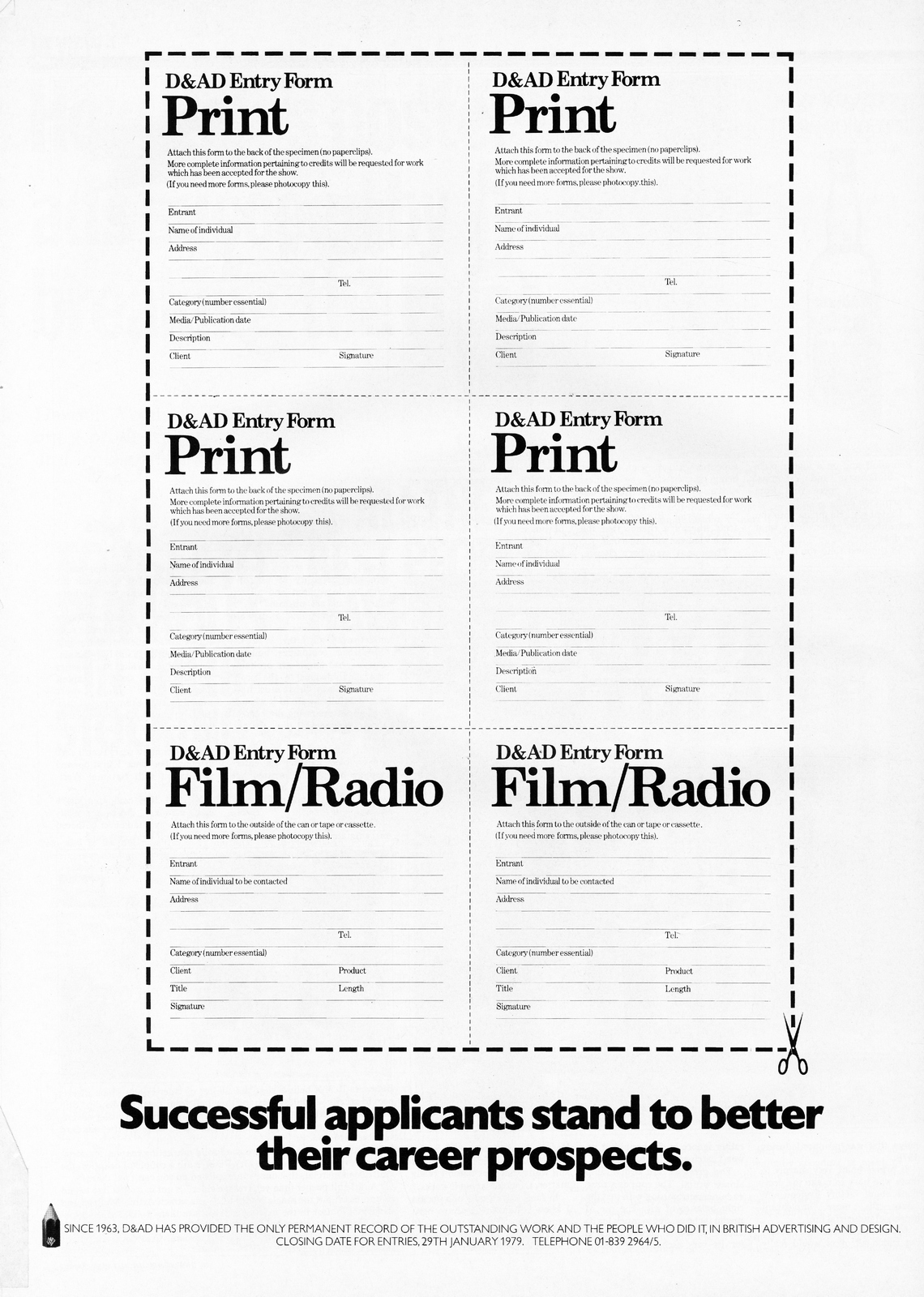
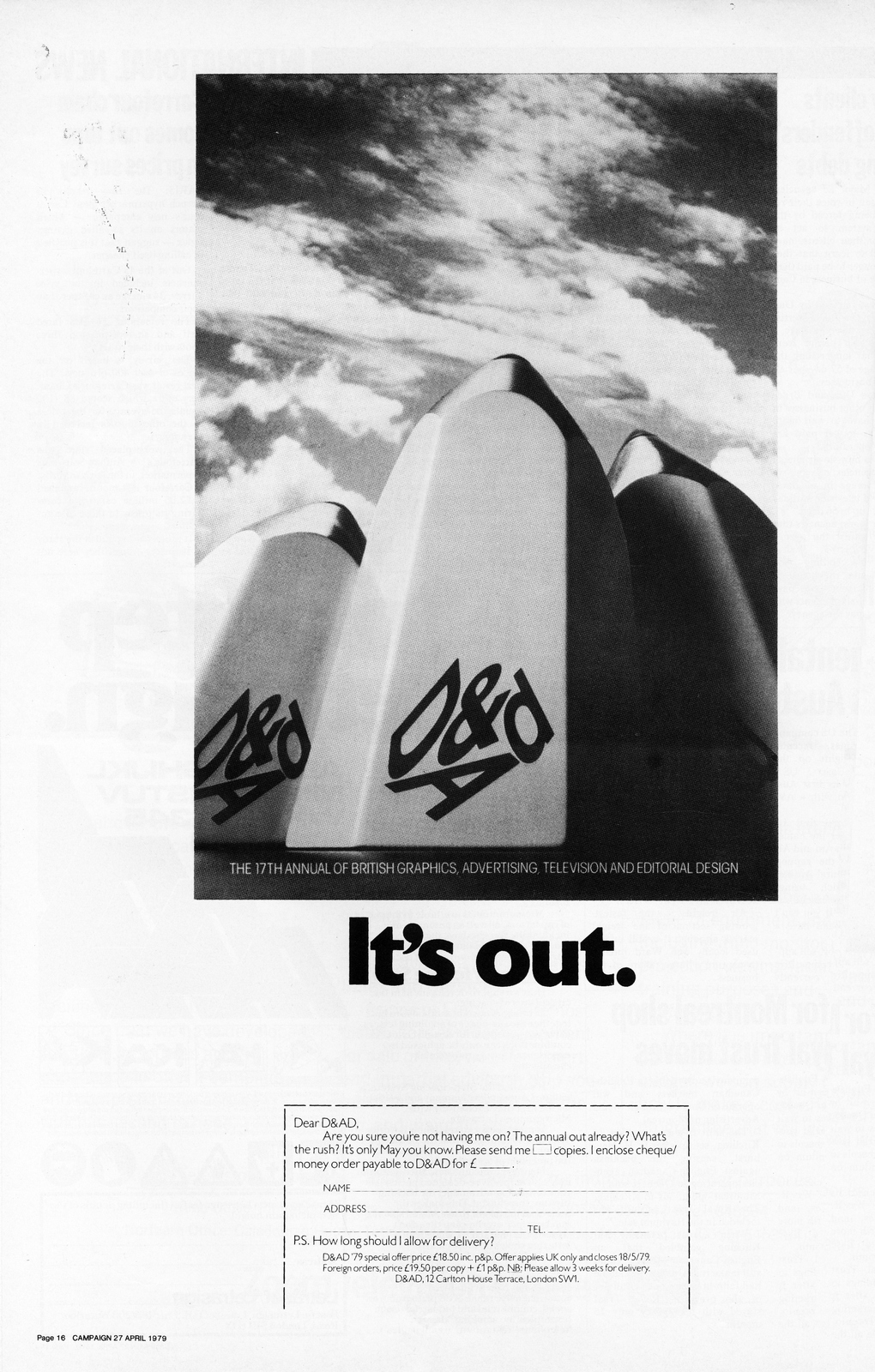
1980.
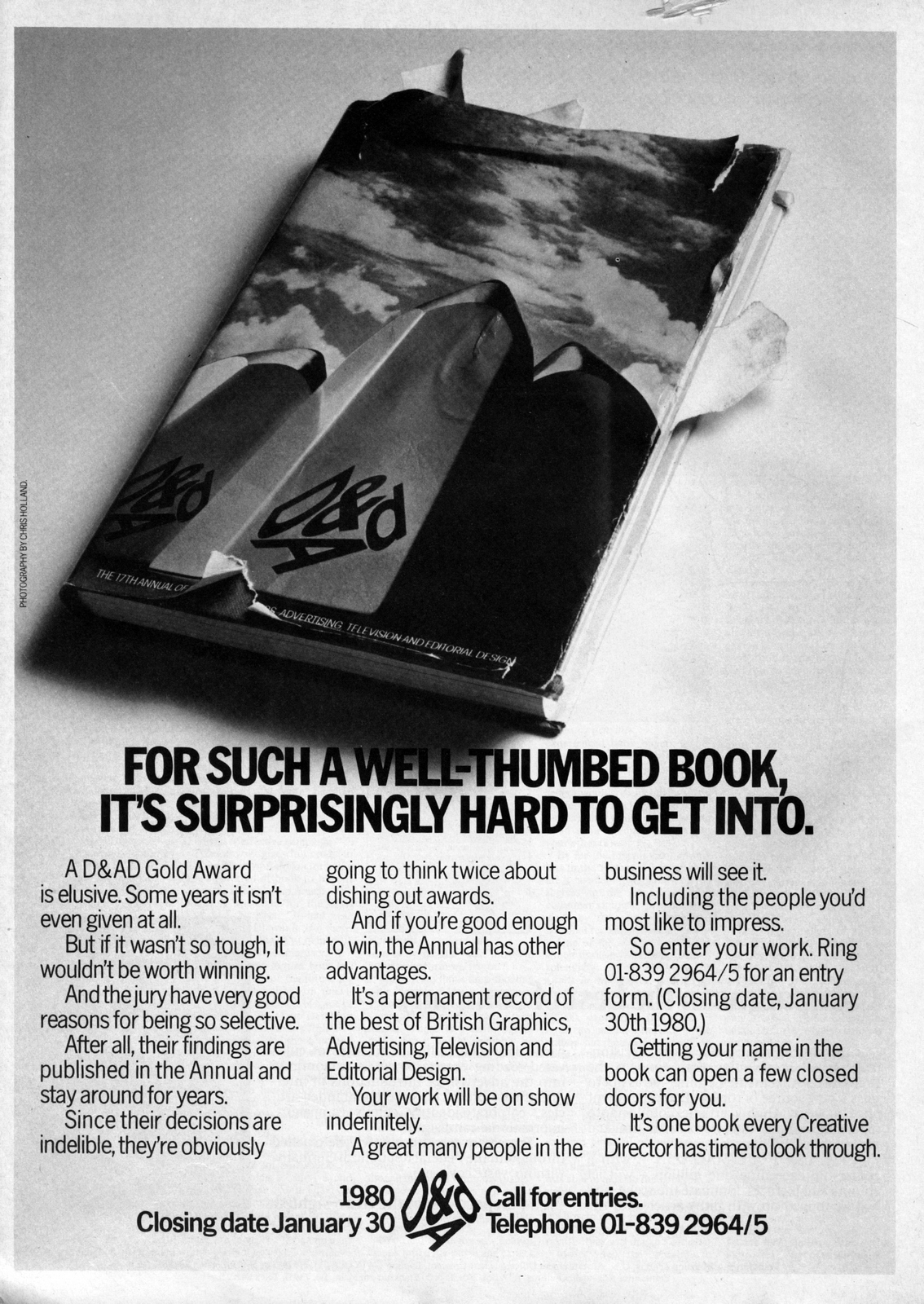

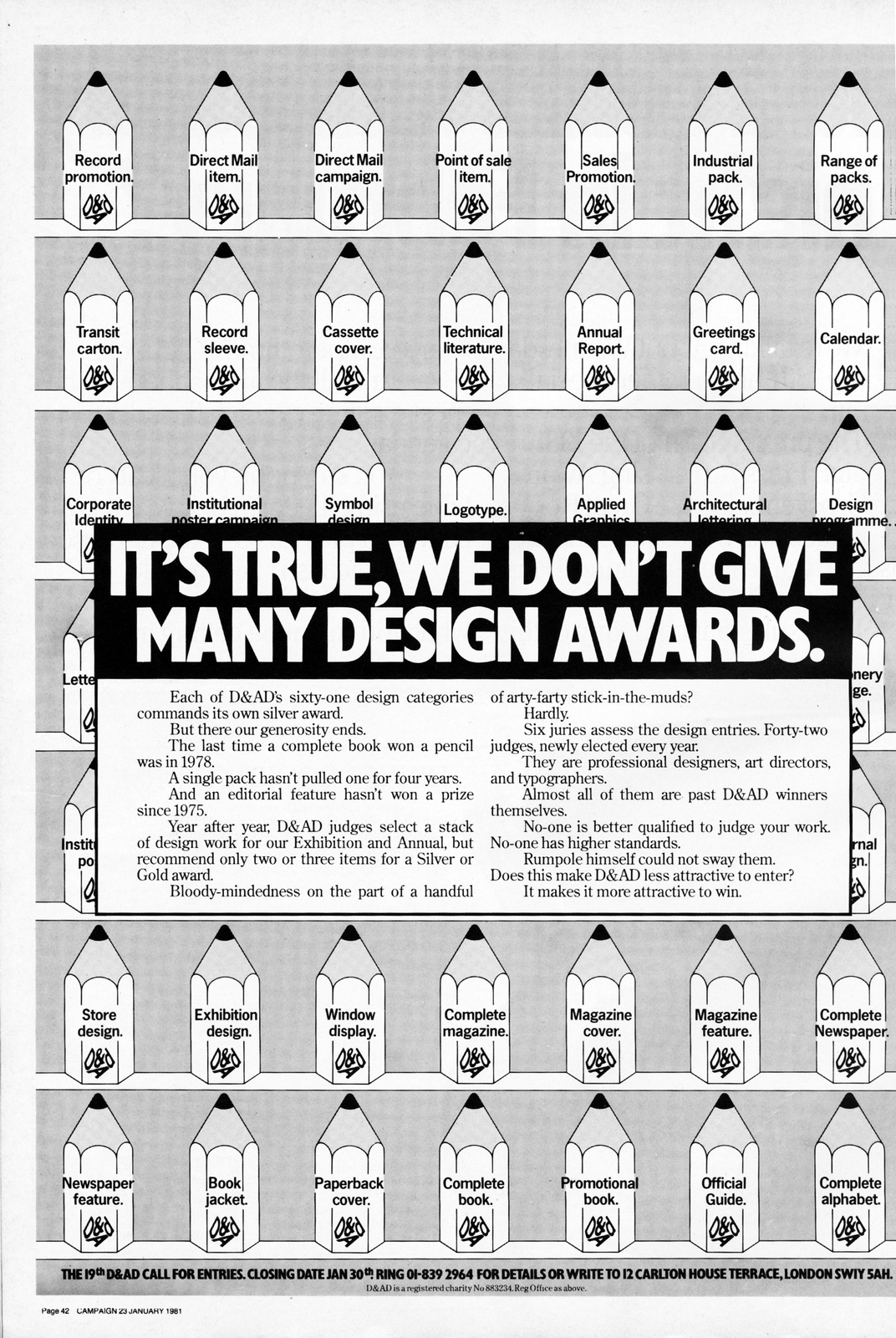
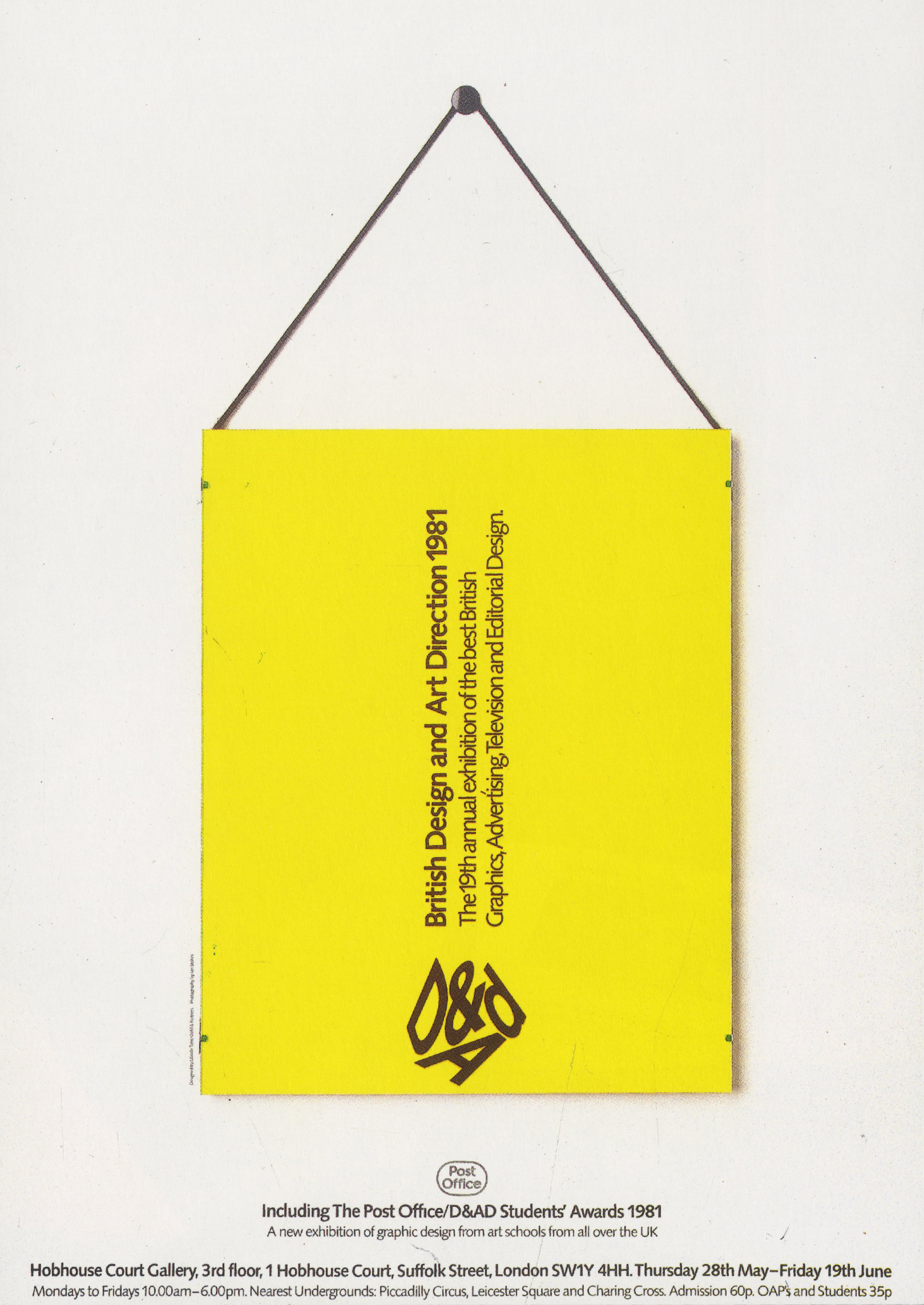
1981.

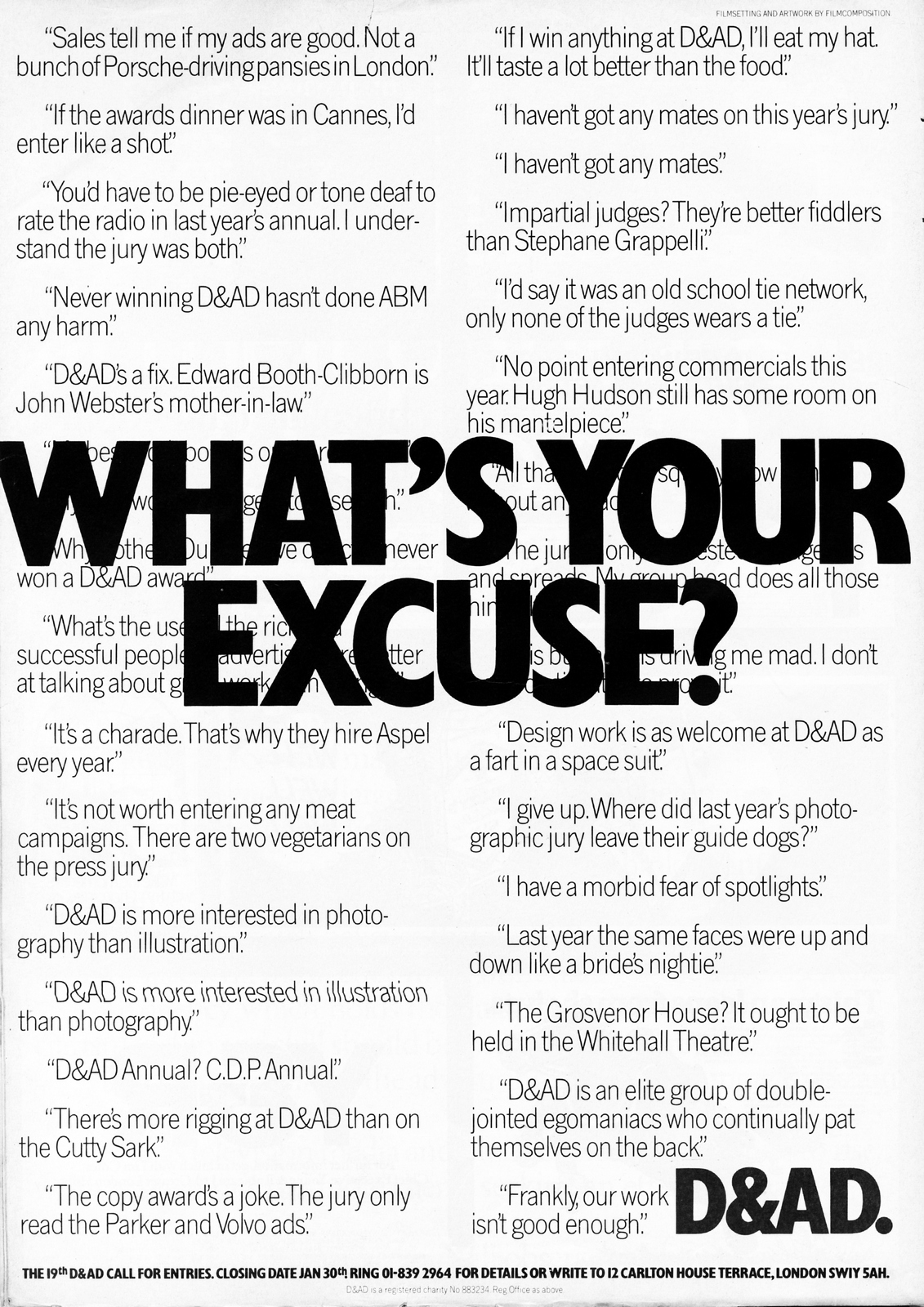
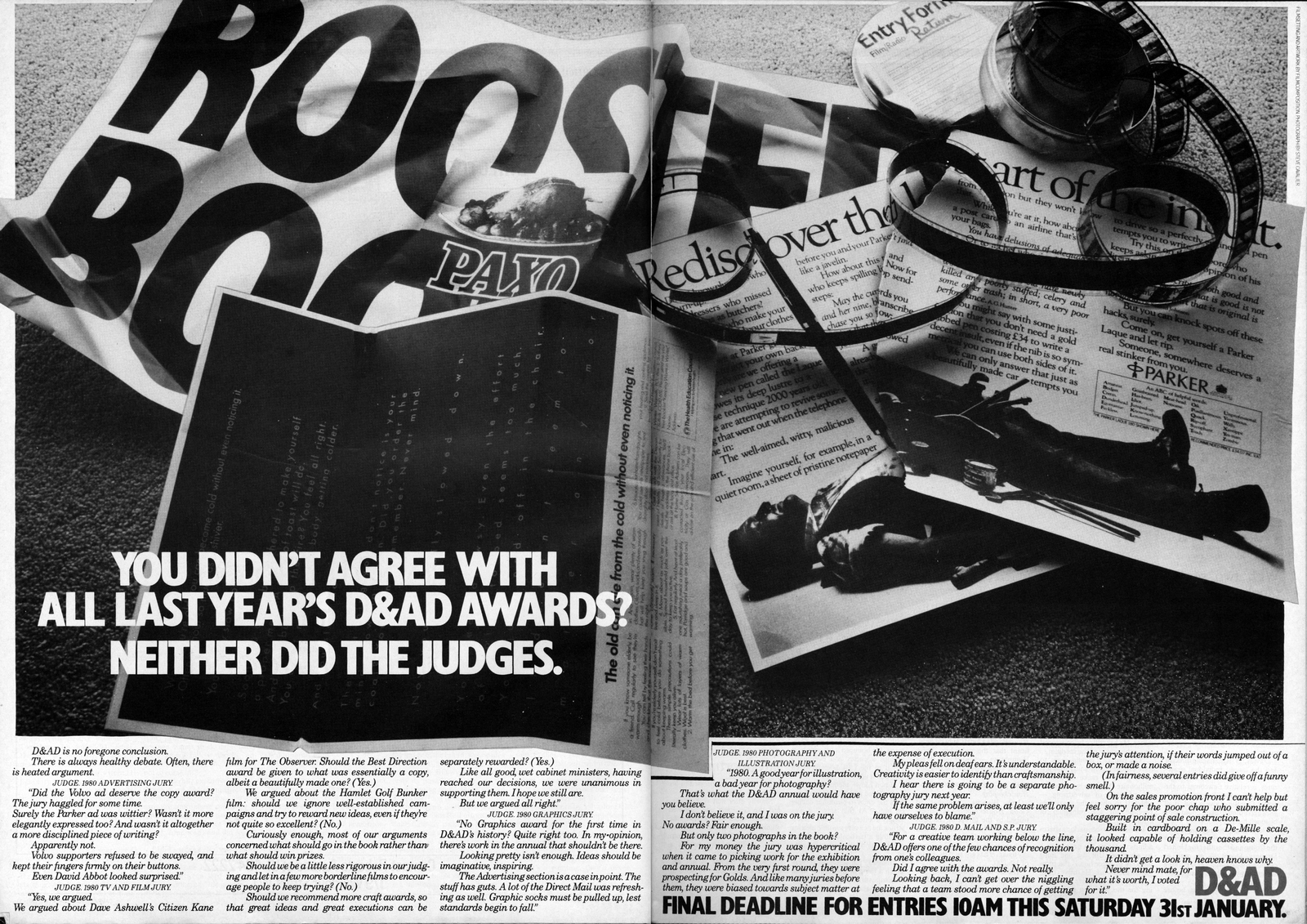


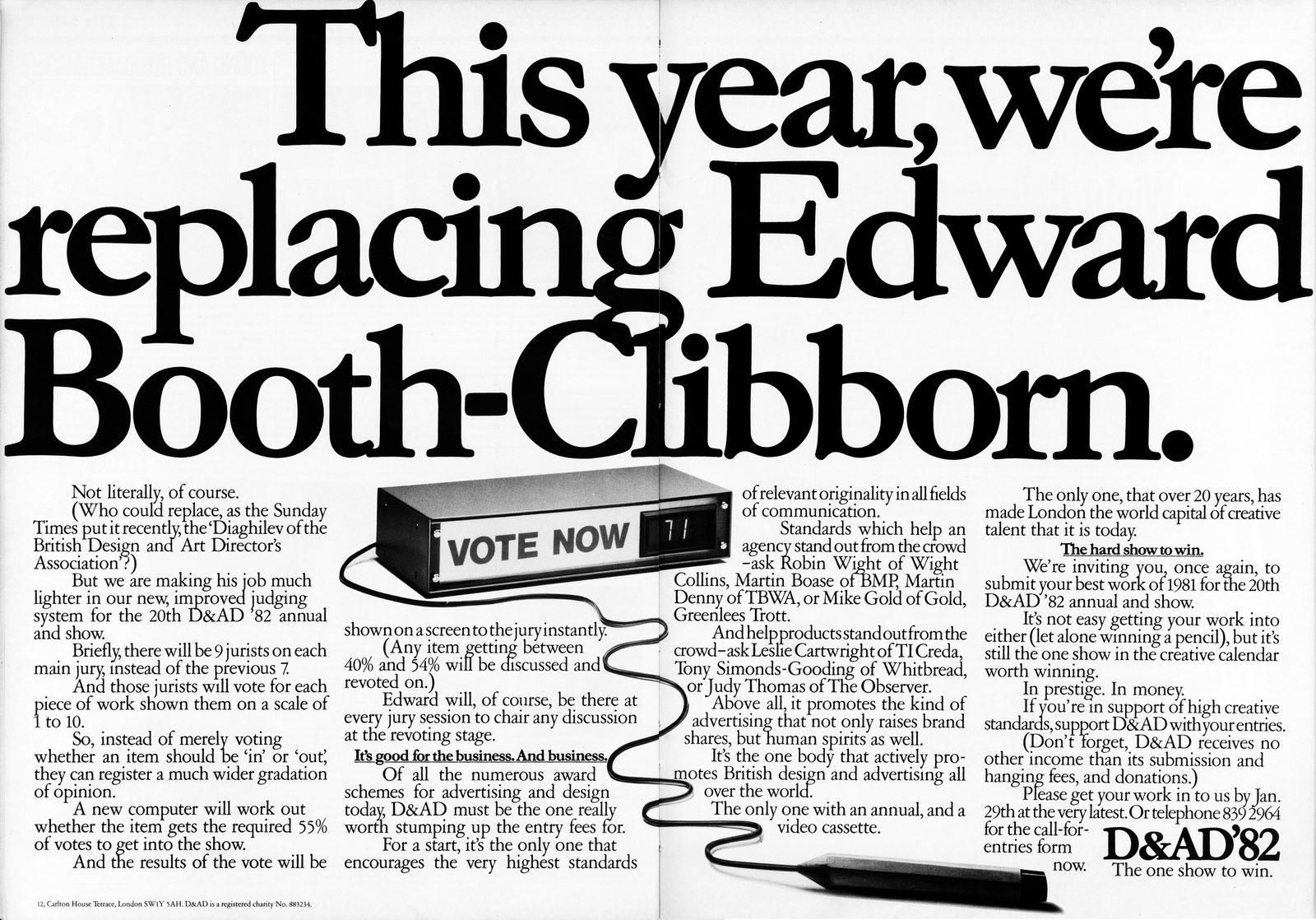
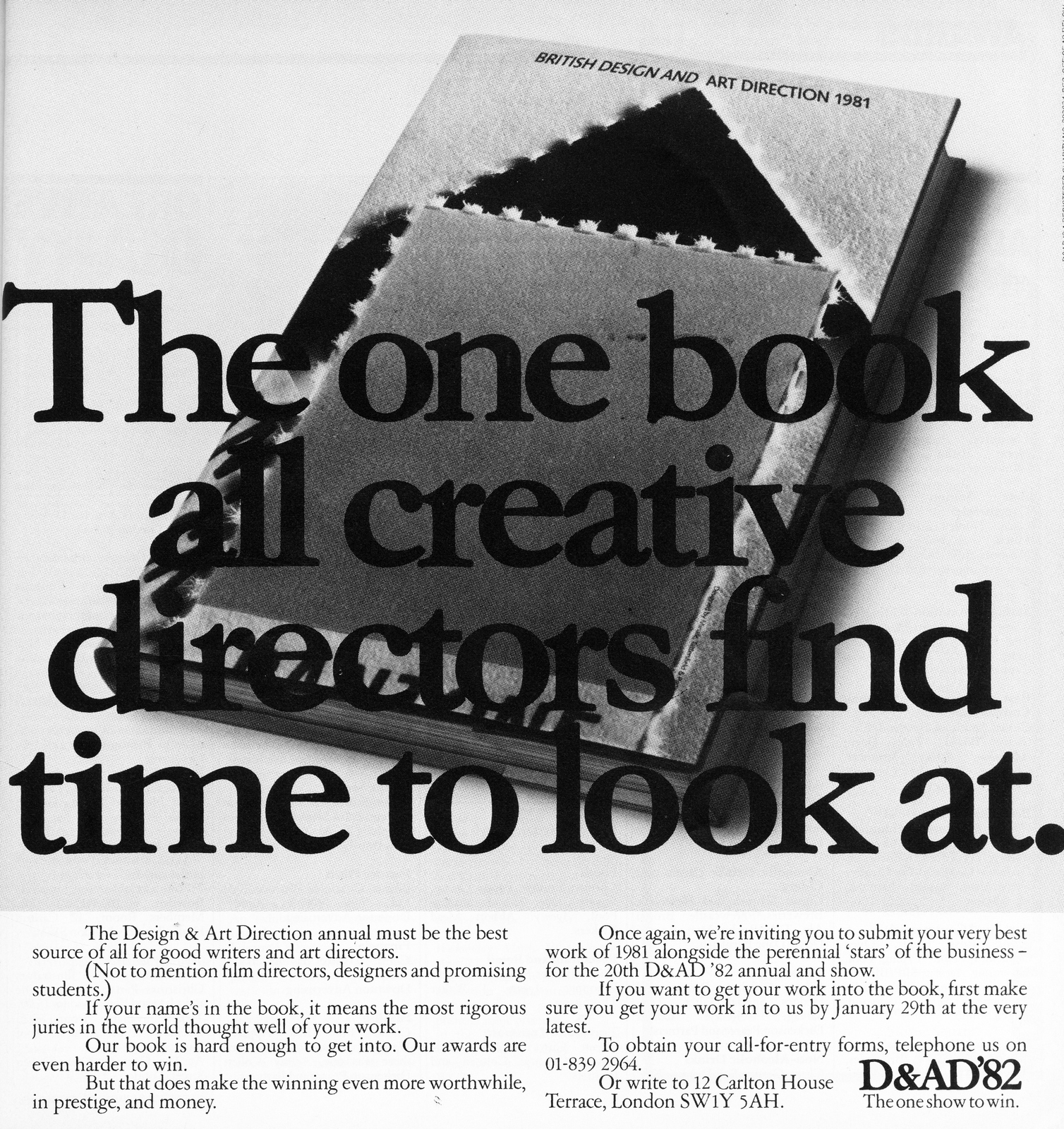
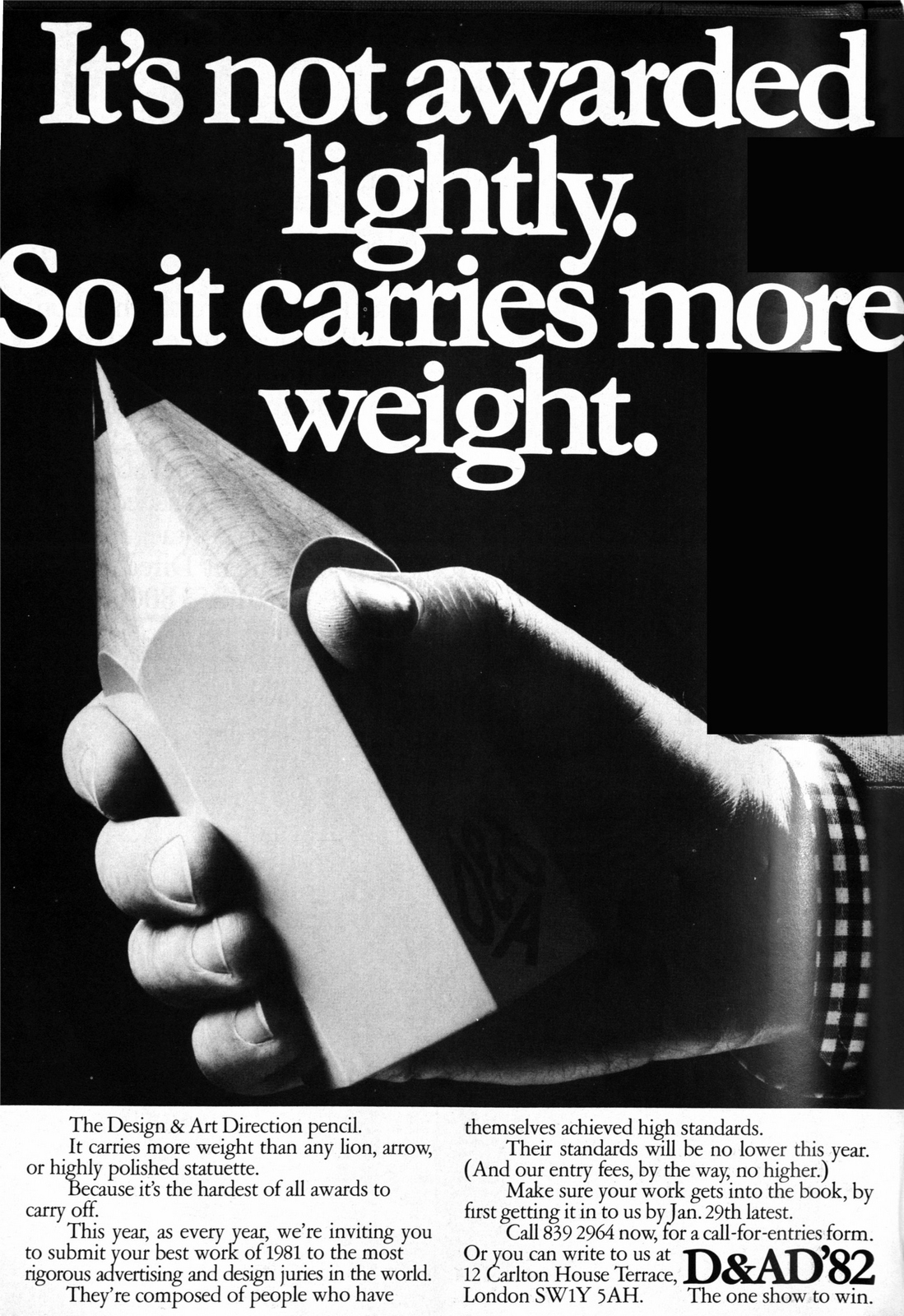
1982.


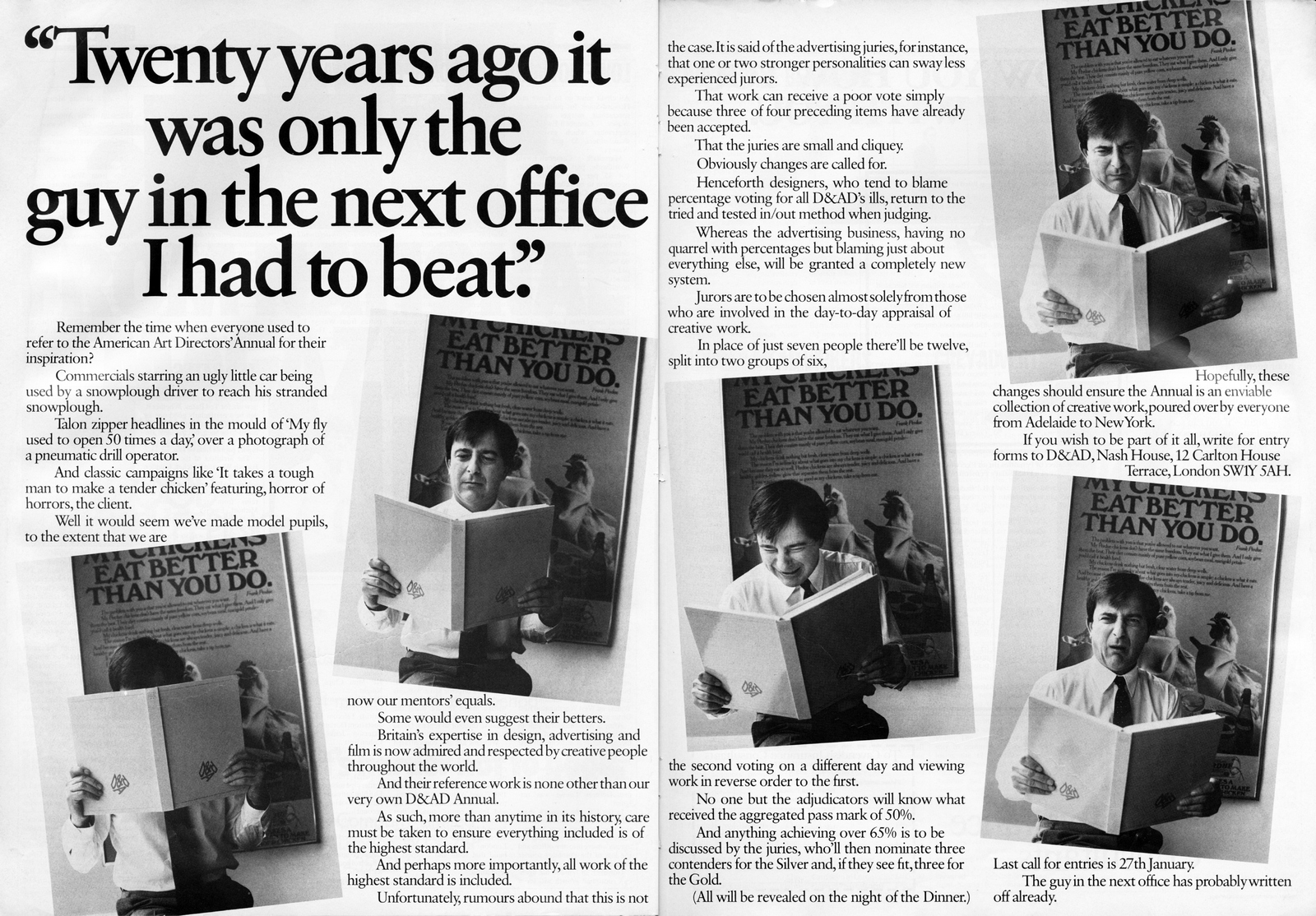
1983.




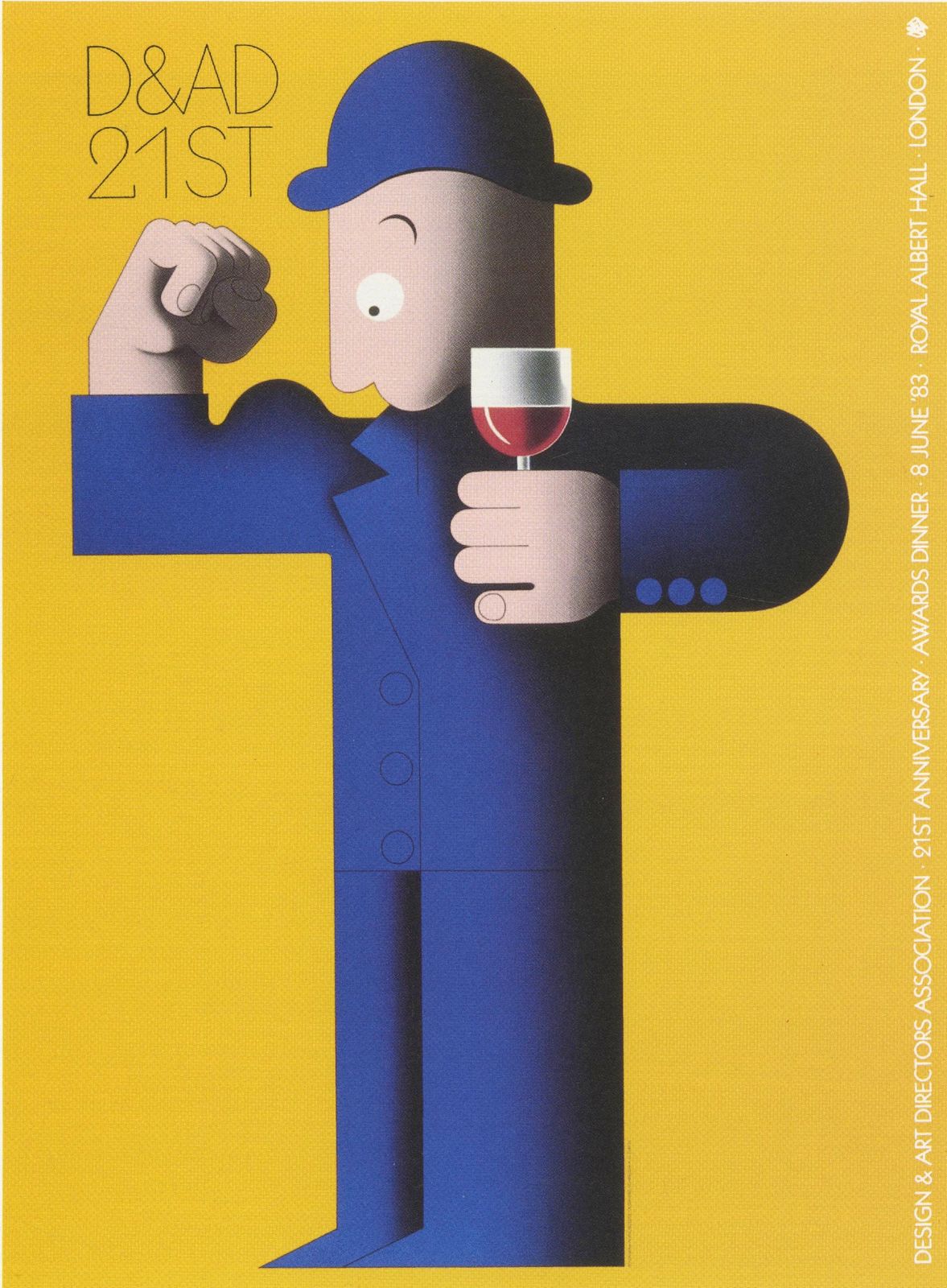
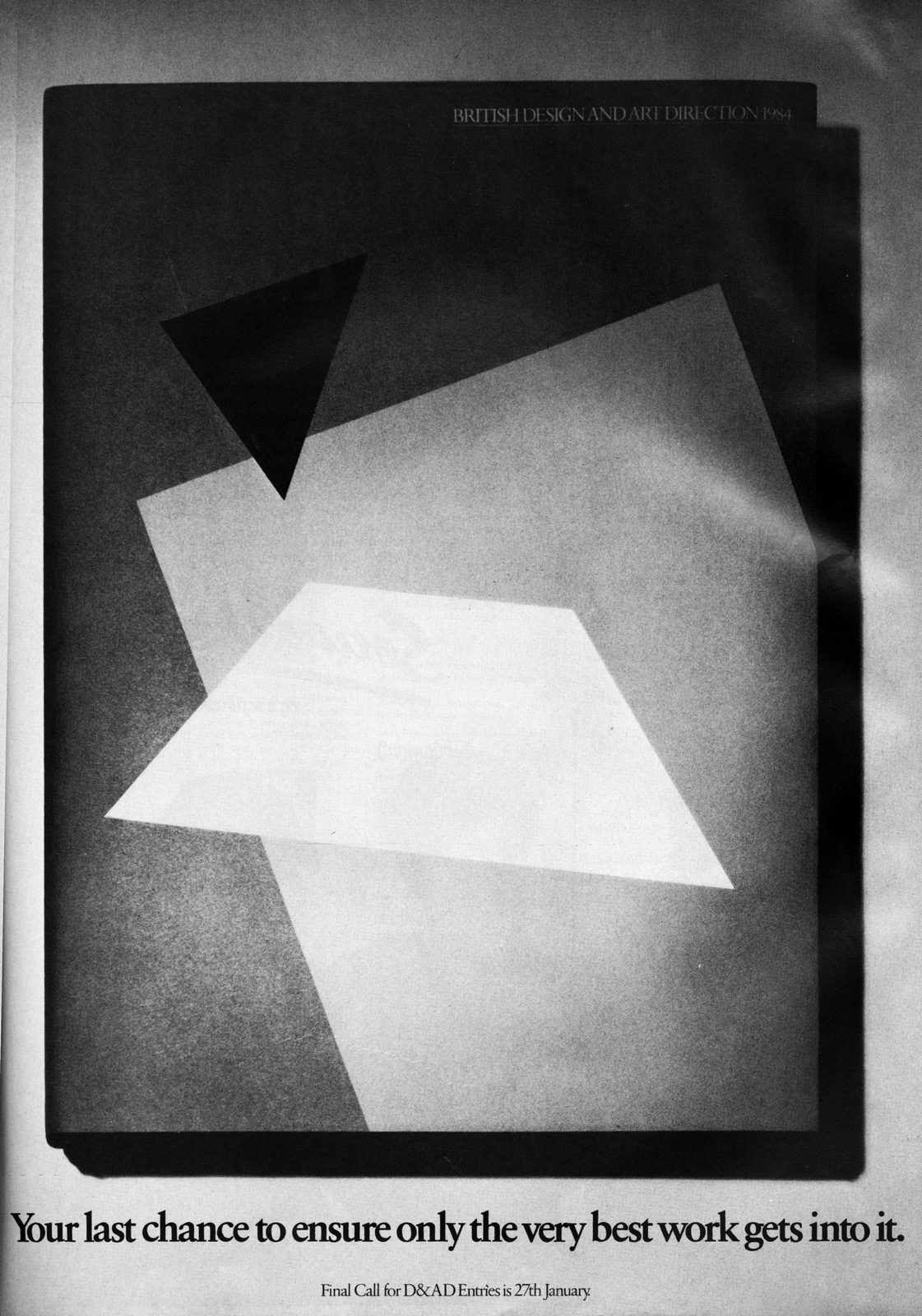
1984.

1985.


1986.

1987.


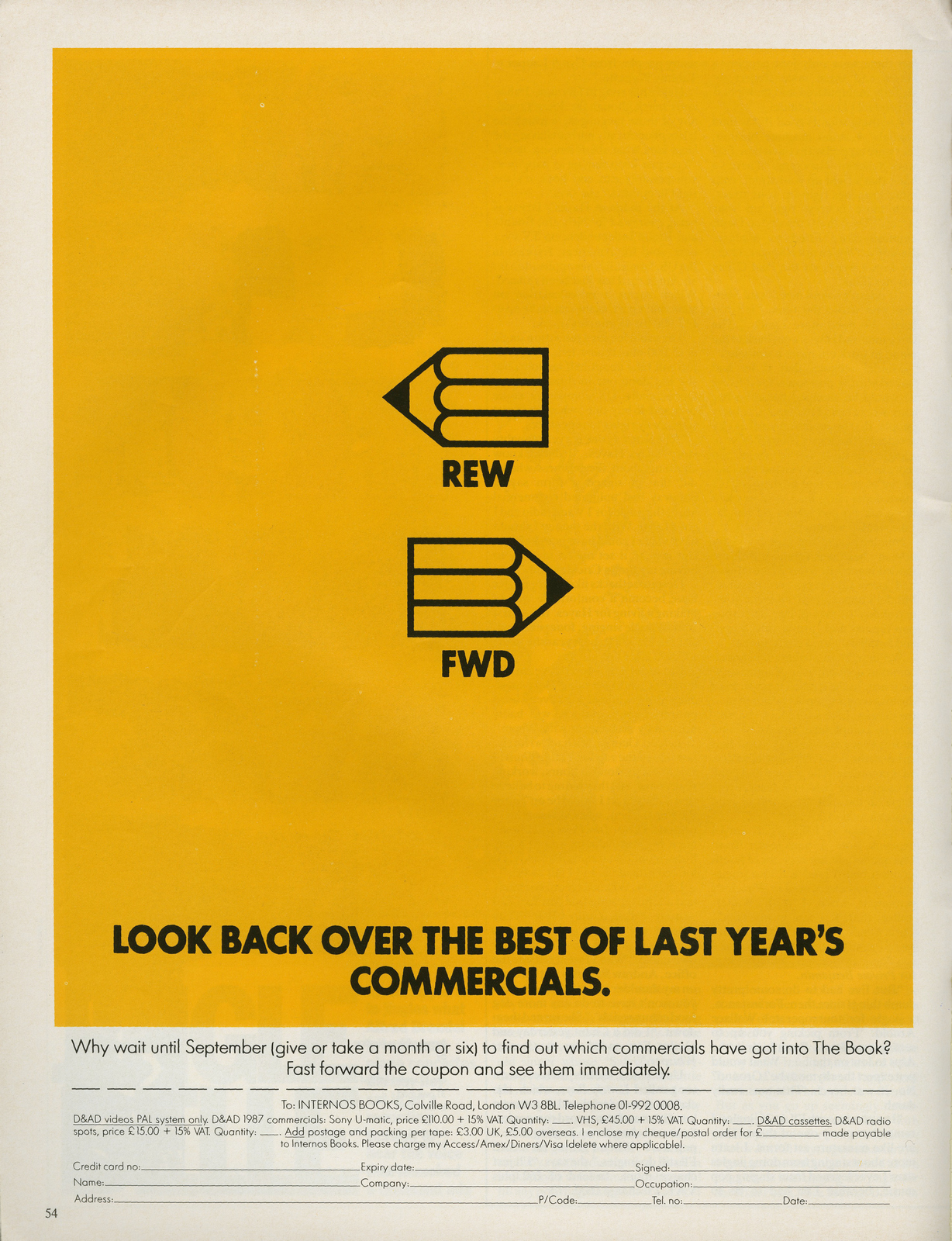


1988.



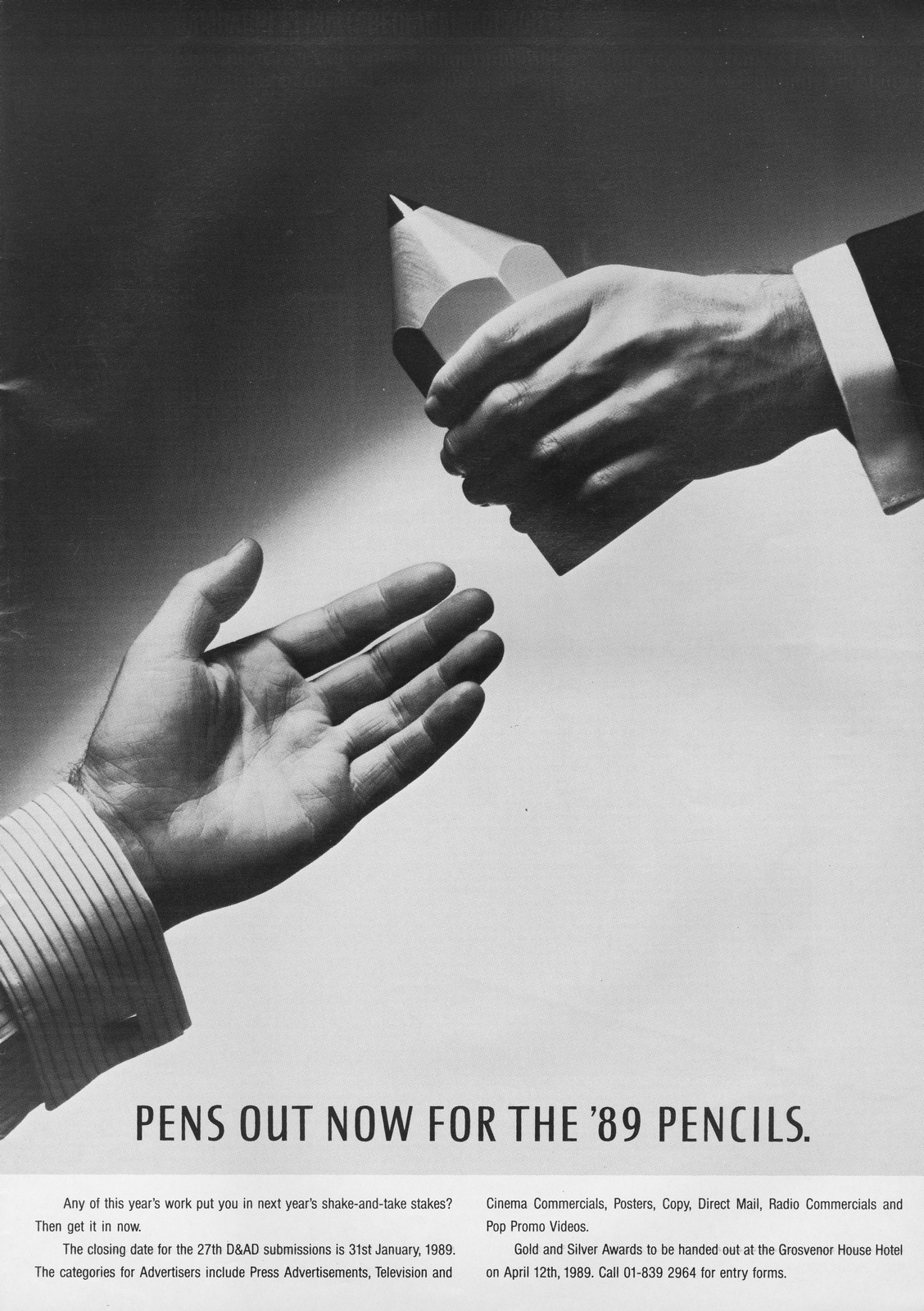
1989.

1990.


1991.

1992.

1993.
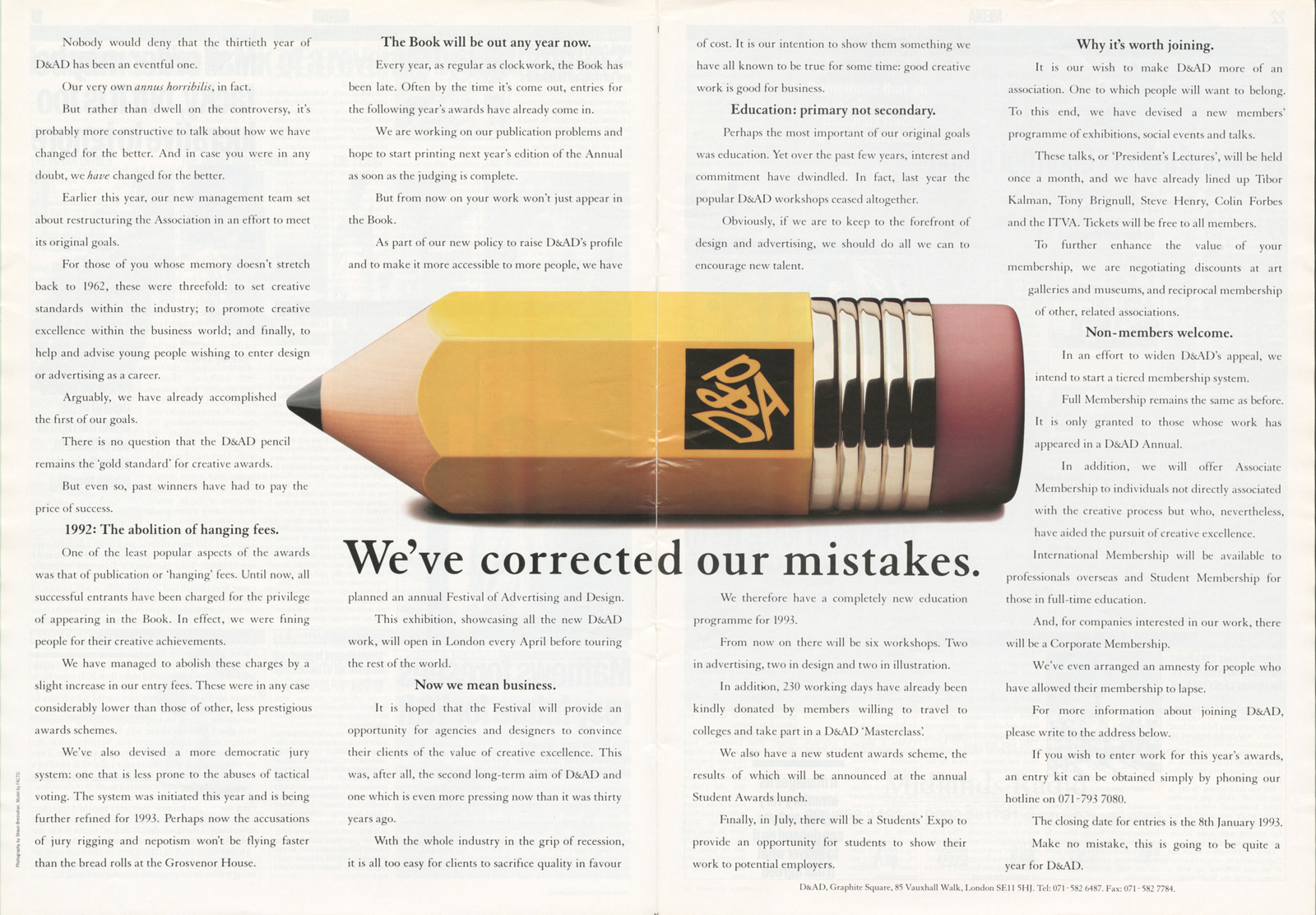
1994.

1995.



1996.

1998.


1999.


2000.



2003.
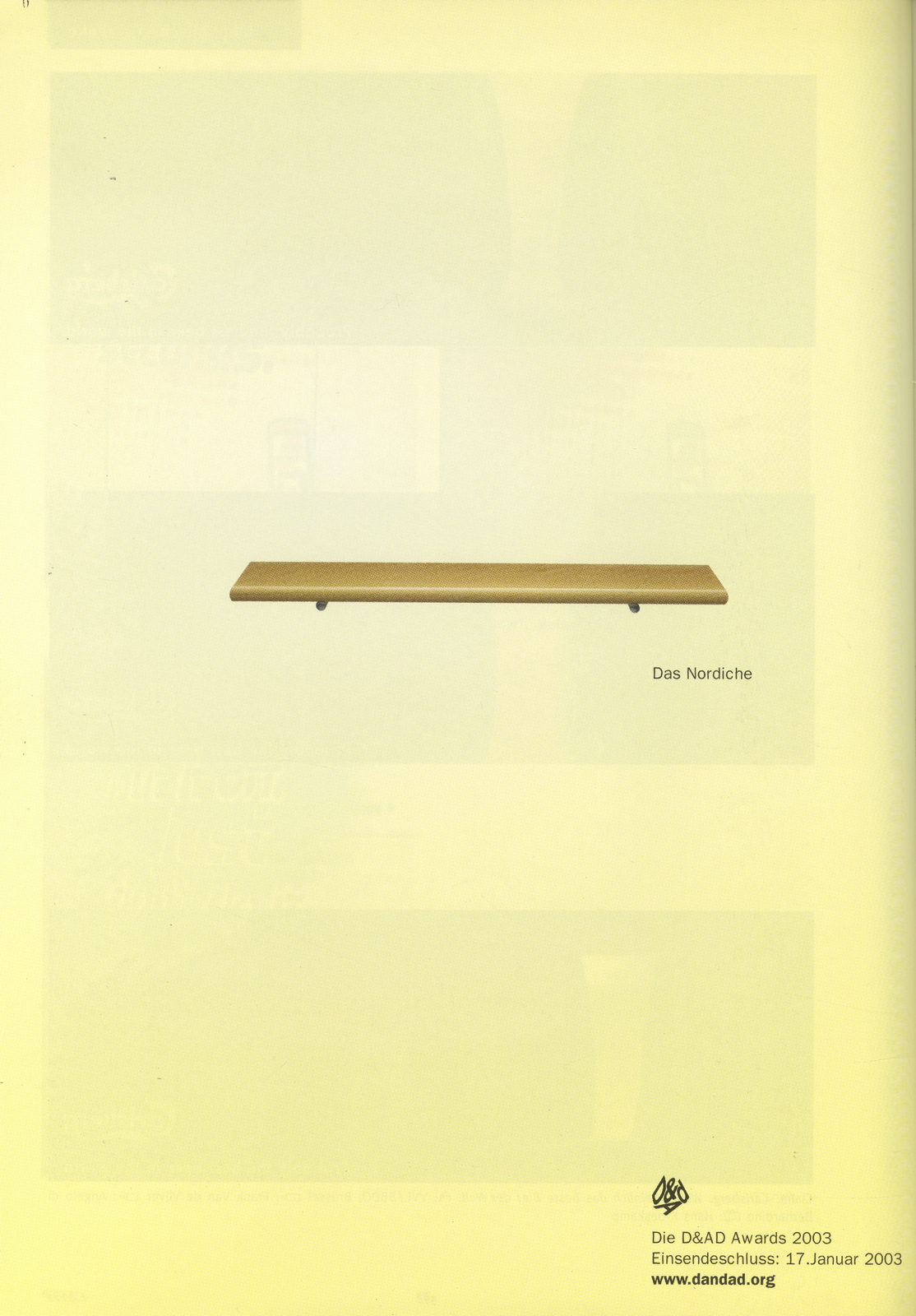
2004.

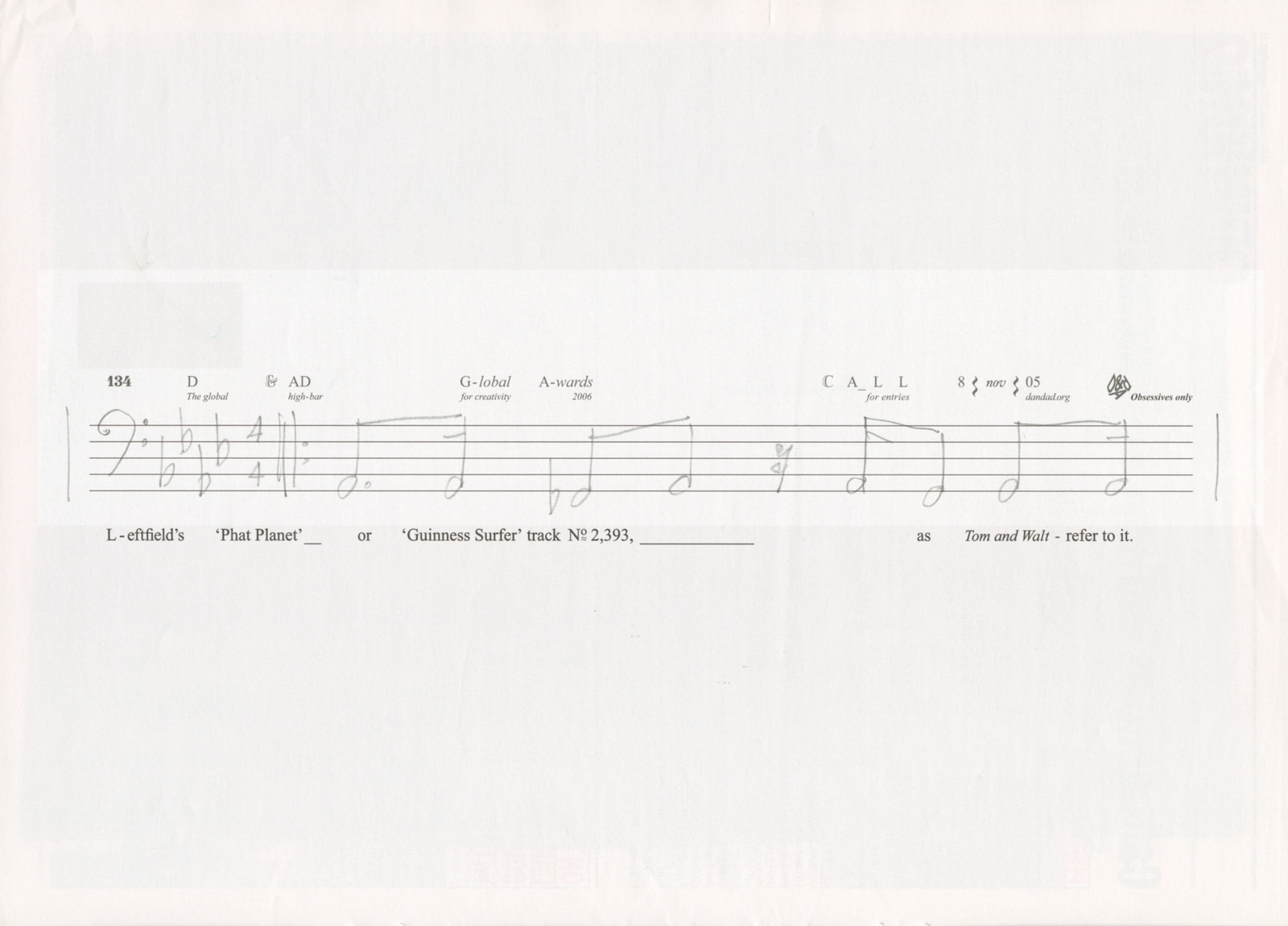
2005.


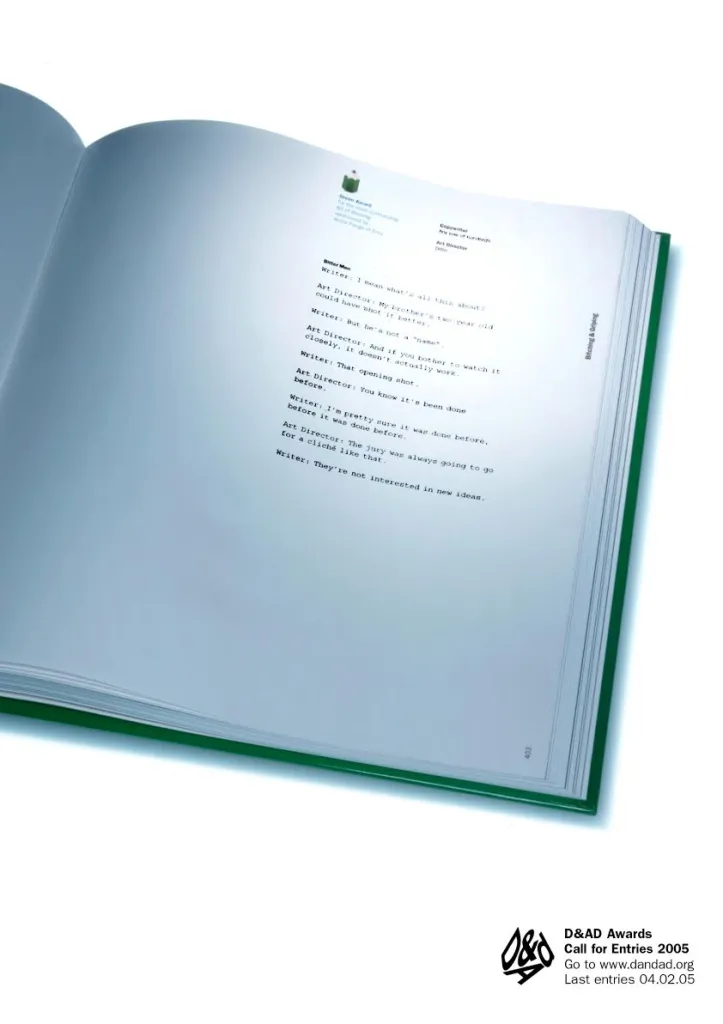
2006.
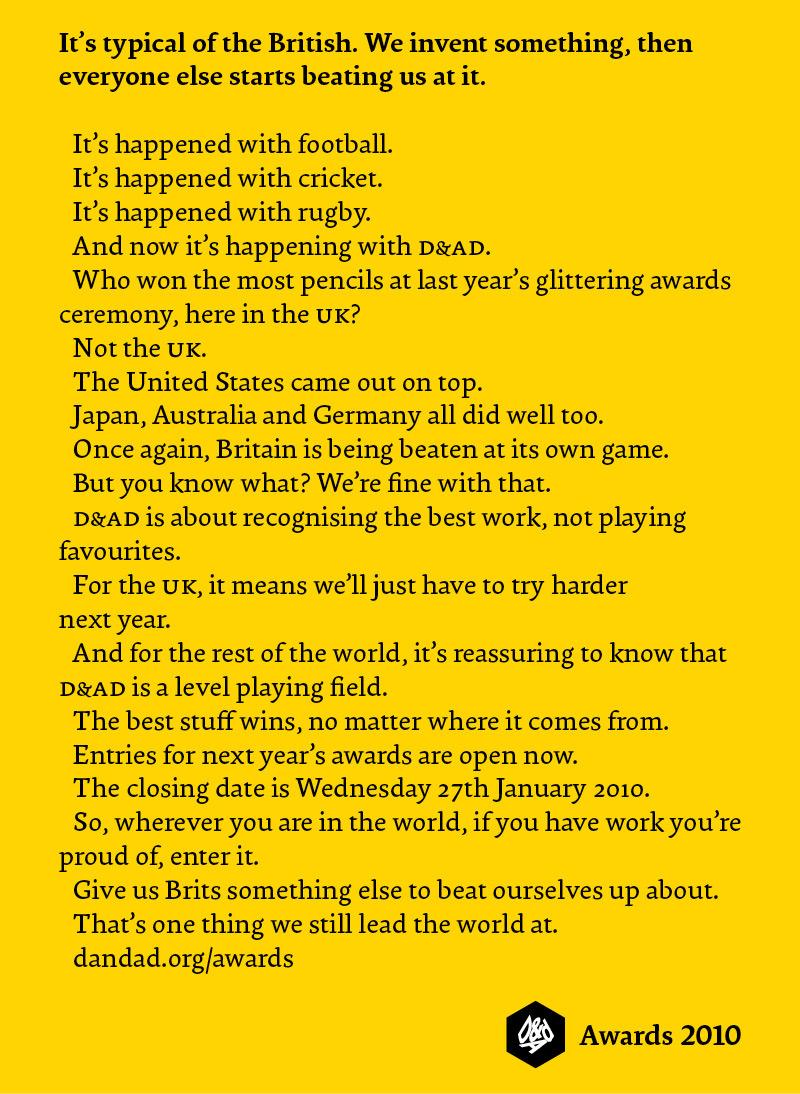
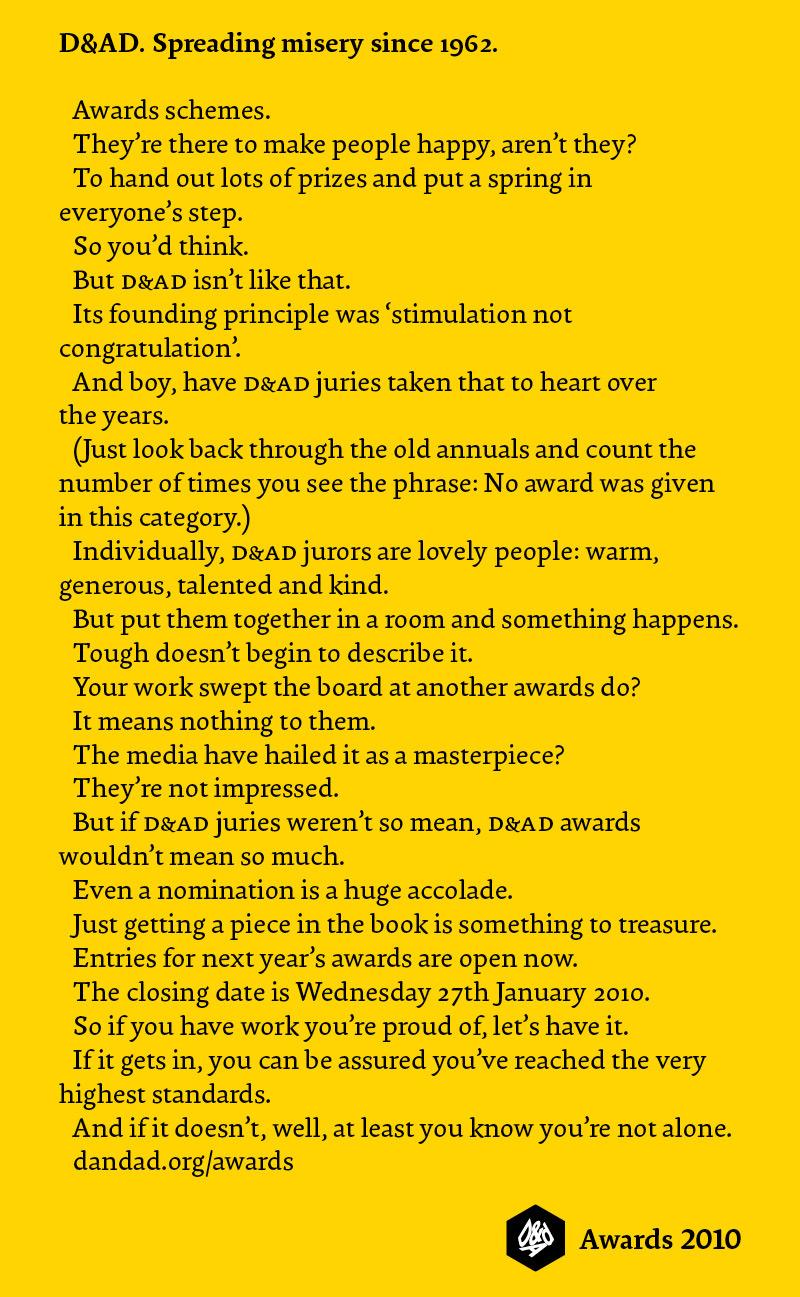
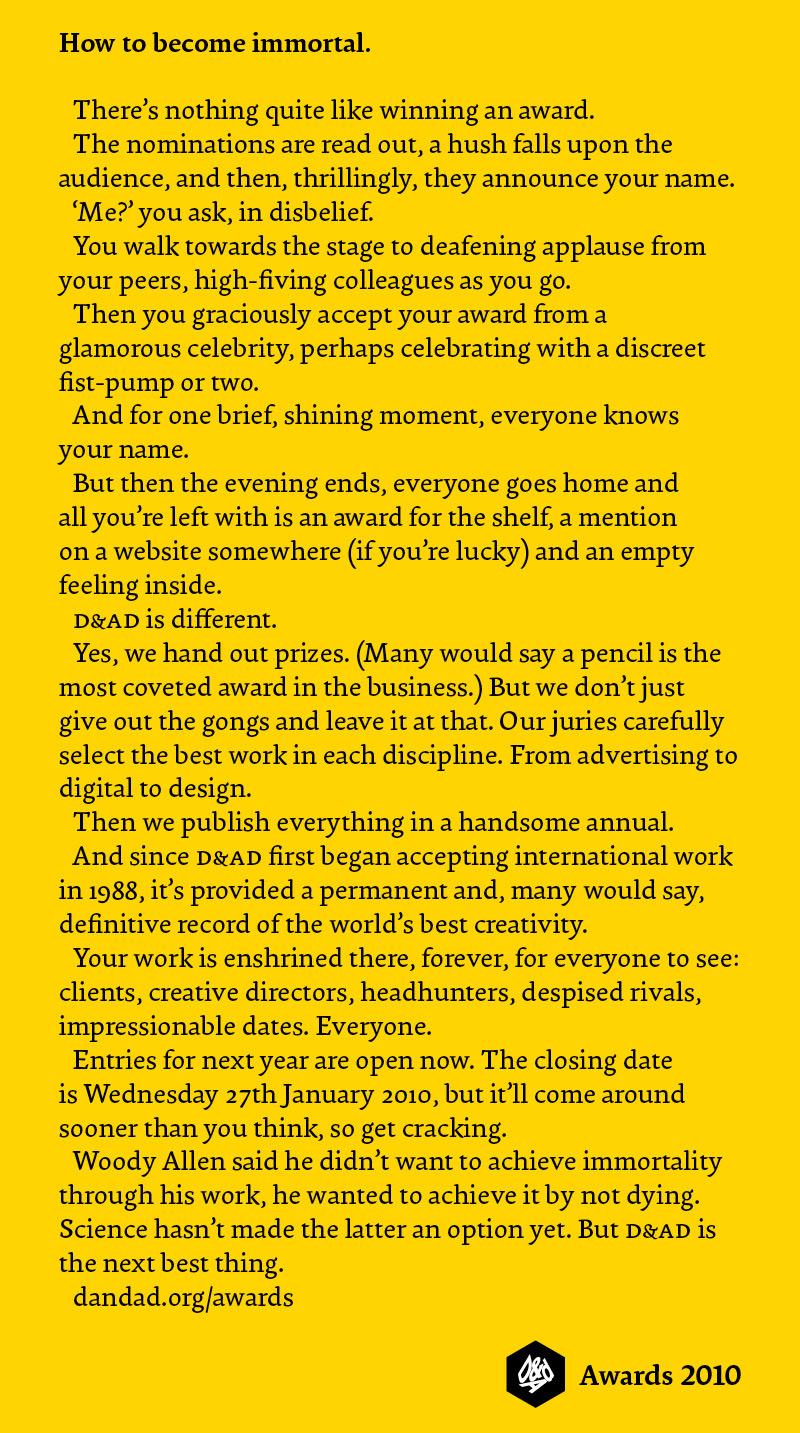
2010.
2013.



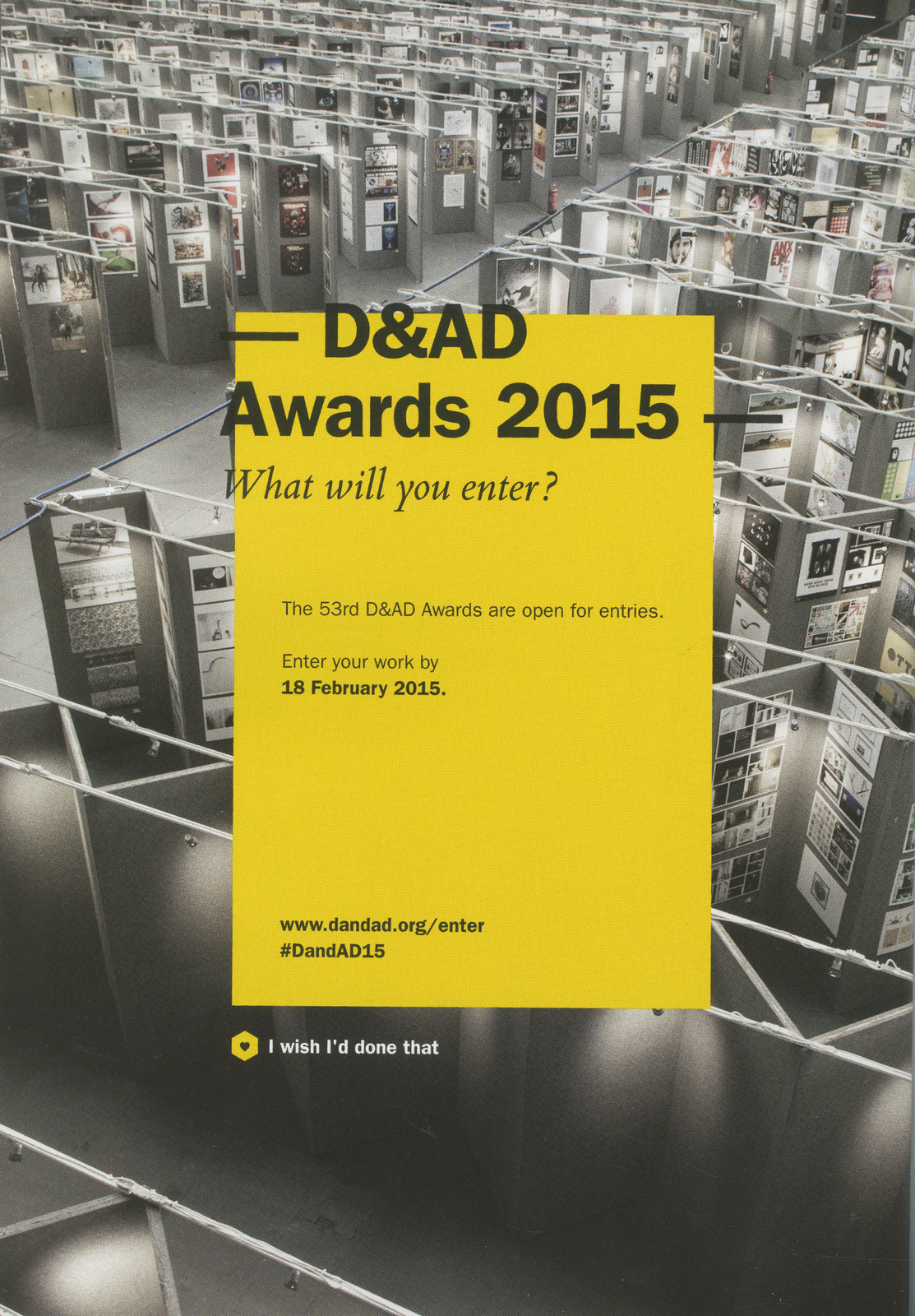
2015.
2016.
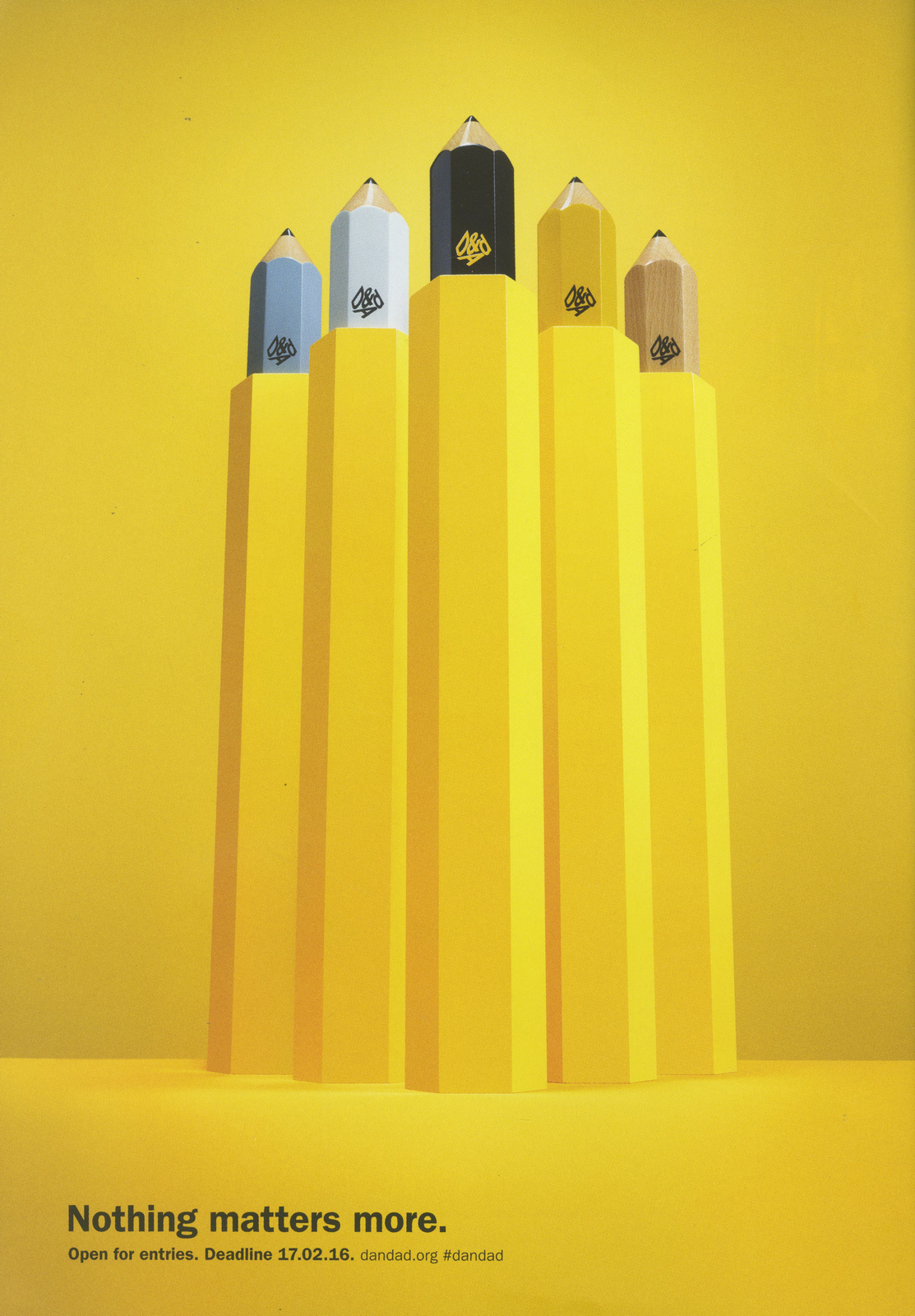
2017.

2018.

2019.

Thanks to The History of Advertising Trust for helping me track down some of these blighters.


Lorem ipsum dolor sit amet, consectetur adipiscing elit. Suspendisse varius enim in eros elementum tristique. Duis cursus, mi quis viverra ornare, eros dolor interdum nulla, ut commodo diam libero vitae erat. Aenean faucibus nibh et justo cursus id rutrum lorem imperdiet. Nunc ut sem vitae risus tristique posuere. uis cursus, mi quis viverra ornare, eros dolor interdum nulla, ut commodo diam libero vitae erat. Aenean faucibus nibh et justo cursus id rutrum lorem imperdiet. Nunc ut sem vitae risus tristique posuere.
Delete